Fire of the Mind
HIDDEN at (A)Void Gallery
Náplavka, Rašín Embankment, Prague 2
3. 6. / 17. 6. 2026
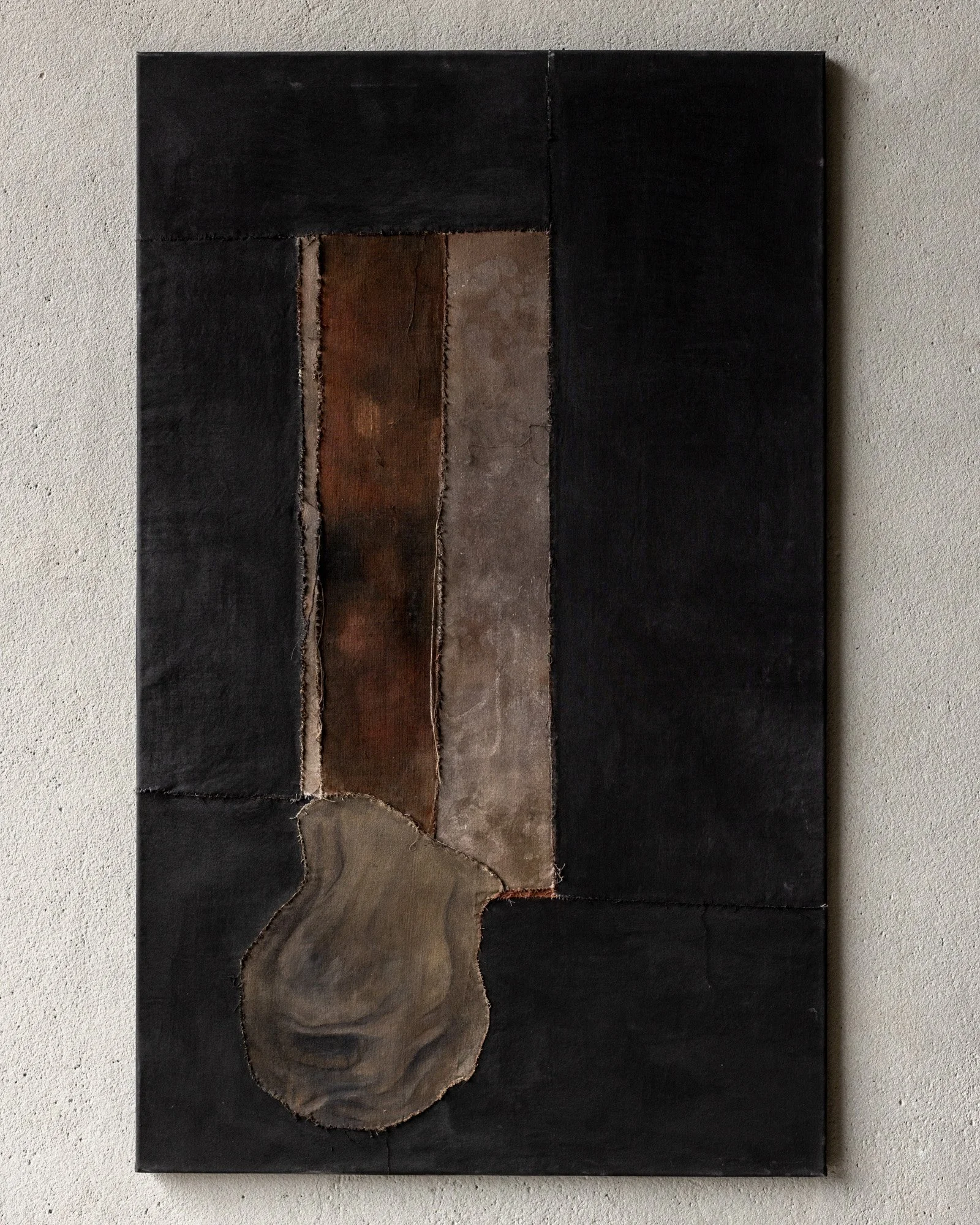
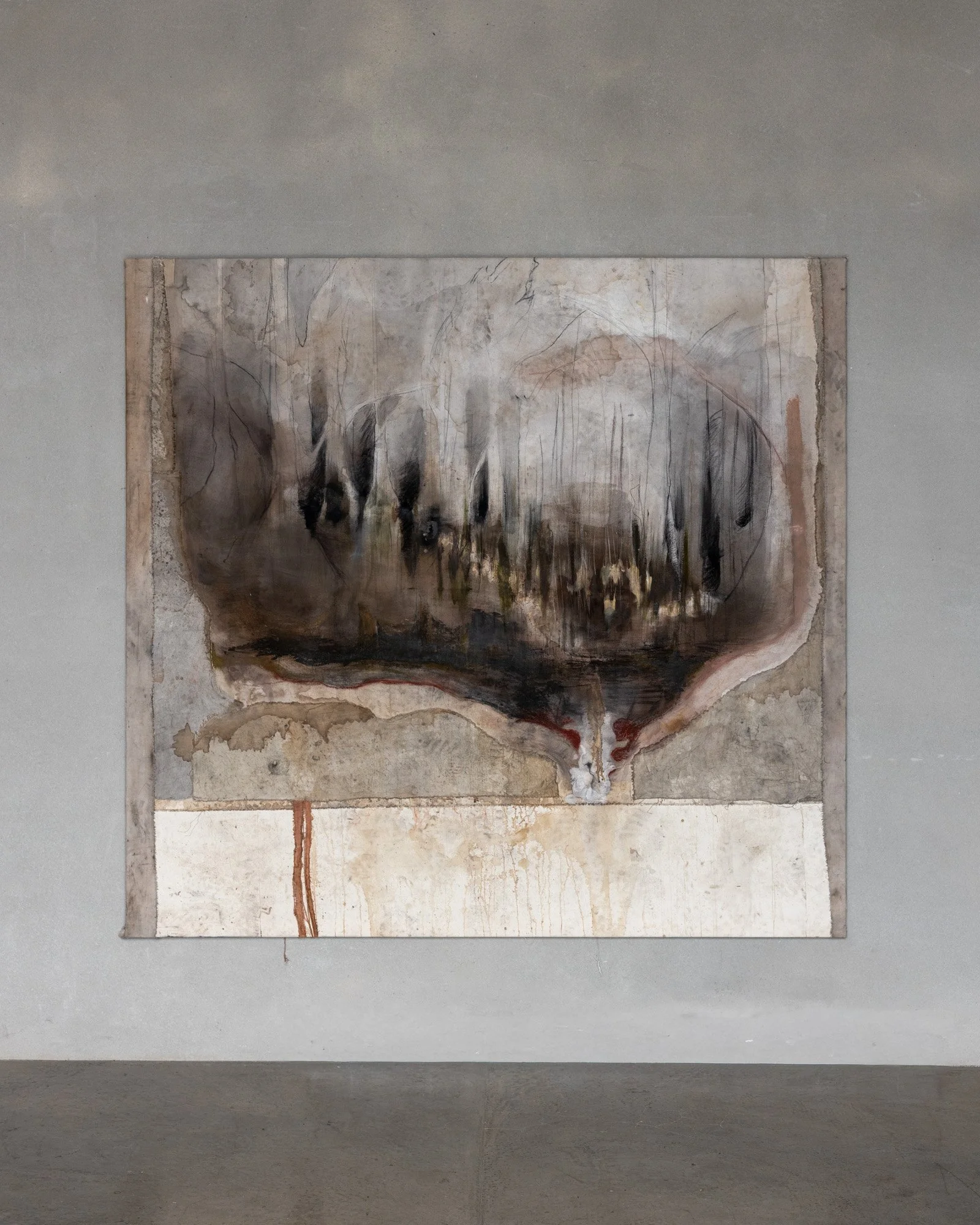
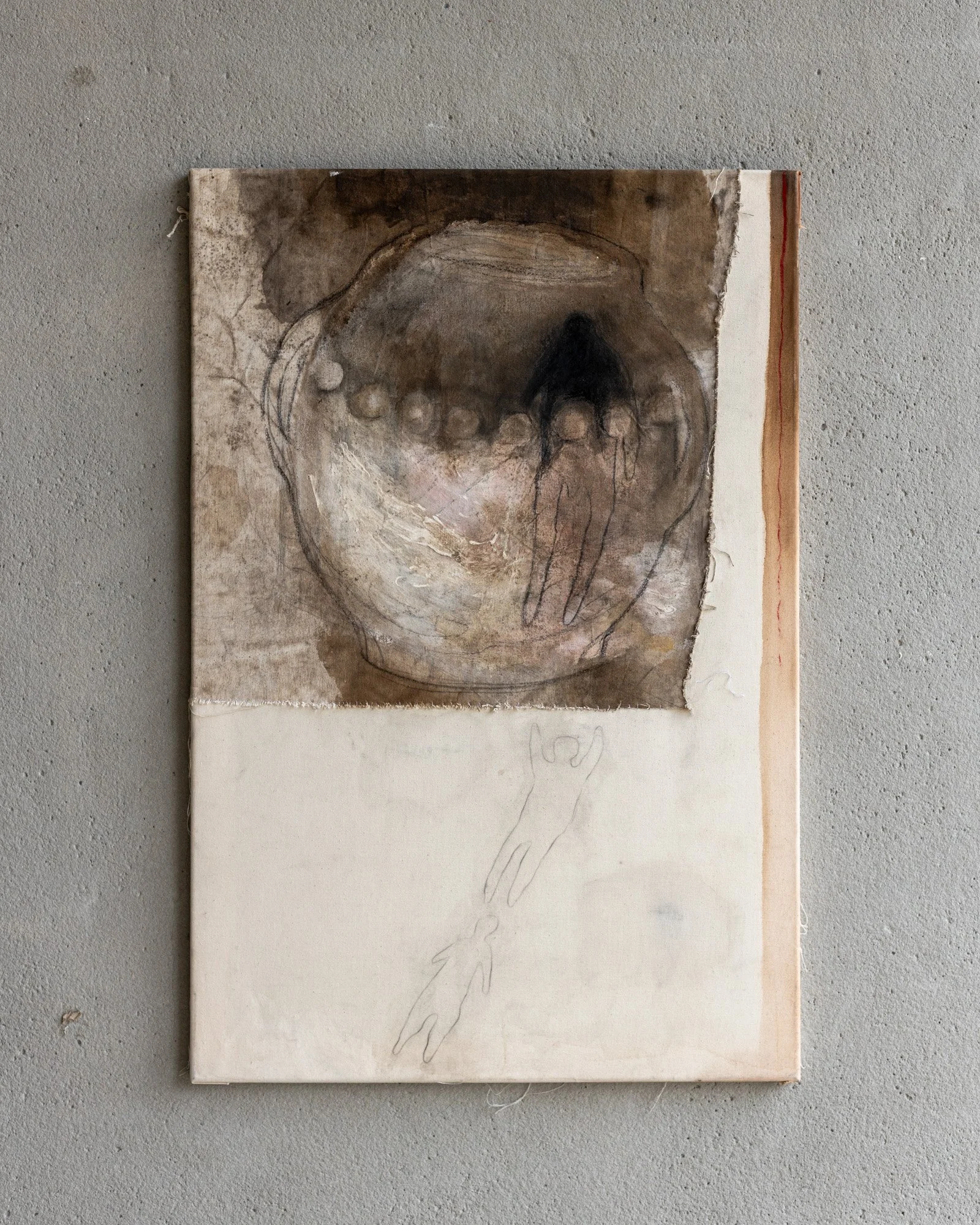
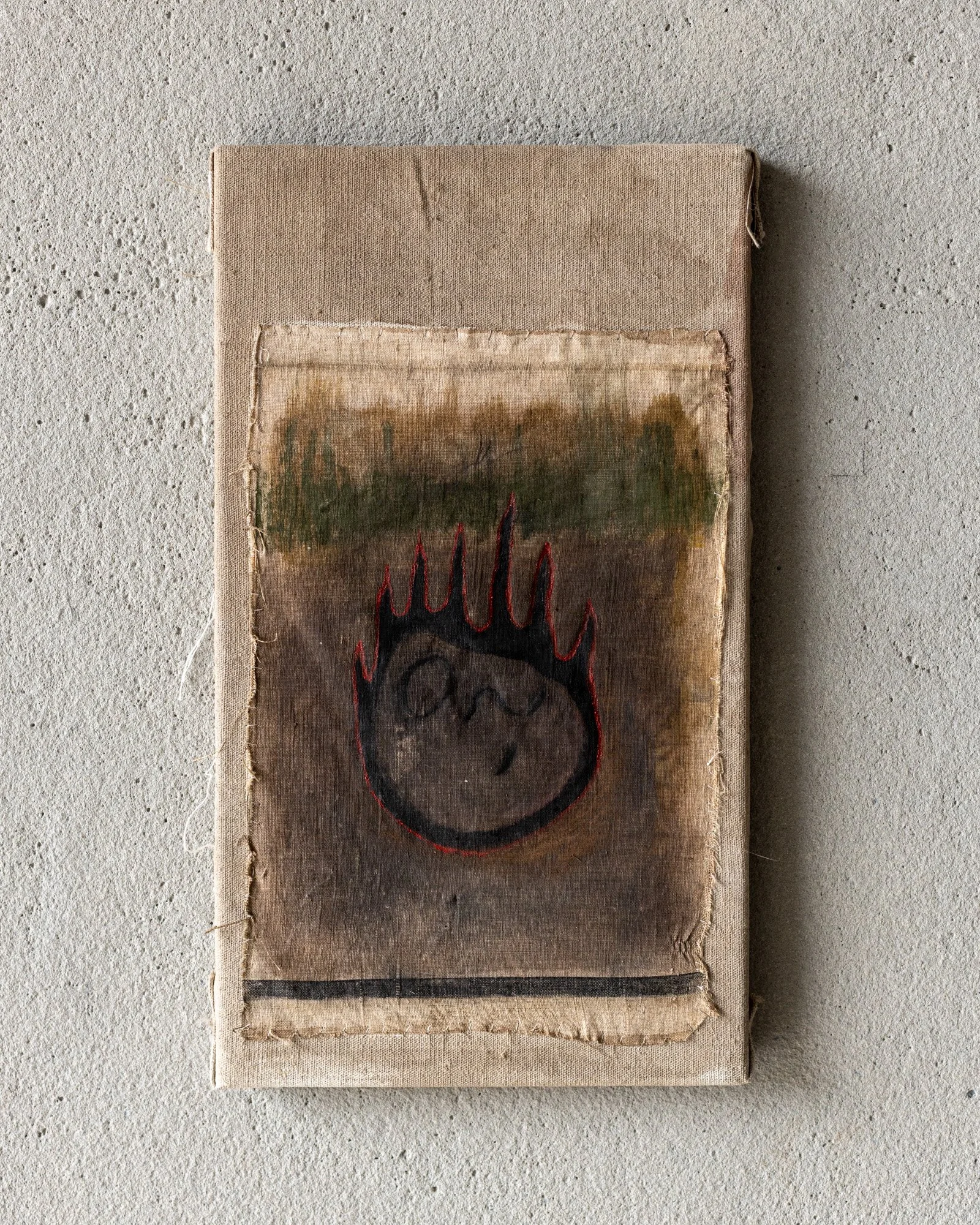
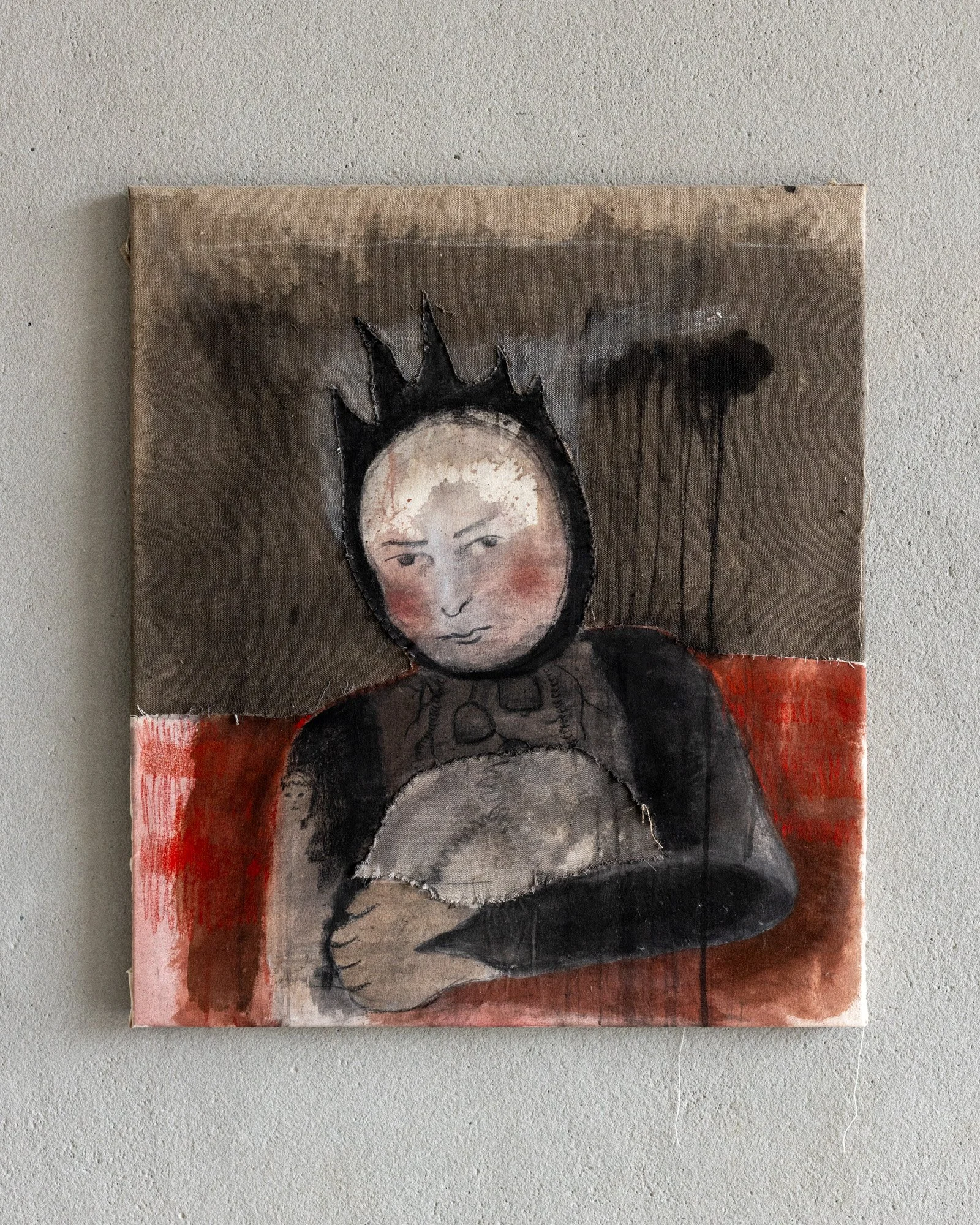
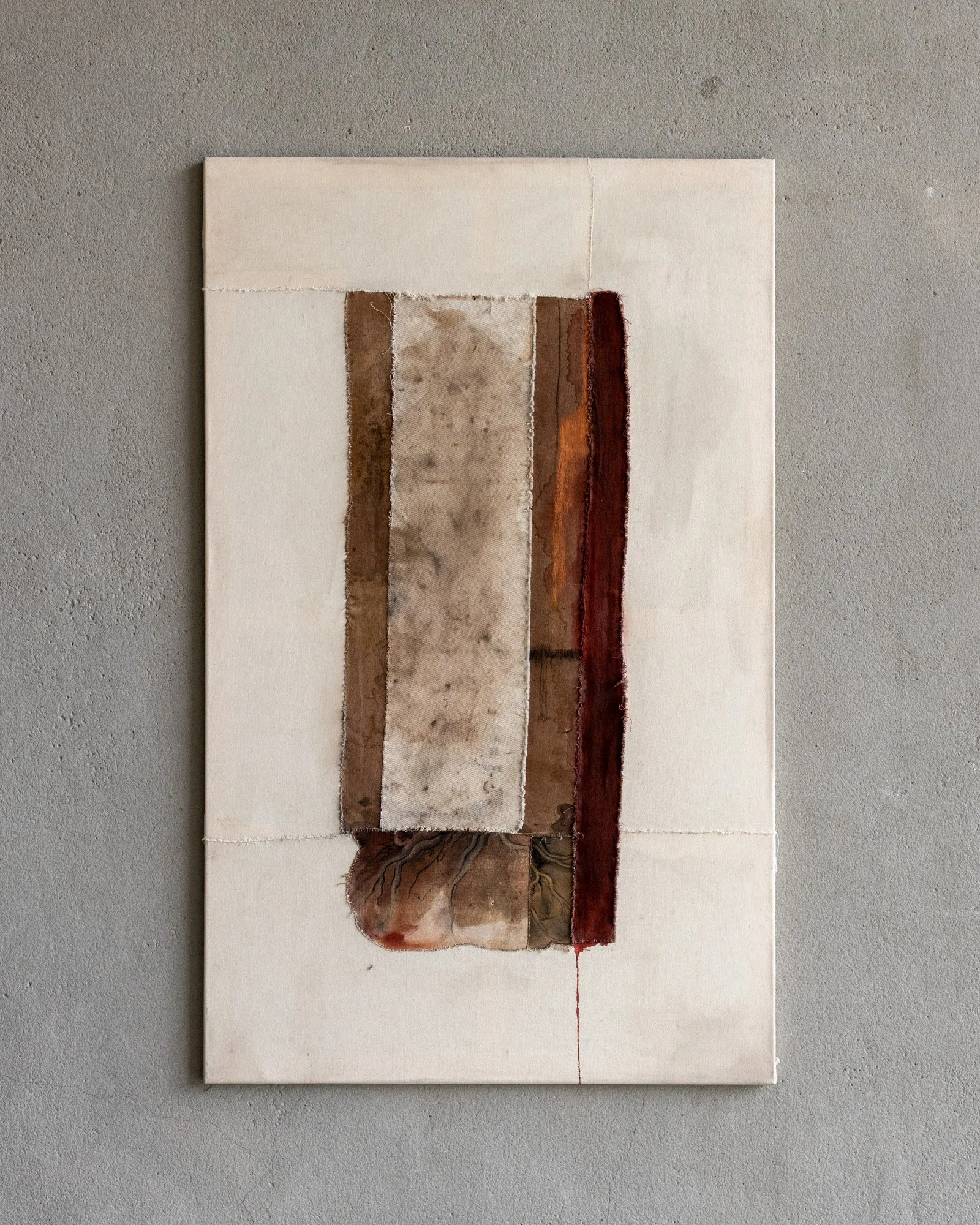
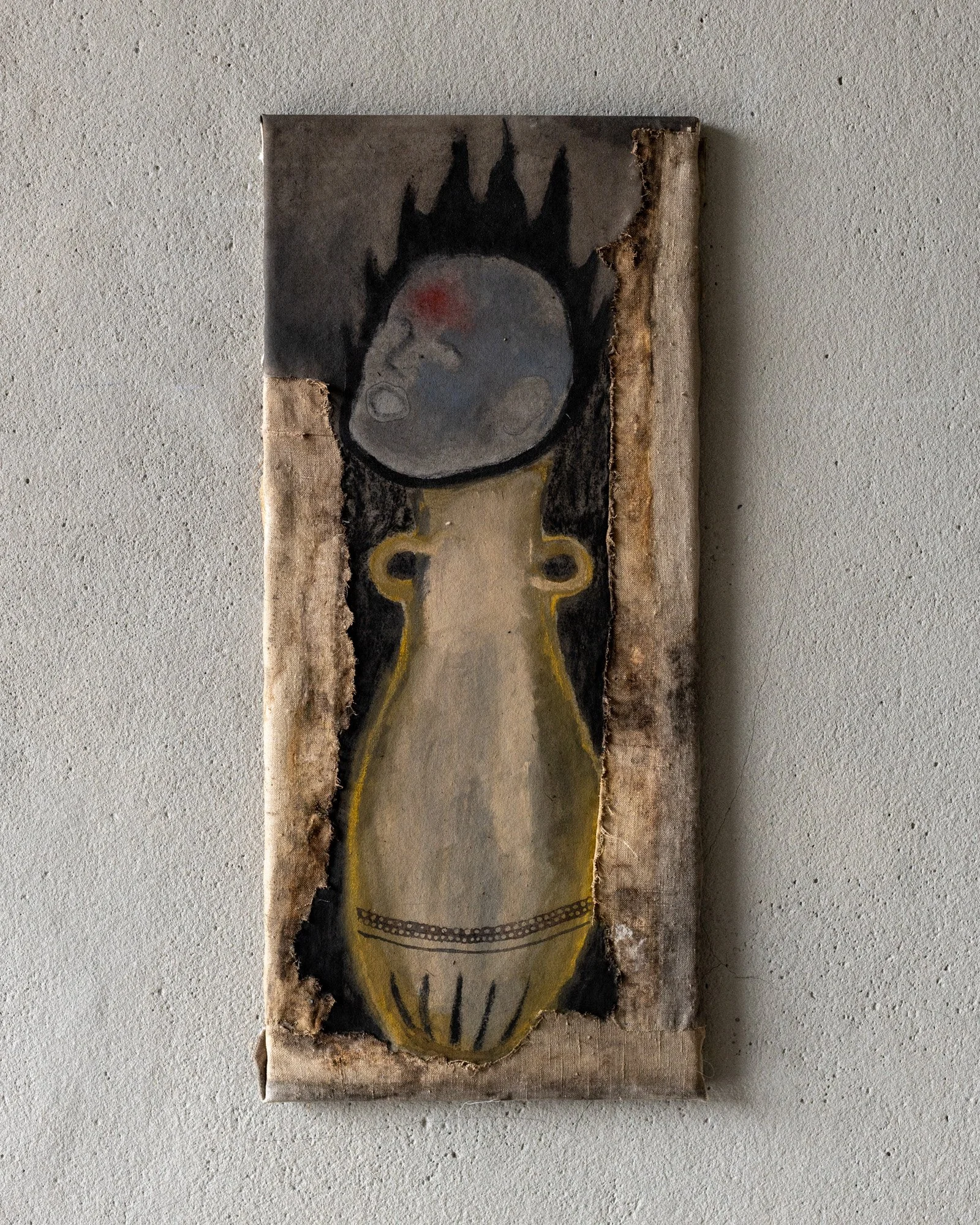
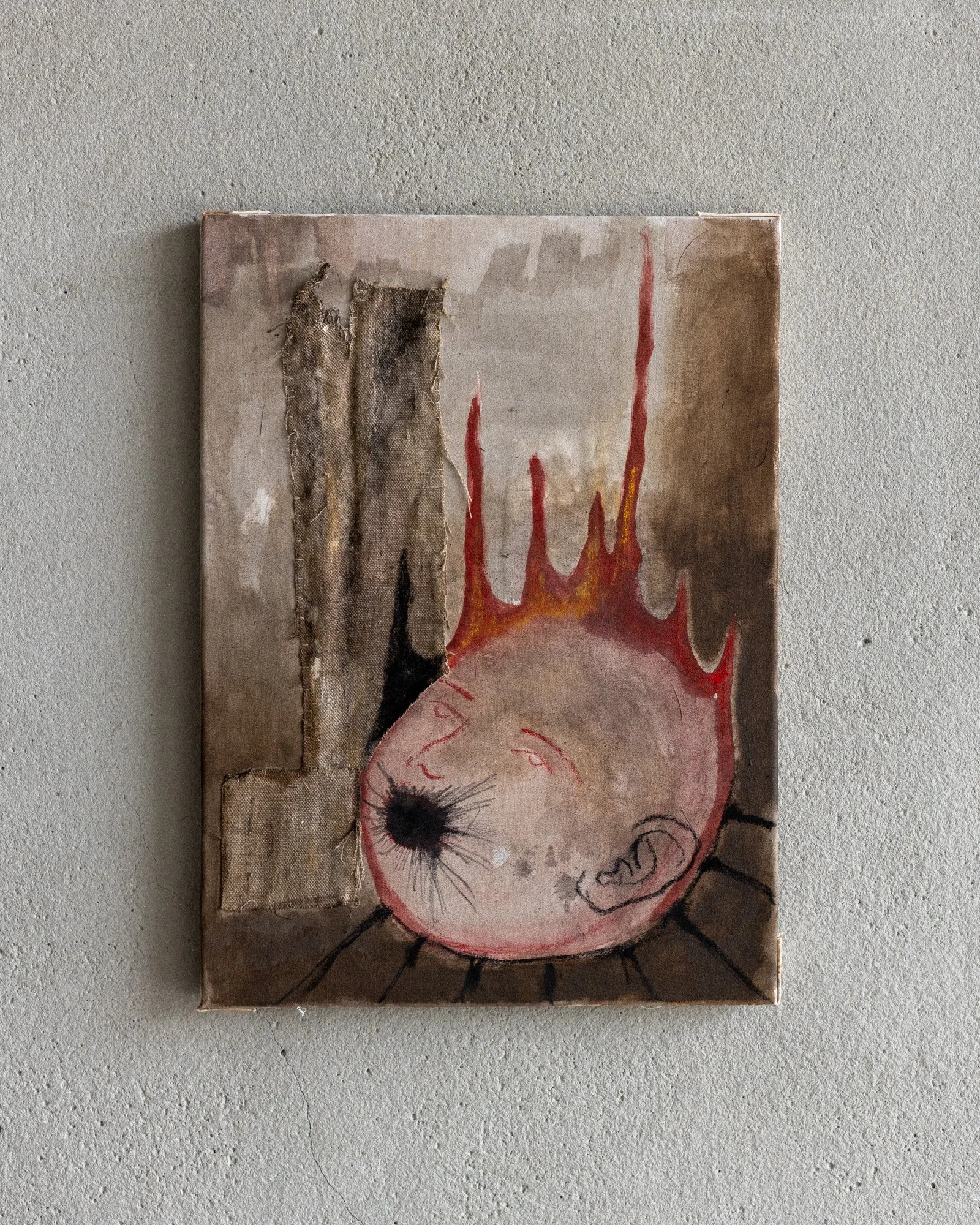
HIDDEN continues its summer program at (A)Void Gallery with Fire of the Mind, a solo exhibition by Lucie Hošková. Inspired by Christian mysticism, alchemy, and the music of Coil, Hošková explores themes of mortality, desire, decay, and transformation. Through physically altered canvases and materials marked by erosion and destruction, she creates works that treat collapse not as an ending, but as a gateway to spiritual renewal.

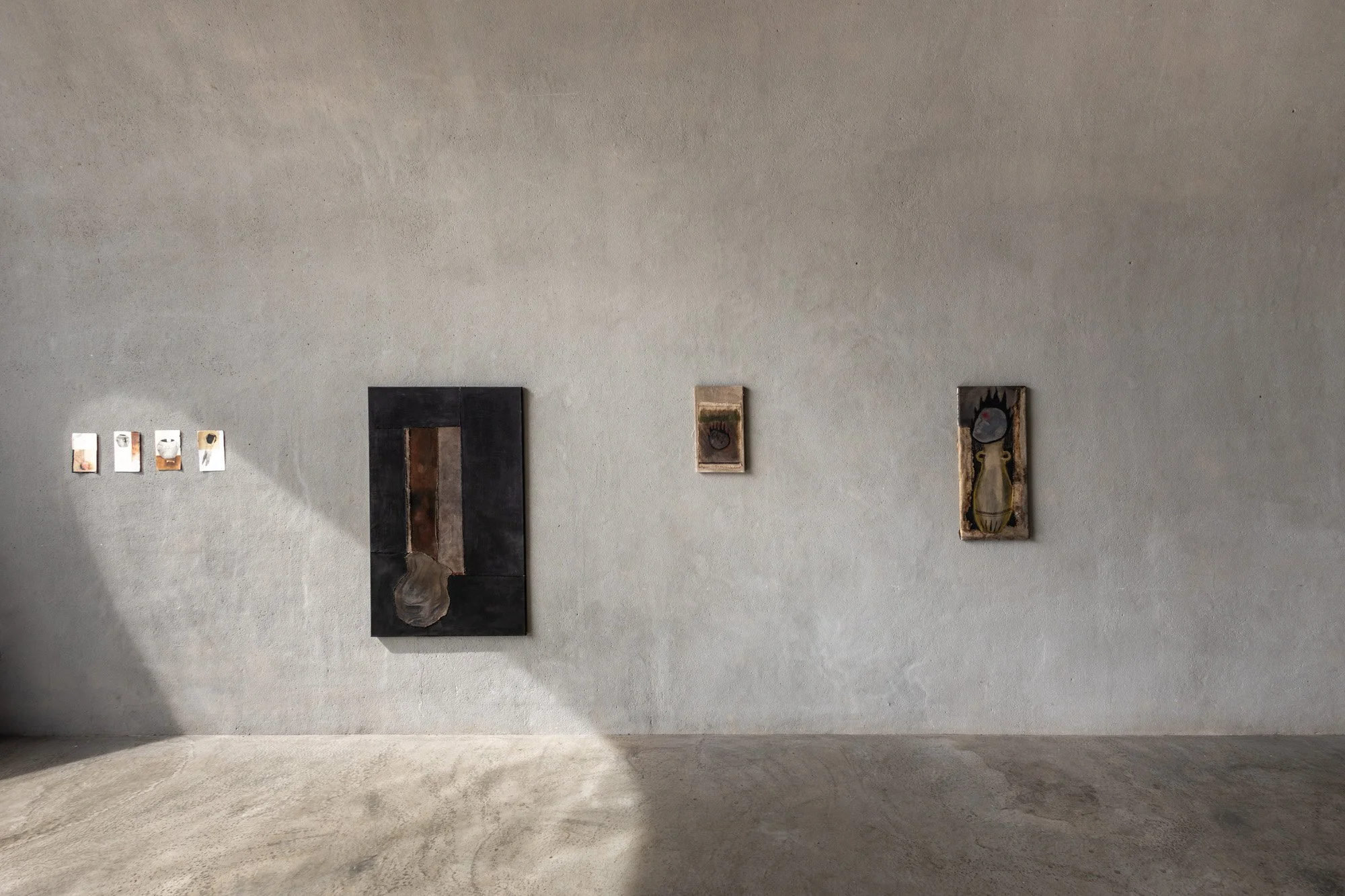
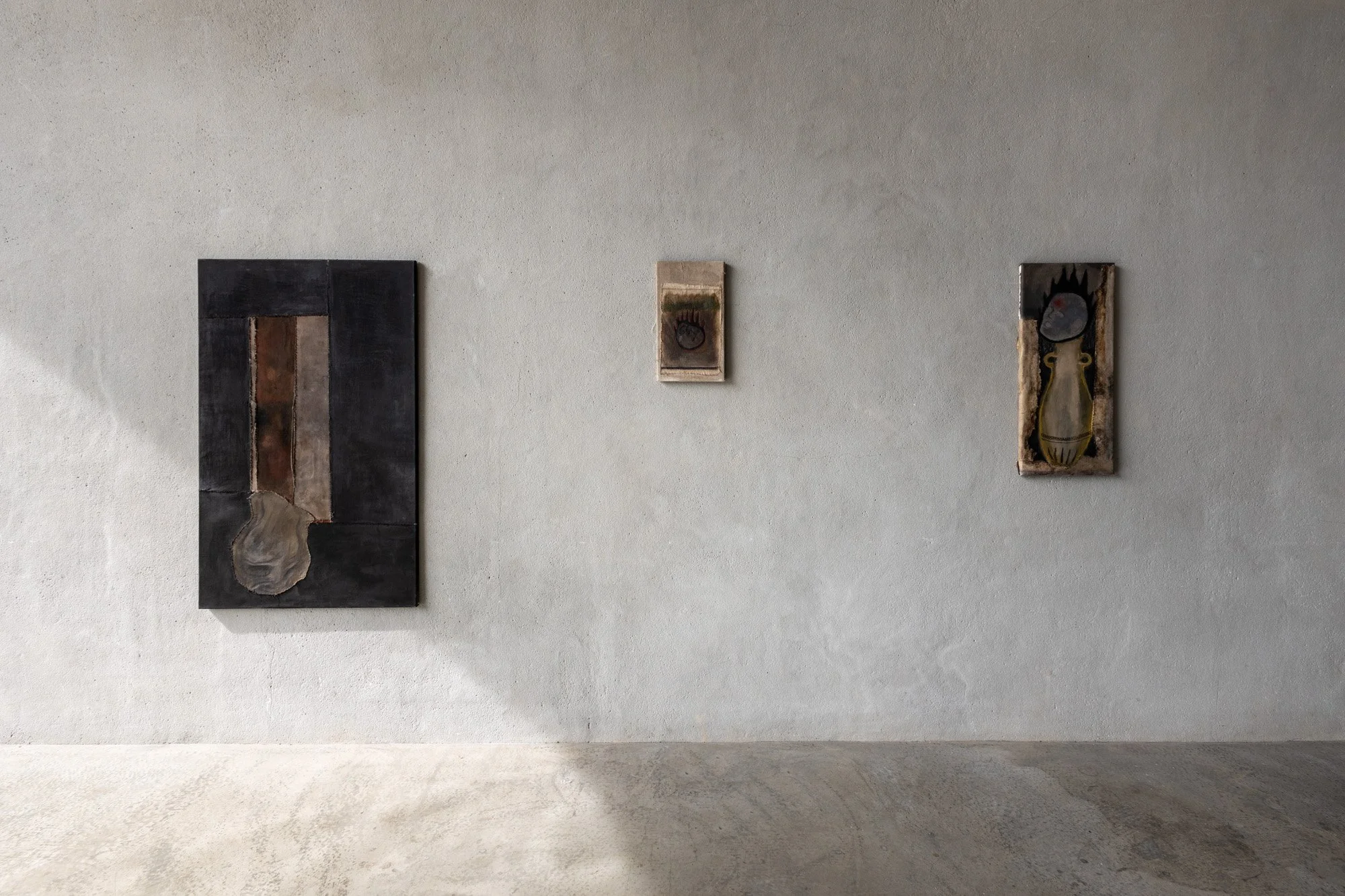
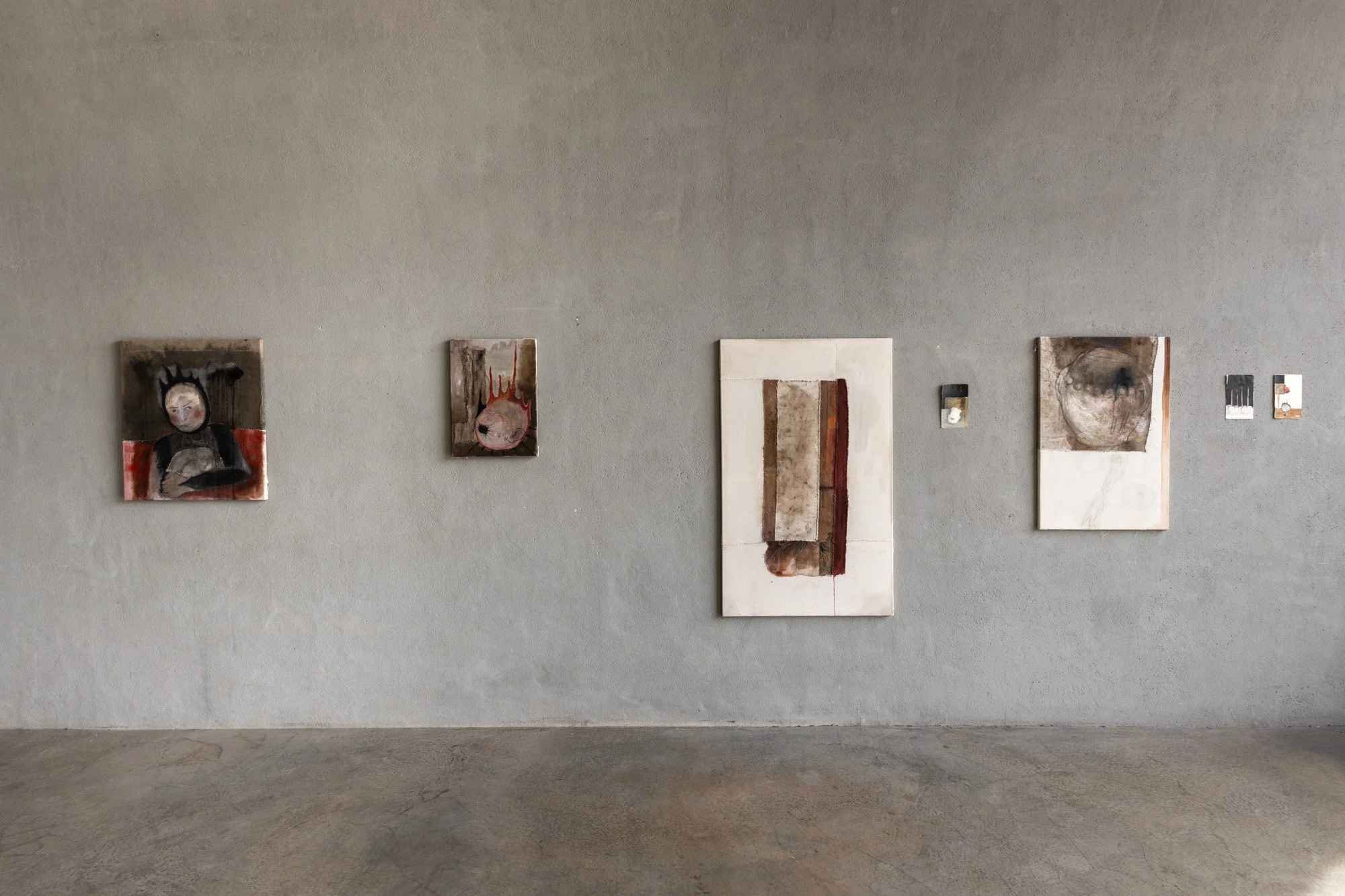
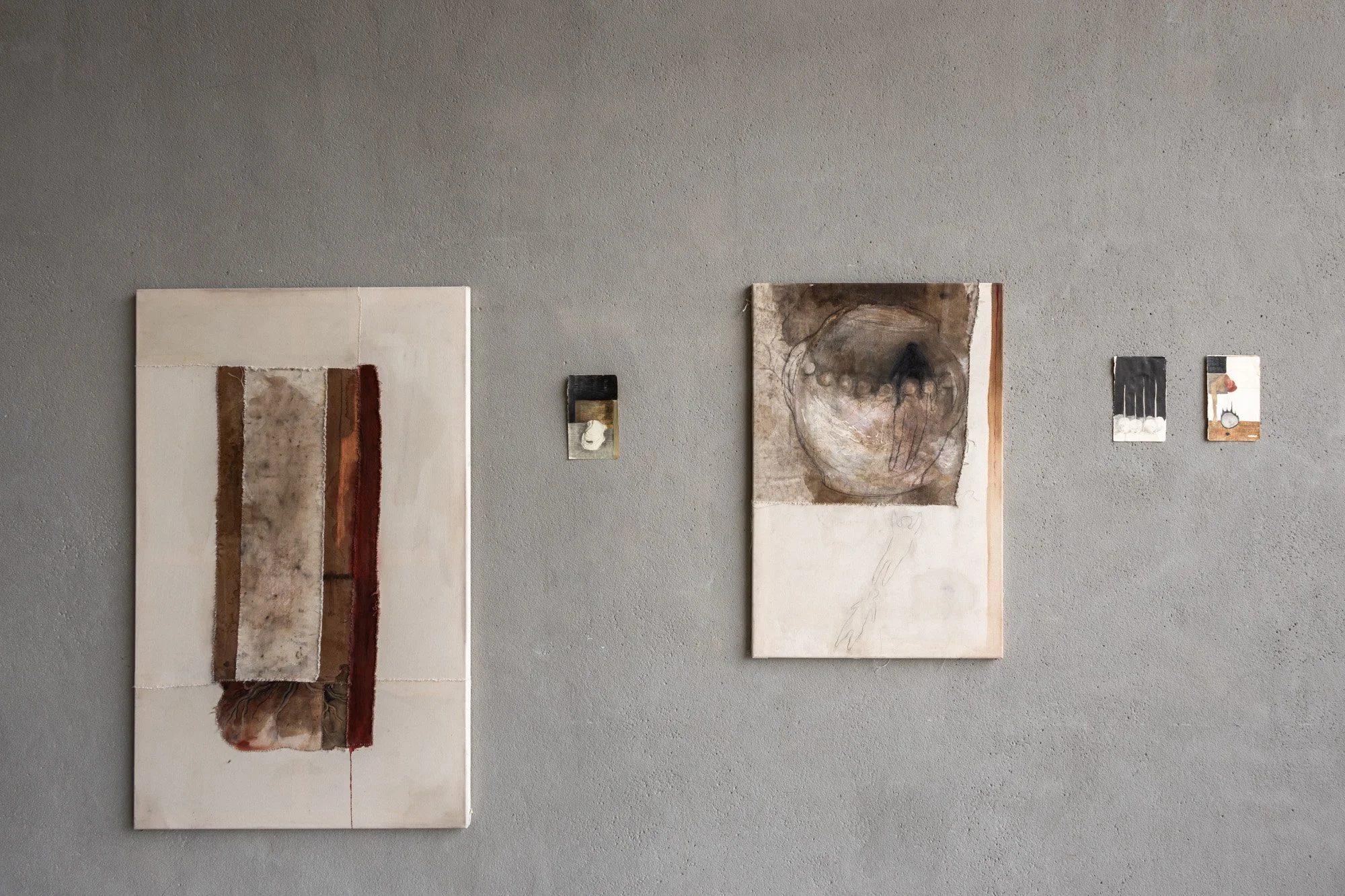
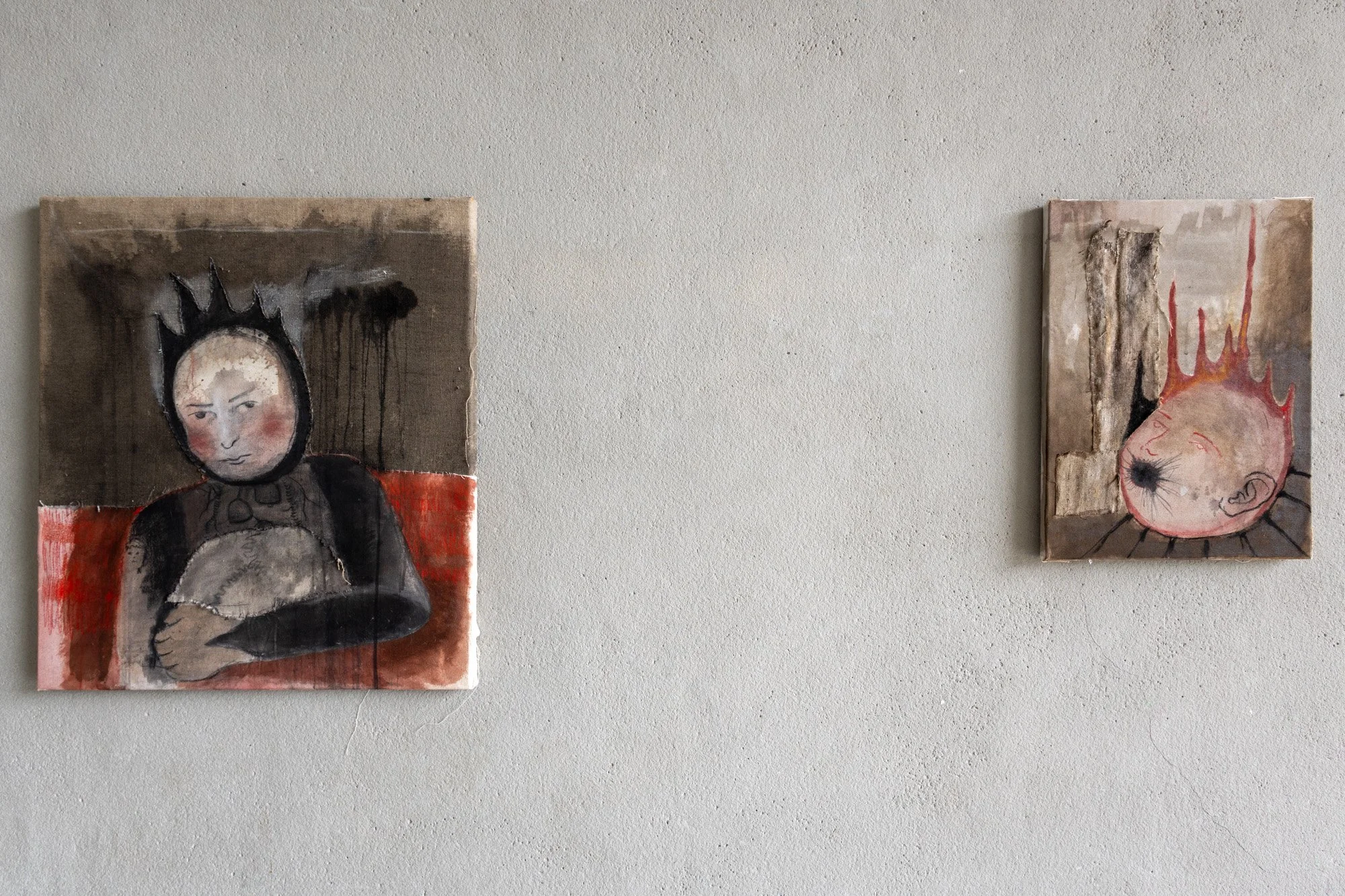
"Does death come alone, or with eager reinforcements?" Thus begins Fire of the Mind, a song by the experimental British group Coil, which also lends its title to this exhibition. Just as Coil approached music as a magical act and a tool for the transformation of consciousness, Hošková treats her artistic practice as a personal occult ritual. Her aesthetic is built upon the collision of opposing forces. Matter struggles with decay, existence with non-being, reason with madness, and love with libido, with the latter invariably prevailing. Yet these roles are not defined in black and white. The Dionysian principle of the animal-human may represent freedom and life, while the Apollonian principle of mathematically rational angels leads us toward destruction.
Both Hošková and Coil draw from the mythology of William Blake, in which cold conventional reason is personified by the tyrannical figure of Urizen, a satanic force akin to Satan. Death is symmetrical and logical, whereas humanity, operating on the wavelength of the animal, remains part of nature. Good and evil are not opposites but Siamese twins. As with the mantra-like hypnotic refrain "Holy, holy, holy, holy," Hošková leaves us uncertain whether we are witnessing a celebration of the Christian God or an indictment of Him.
A key source of inspiration for the artist lies in the supernatural visions of Hildegard of Bingen and Teresa of Ávila. While Hildegard, in moments of religious ecstasy, beheld a living cosmic flame known as Ignis vivens, Teresa experienced violent mystical-erotic trances in which a seraph pierced her body with a golden spear tipped with fire. This motif of ecstatic intoxication through paralysing pain, where the suffering body agonises while the liberated soul ascends toward heaven, was immortalised in the Baroque sculpture of Gian Lorenzo Bernini.
Rather than working with ostentatious marble, Hošková employs humble, worn, and seemingly ugly materials such as exhumed textile canvases eroded by time and nature. Just as the masochistically tortured body of a flagellant opens the gates of paradise to the elevated spirit, Hošková "torments" the material of her works so that their spiritual content may emerge more clearly. Decay and disintegration become necessary conditions for future transformation. This points toward the first stage of the alchemical process, nigredo, symbolised by the black sun that Coil evoke in their song.
For Hošková, the sacred is inseparable from the transgression of taboos and the violation of a collapsing order. The body is not idealised but dysfunctional, mutilated, and grotesque. Sexuality is portrayed as irrational and repulsive, bringing not fulfilment but exhaustion and states of disappointed anhedonia. The path to transcendence is paved with experiences of pain, and the search for spiritual beauty leads through the destruction of the flesh. This is reflected in the artist's deliberate and methodical damaging of the structures of her artworks.
In Hošková's universe, the human being is not a harmonious whole but a violent union of incompatible parts doomed to rapid biological decay. Humanity is a knot tied too tightly between a soul longing for the pleroma and a body sinking toward the grave. Can human life therefore be understood as one long existential cry between birth and death? Or does there truly exist that pure fire of the mind that fills the crystalline spaces of Charles Baudelaire's poem Elevation? The answer may be found in flashes of the axis trembling on its path toward the stars.
– Kamil Princ