
Every June, the Academy of Fine Arts in Prague opens its doors to show the final works of its graduates. This year the show was called Eye of the Storm. We spent the opening days walking through the studios and the garden and recorded a podcast with ten artists, right next to their work. Some of them we invited ourselves, others answered an open call we posted on Instagram, so the selection is a mix of our picks and people who simply had something to say.
You will find a boat that cannot sail, a hill made of aluminium, a deer and a hunter frozen in stone, a room built from beeswax dreams, and a wardrobe taken apart thread by thread. For every work, we describe in a few lines what you are looking at and what you will hear in the conversation. At HIDDEN, we often start working with artists while they are still at school. With most of these ten, this is where we are meeting them for the first time.
Tina Hrevušová
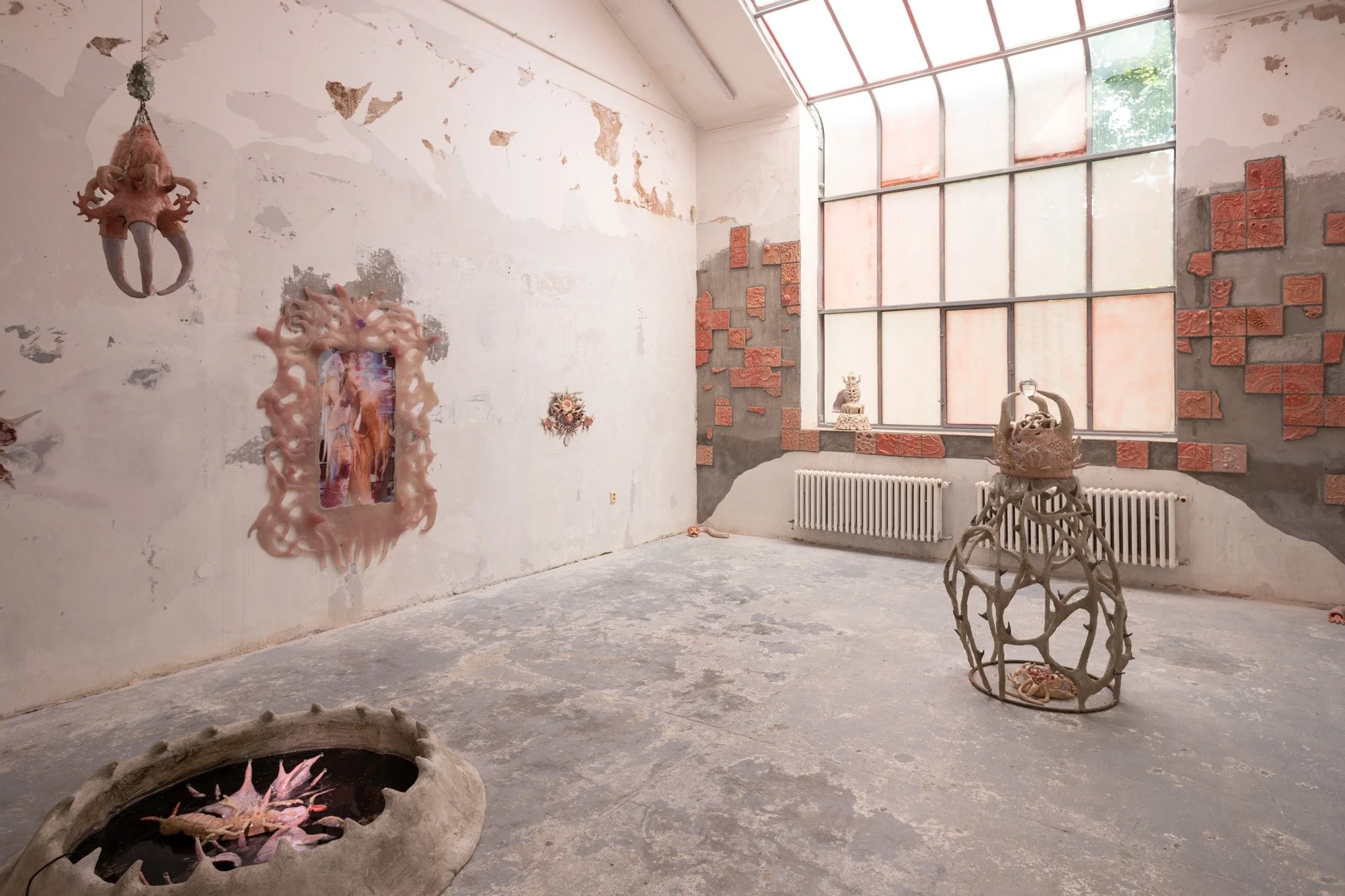
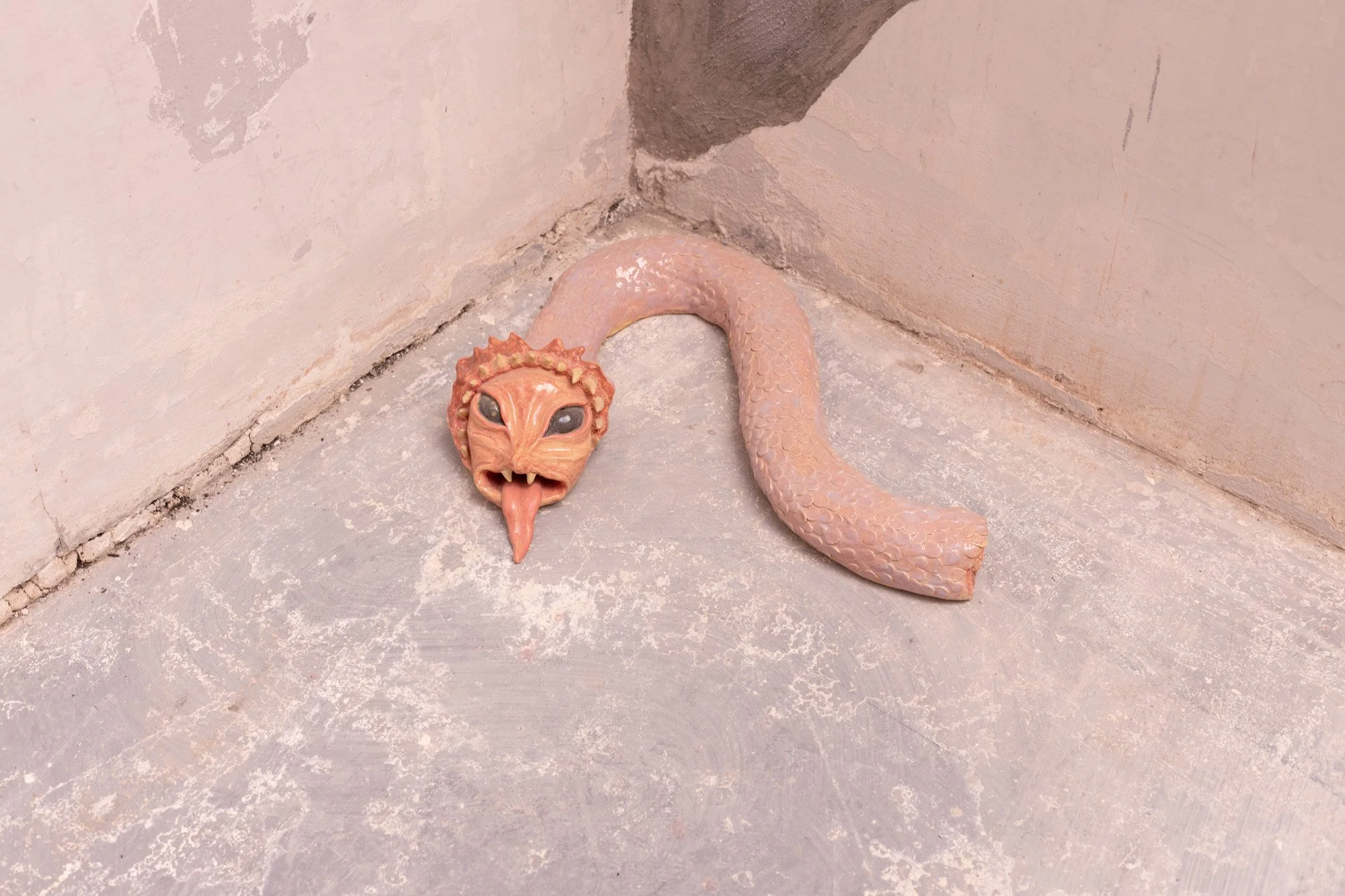
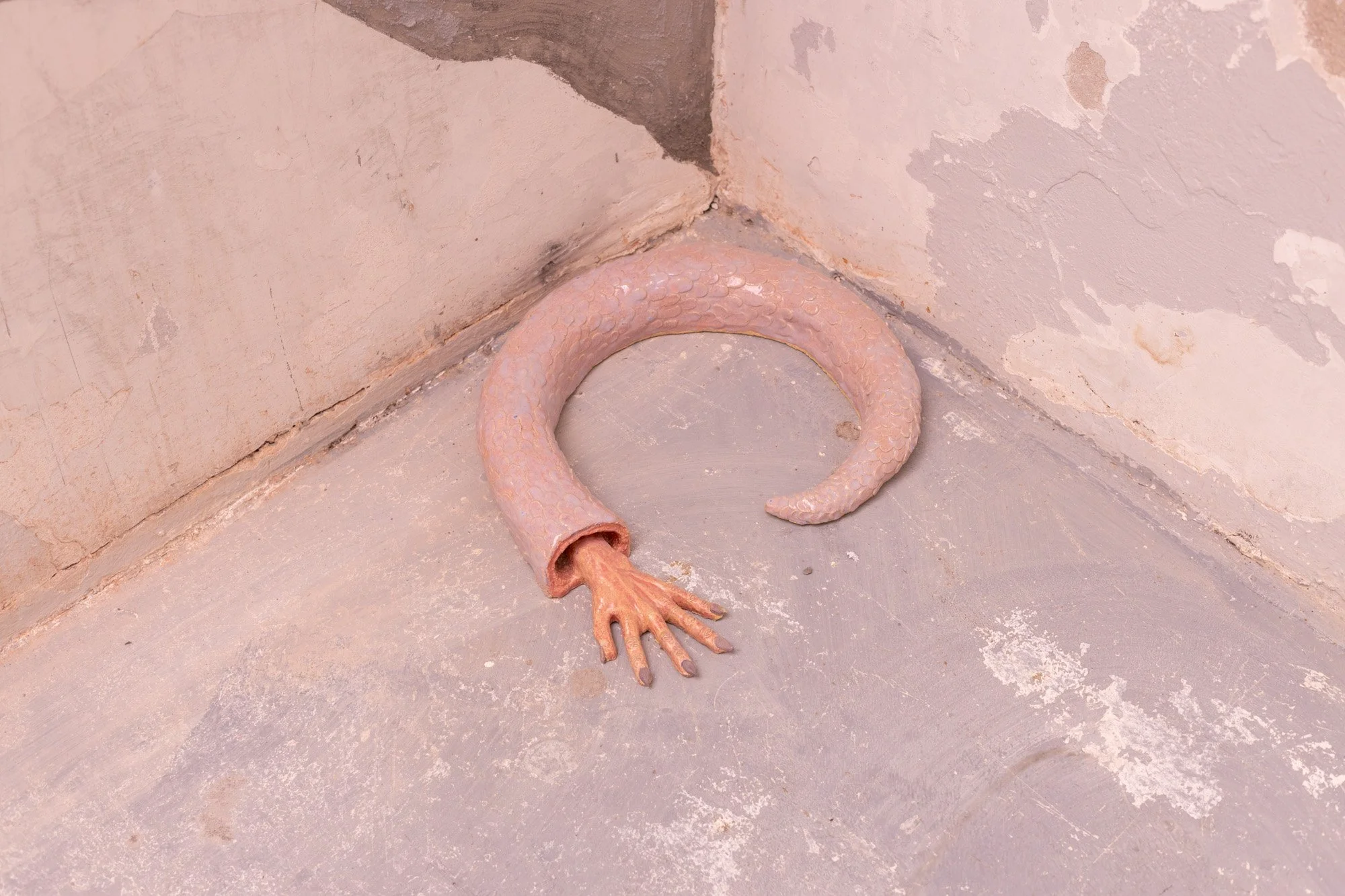
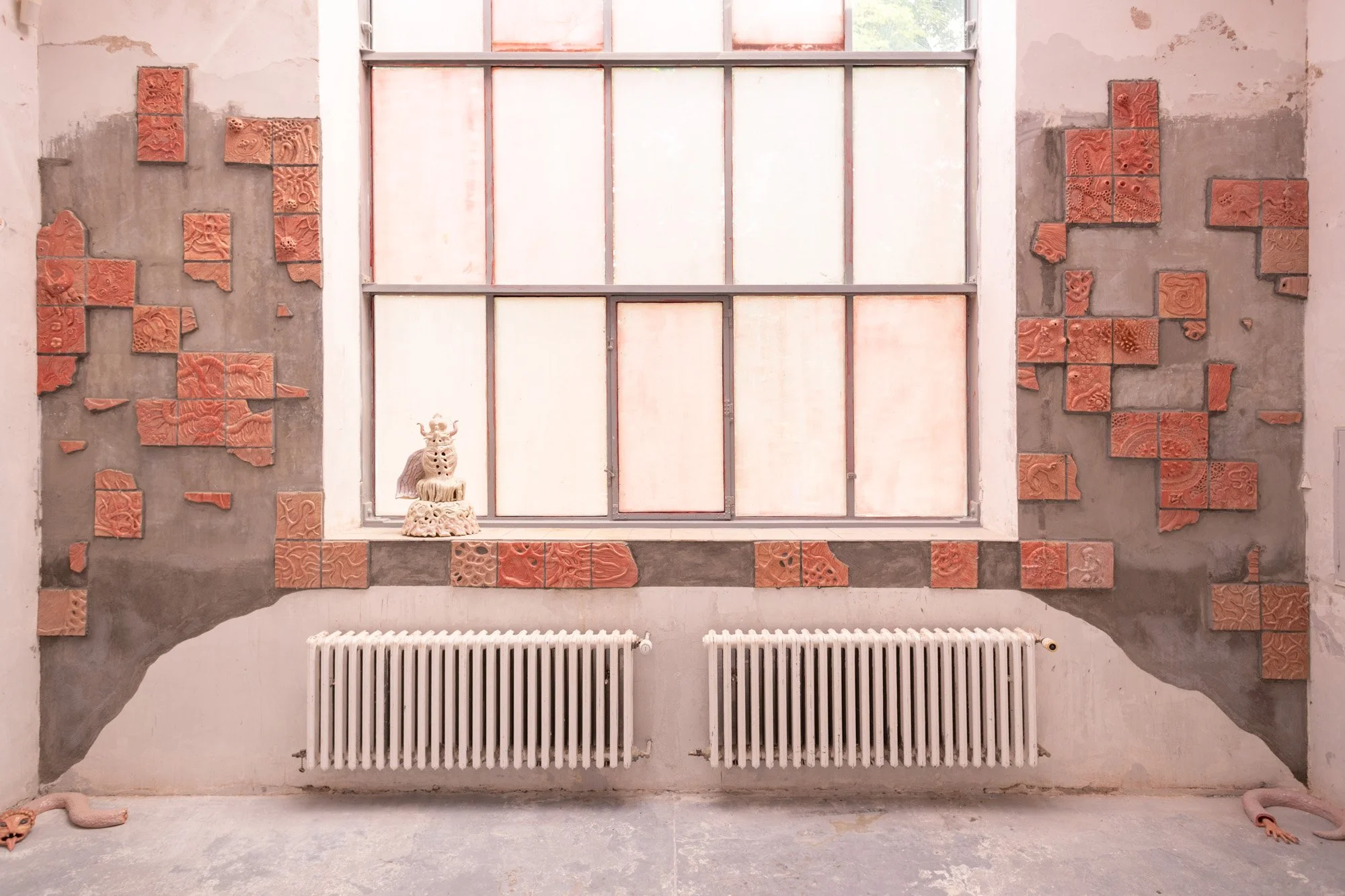
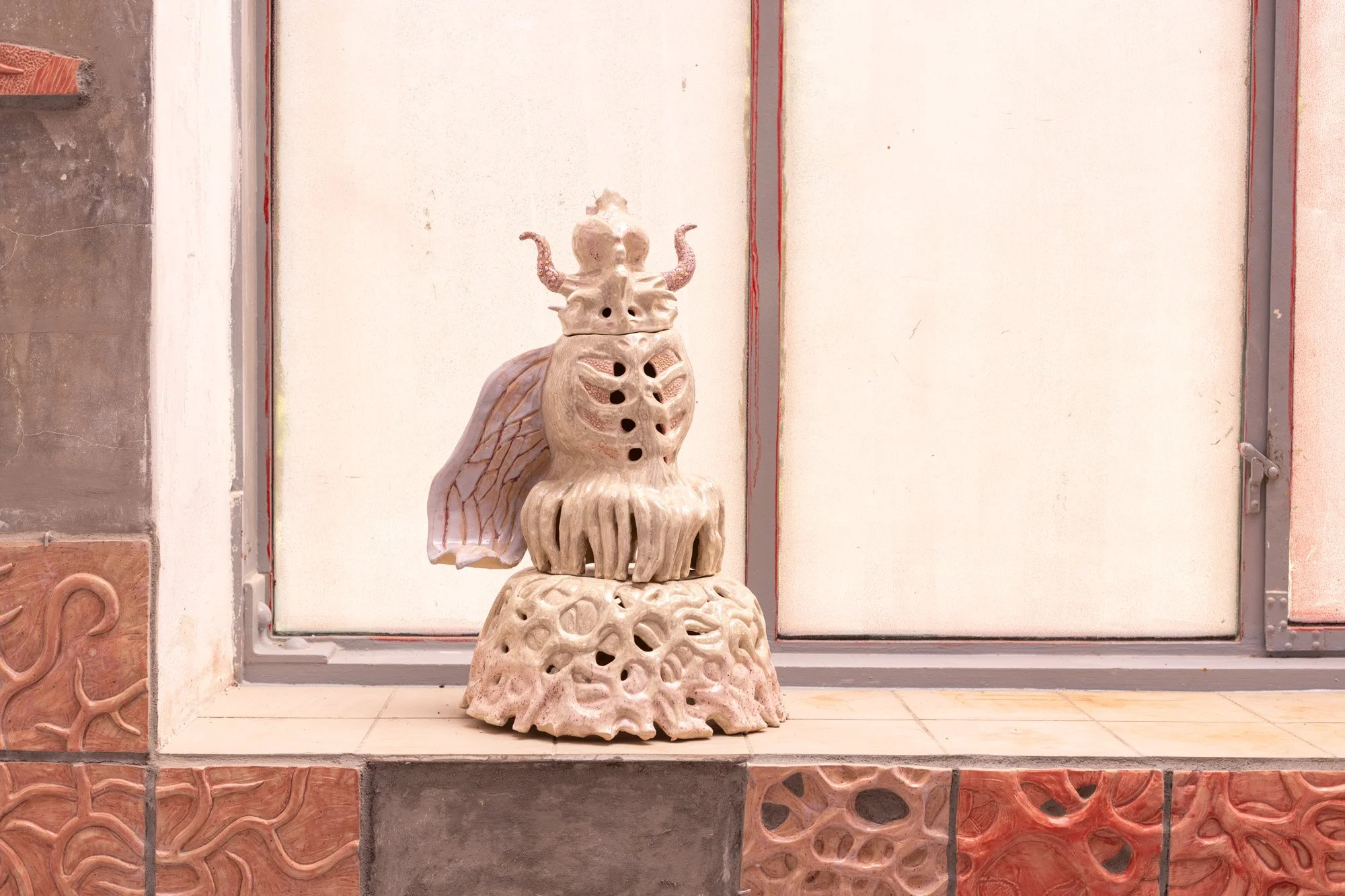
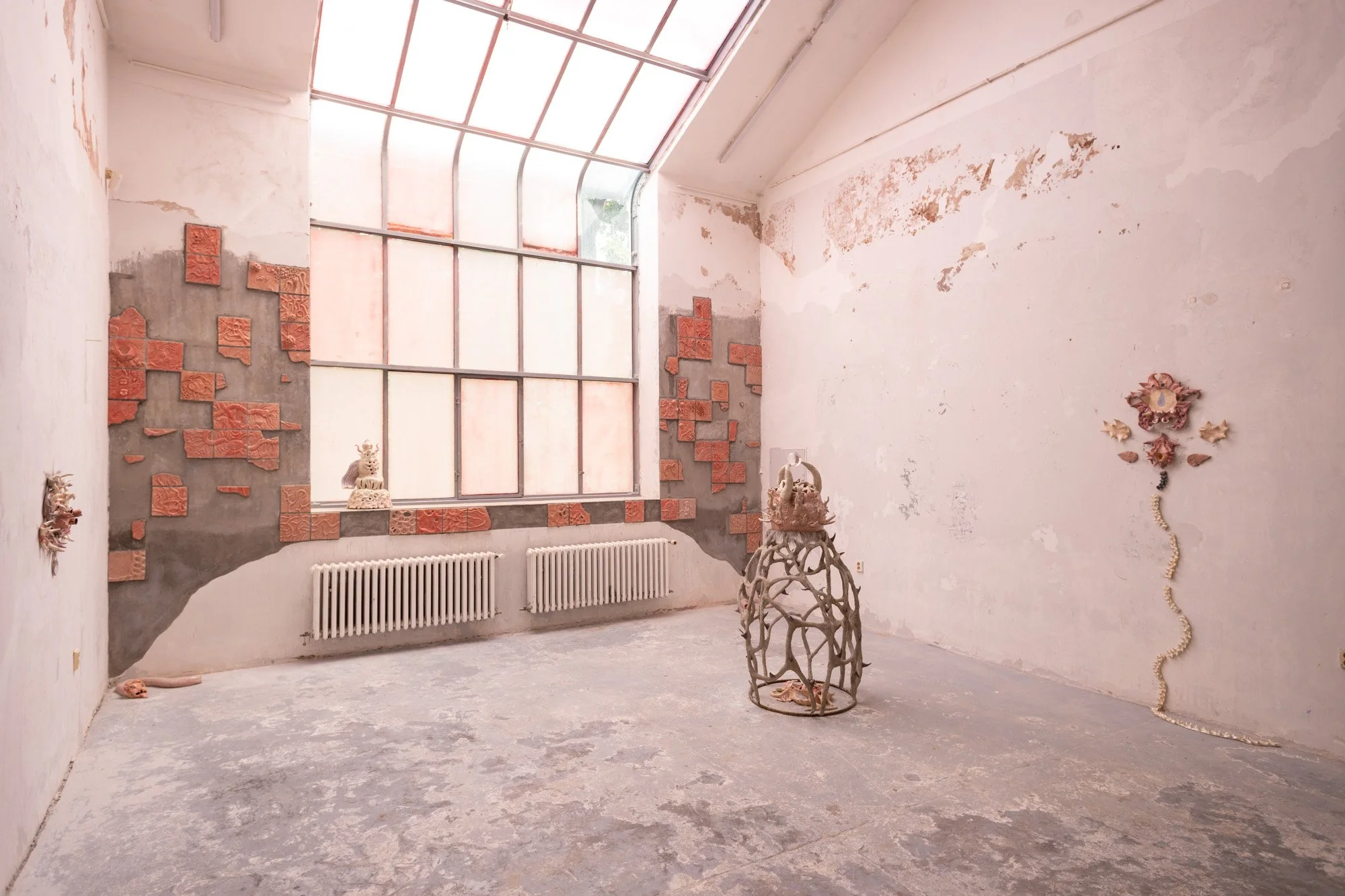
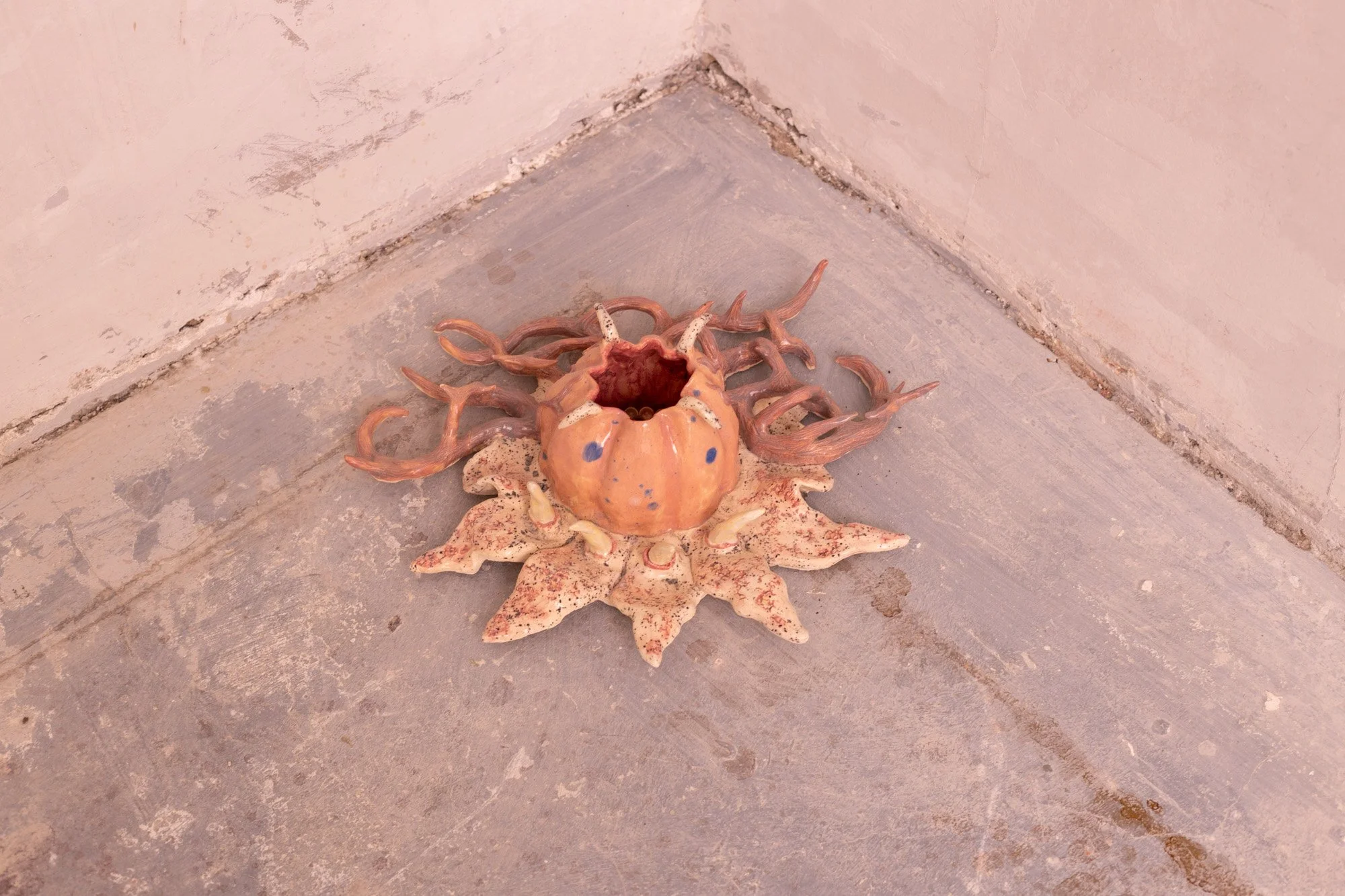
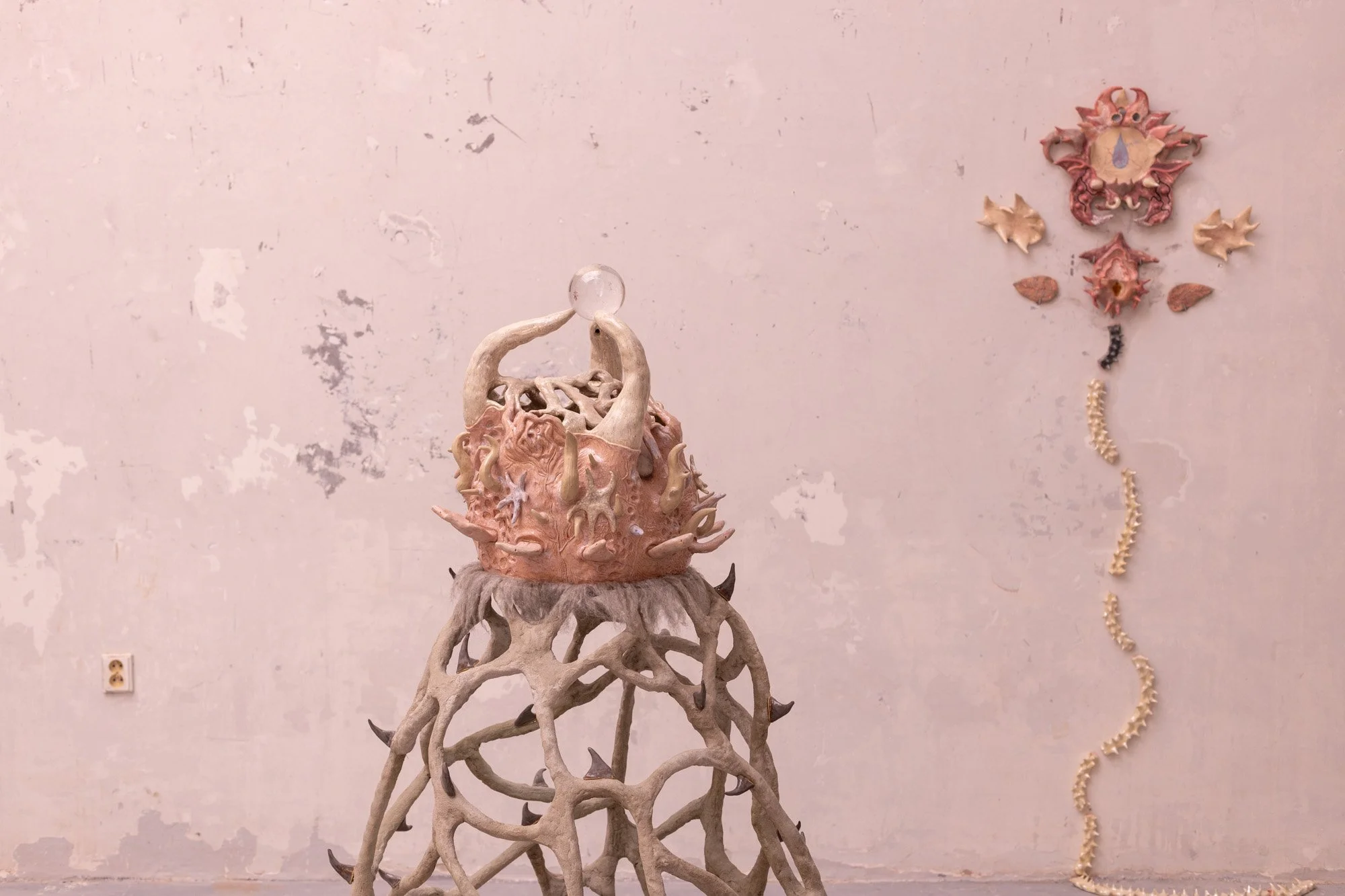
In Forgotten Fontanelle, Tina Hrevušová turns a room into something between an abandoned clinic and the inside of a body. Warped pink ceramic tiles with fleshy relief cover the walls, a concrete fountain sits at the centre, and a sculpture lifts a glass sphere holding an amoeba, a parasite that lives in warm, still water. A lenticular relief replaces the mirror with a shifting, broken image of the body. During a performance, the amoeba becomes a creature made from silicone casts of her friends’ faces. The title refers to the fontanelle, the soft spot on a newborn’s skull that has not yet closed.
In the podcast, Tina talks about moving from Dominik Lang’s studio at UMPRUM to sculpture at AVU, and why glass and ceramics keep pulling her back. She tells the childhood story behind the fountain: she dropped a butterfly into a pool, then rescued it, hoping it would stay with her. We talk about parasites and symbiosis, what it takes to get friends to let you cover their faces in plaster, and why wearing one of her silicone costumes makes you feel you have a fourth arm. Expect a strange, gentle conversation about pink, bodies and the amoeba she kept reading about while stuck in Thailand.
Emma Štěpánová
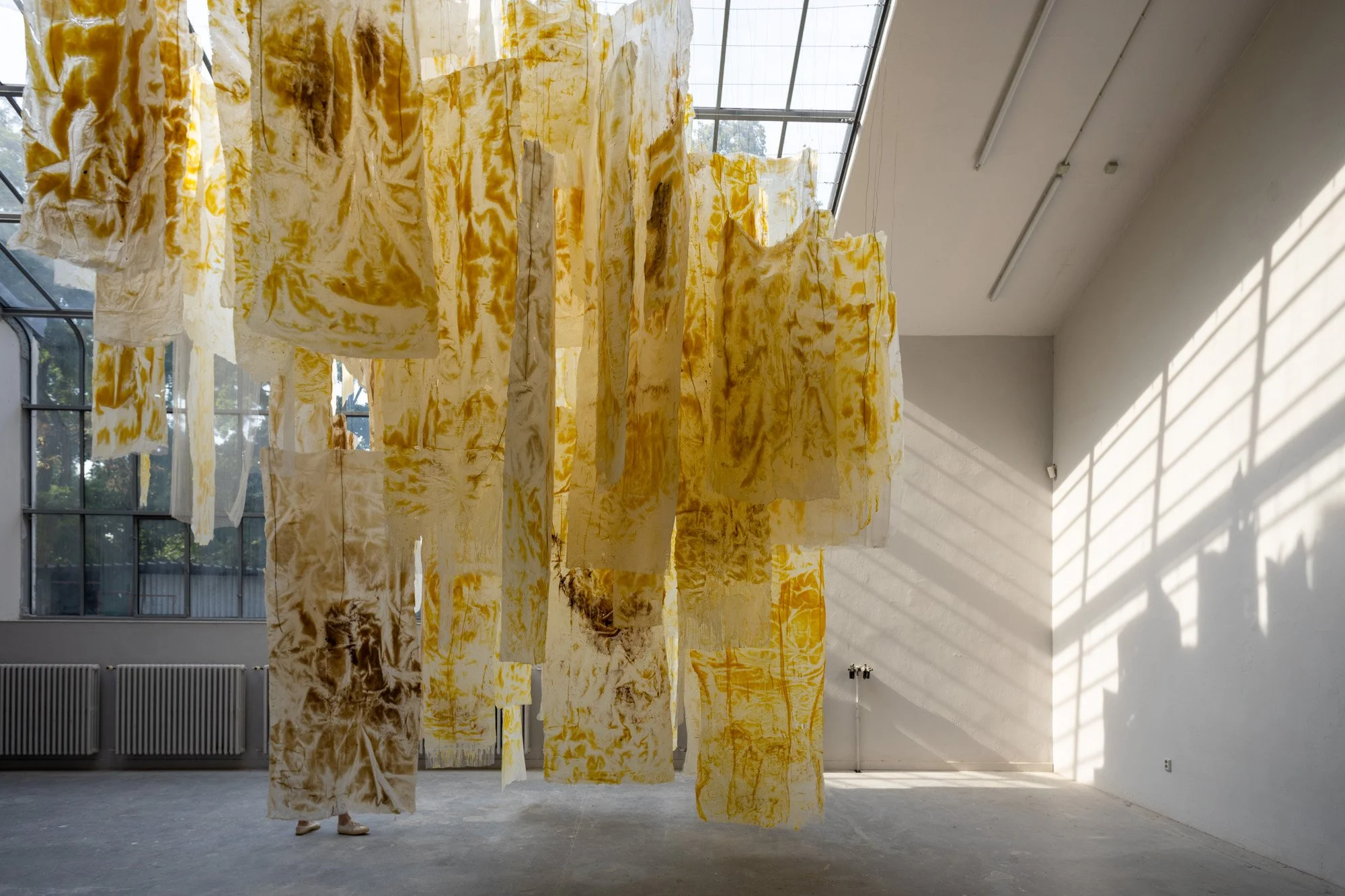
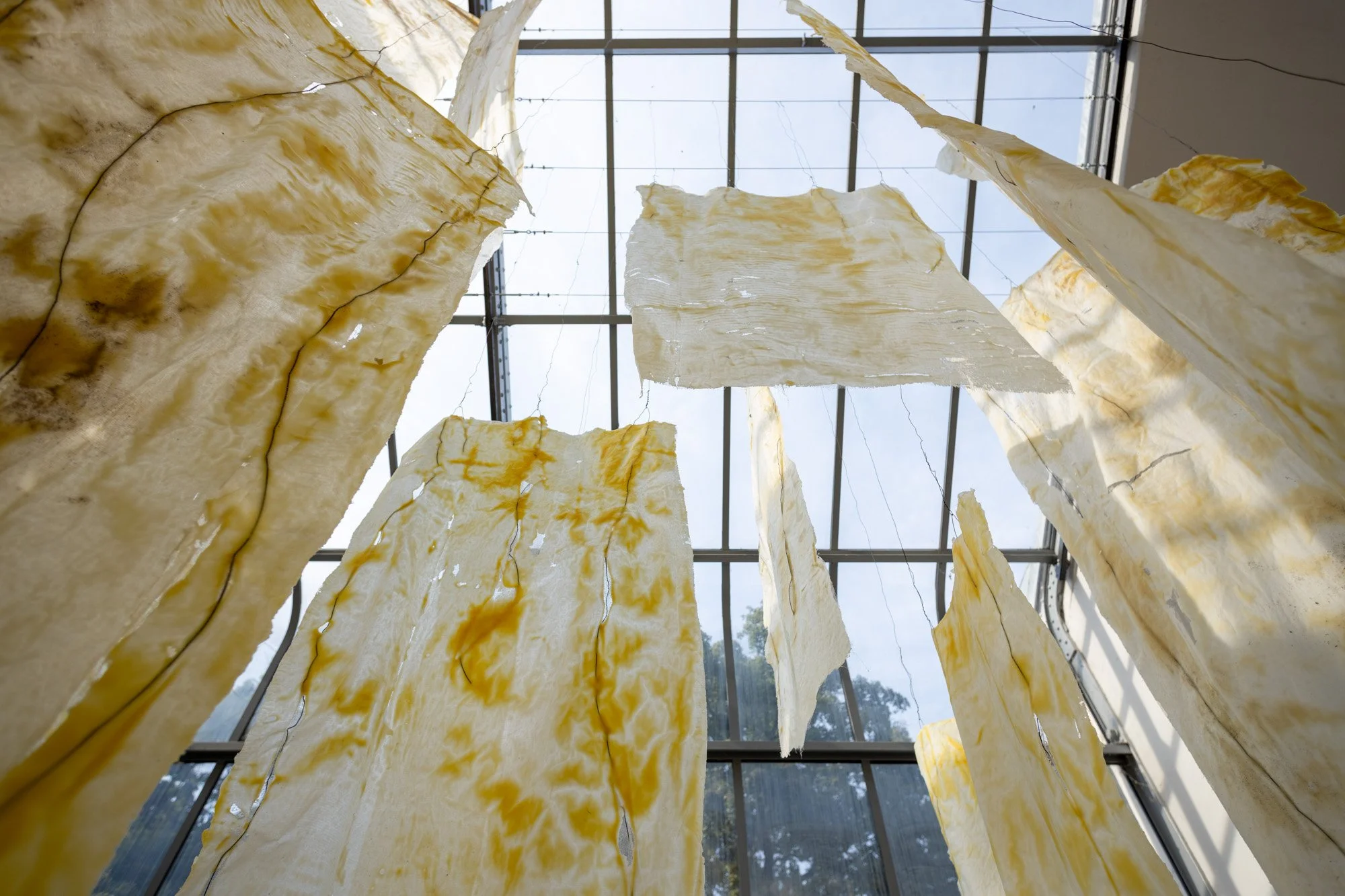
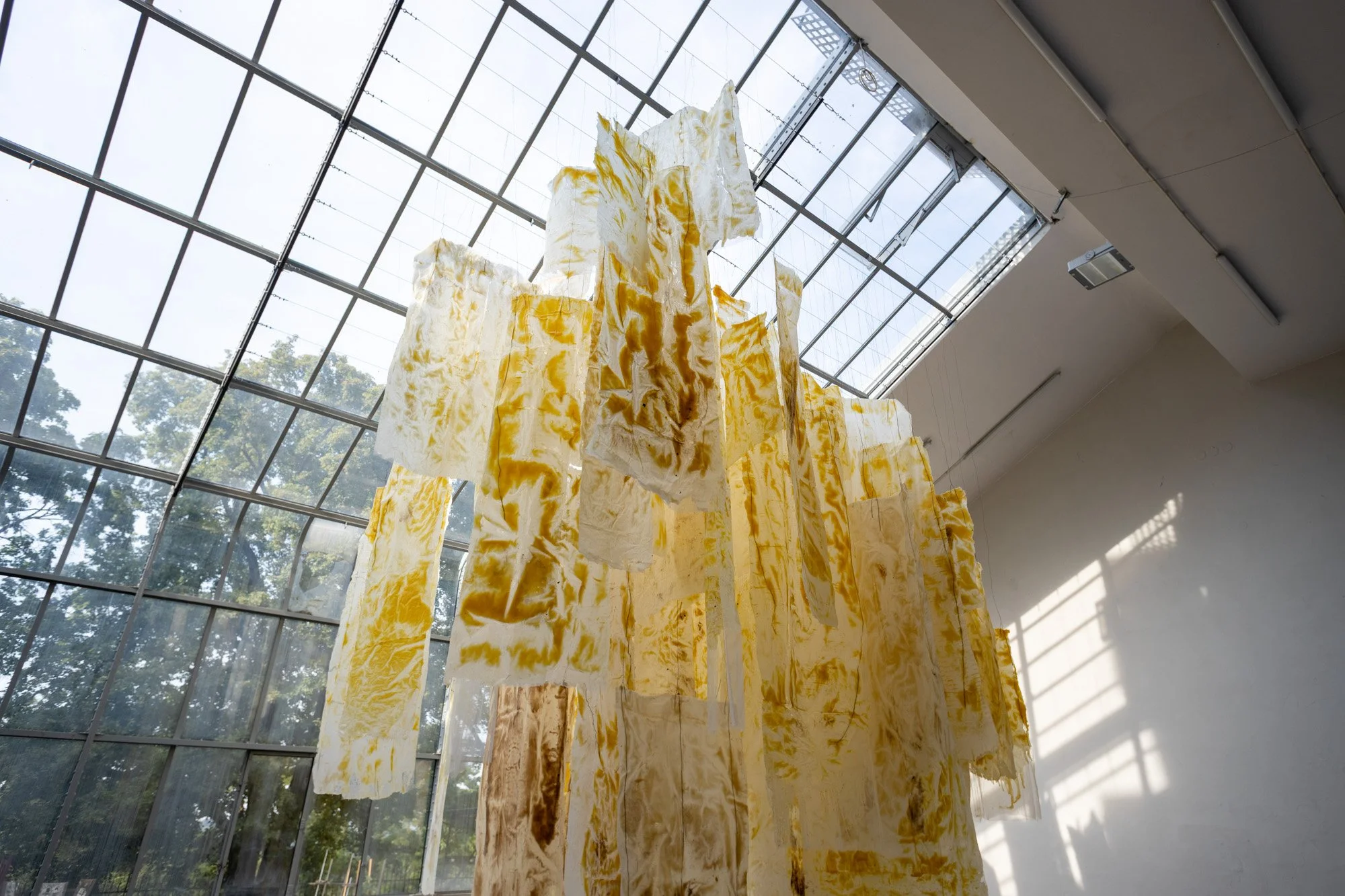
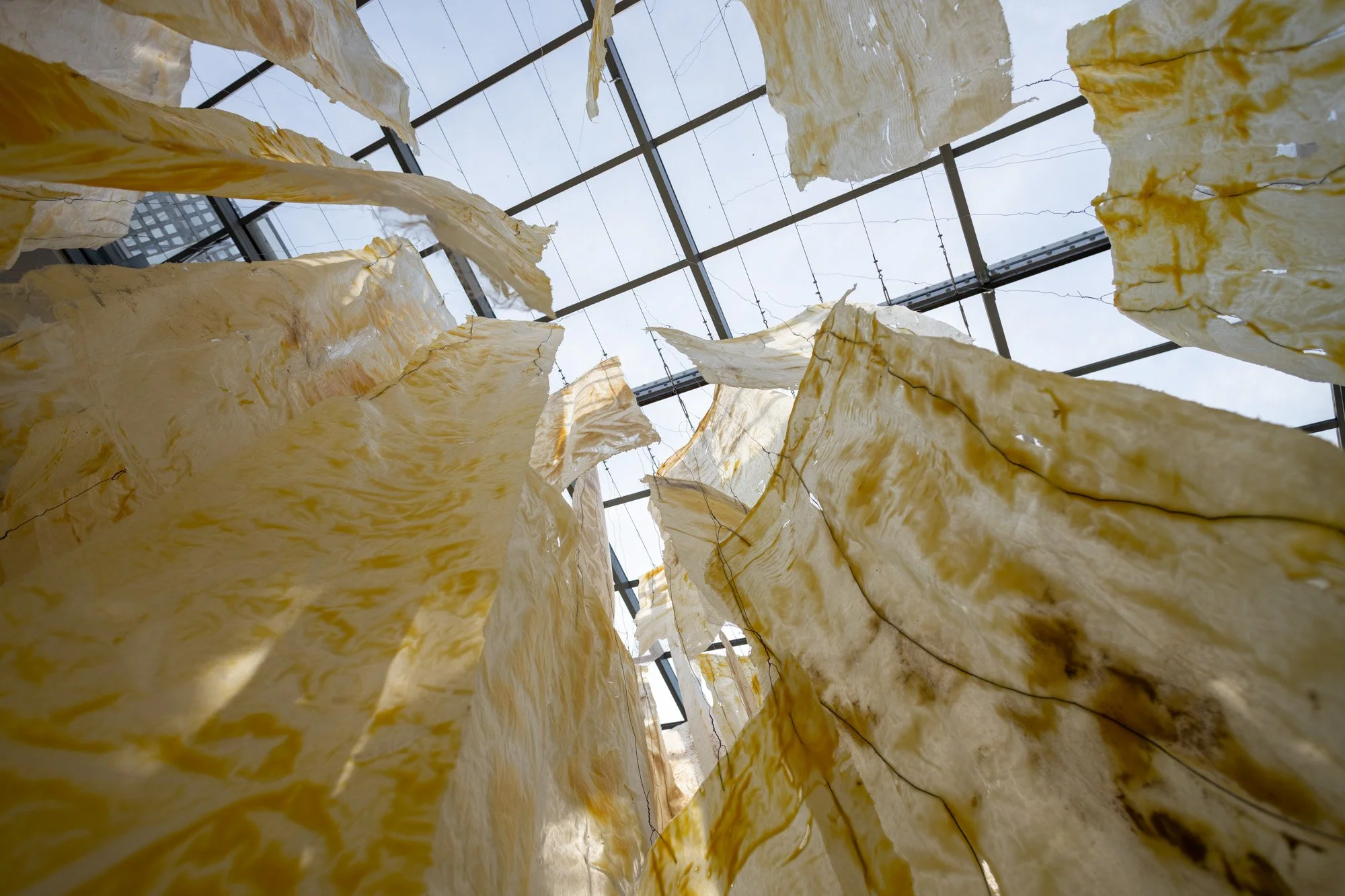
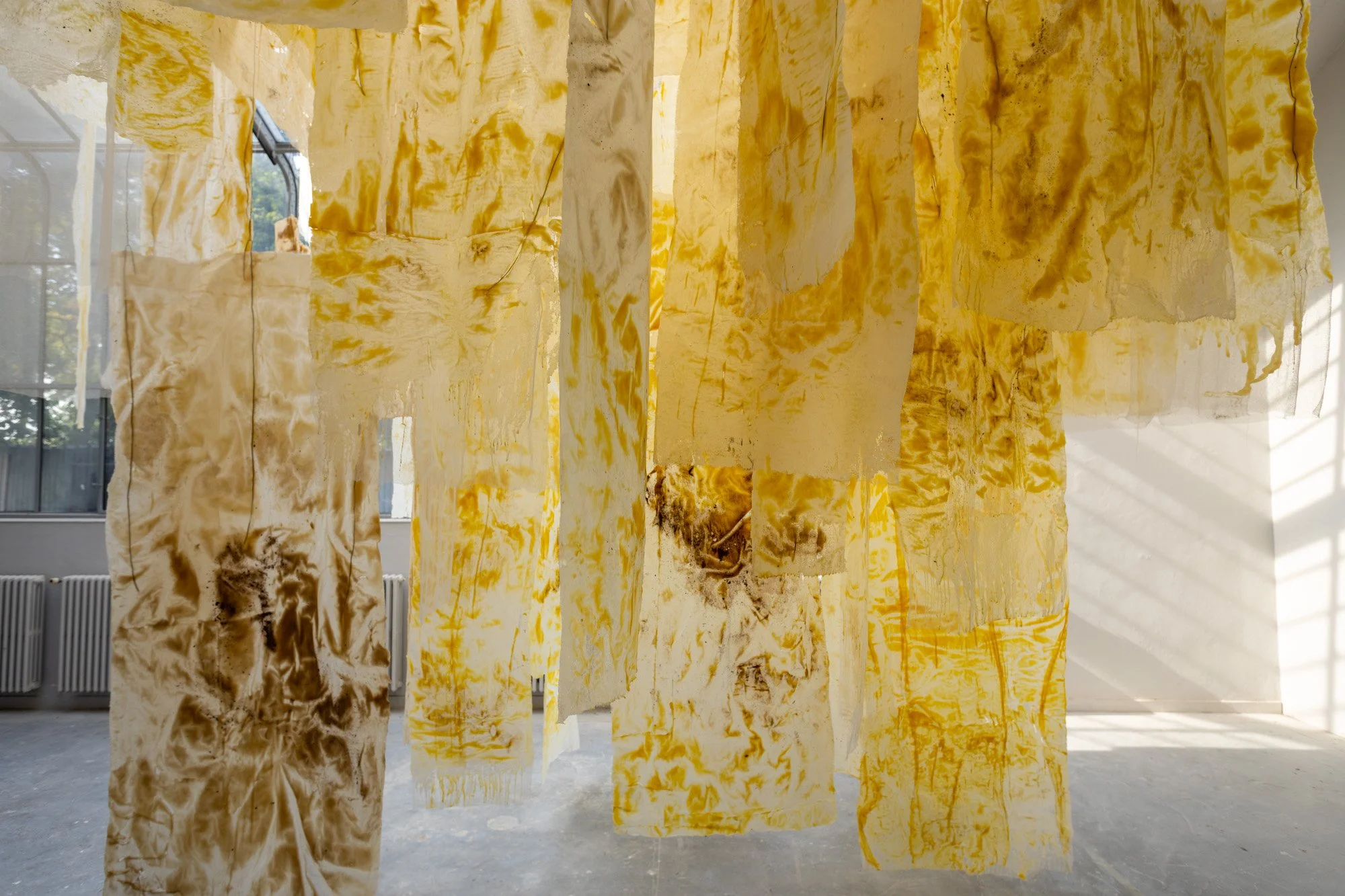
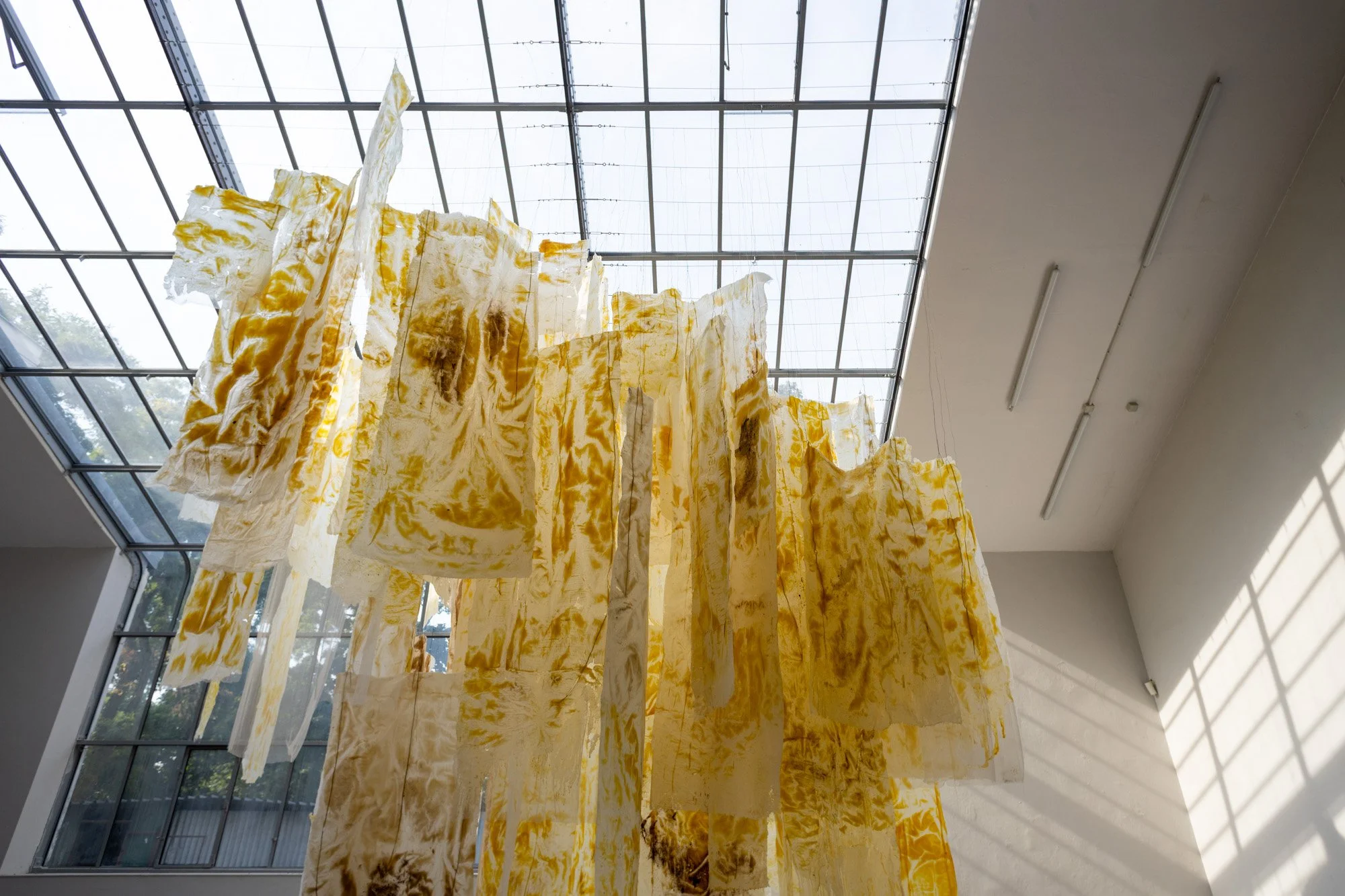
In REM HIVE – REM SCAPE, Emma Štěpánová builds a room out of dreams. Eighty-one thin sheets of beeswax poured over gauze hang at different heights, and each one stands for a single dream. From a distance they look like one dense mass. Up close they break into layers, holes and patches of light, and they get tighter as you walk towards the centre. Beeswax and gauze are both used to heal wounds, and the whole space smells of wax. Nothing is shown literally: the work is a map of the subconscious that every visitor fills with their own images.
In the podcast, Emma explains how she got from a ceramics school in Uherské Hradiště, through sculpture in Brno, to AVU, and how a stay in Dresden turned wax into her main material. She talks about leaving dead bees and other residue in the wax instead of filtering them out, and about installing the work by intuition under a seven-and-a-half-metre ceiling. We also get to her next ideas: smaller, diary-like sheets, hanging the plates in a forest for wild bees, and lying under one of them as a performance. Expect a calm conversation about material, care and what a dream might look like as an object.
Dominika Vyskočilová
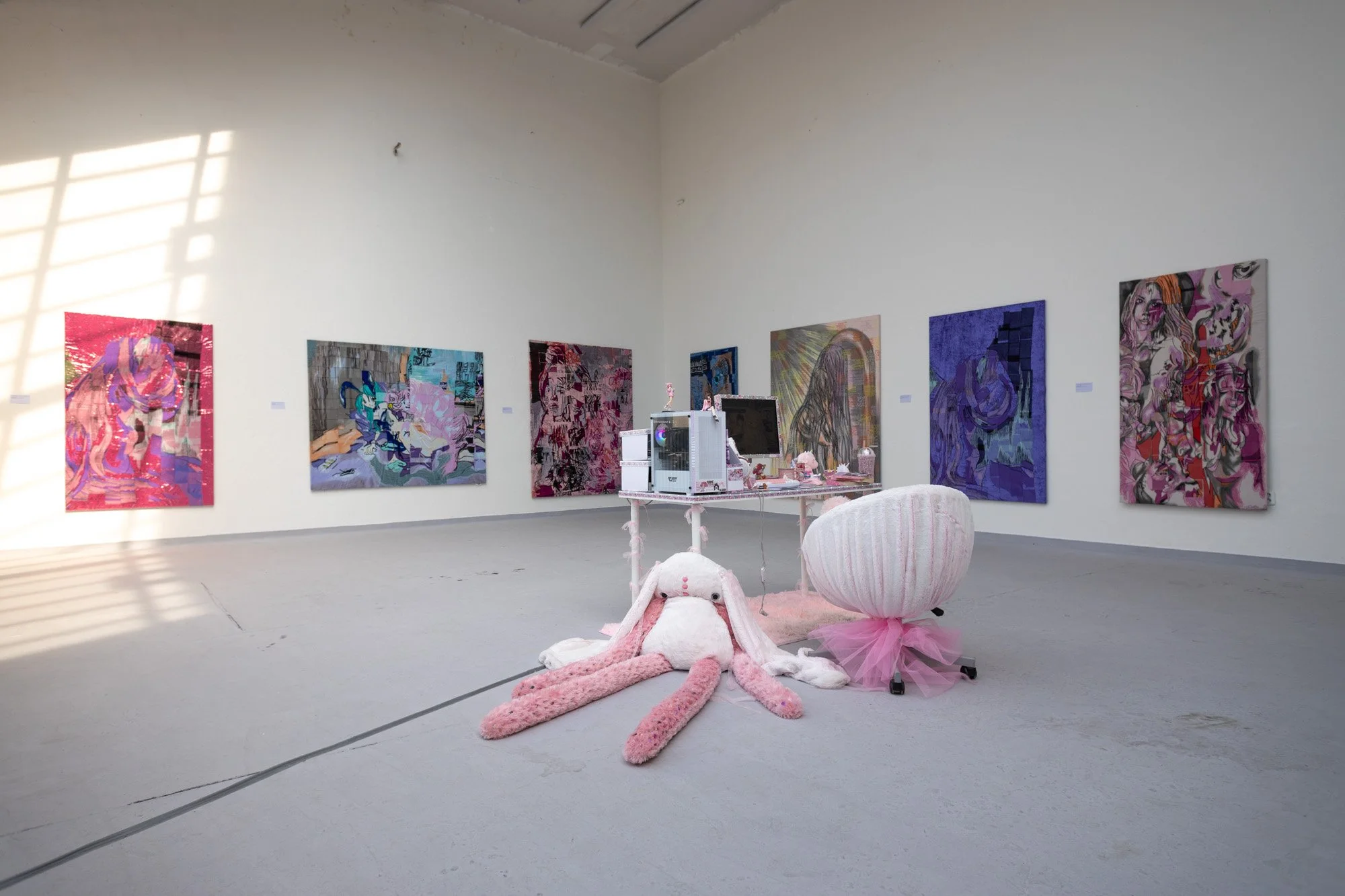
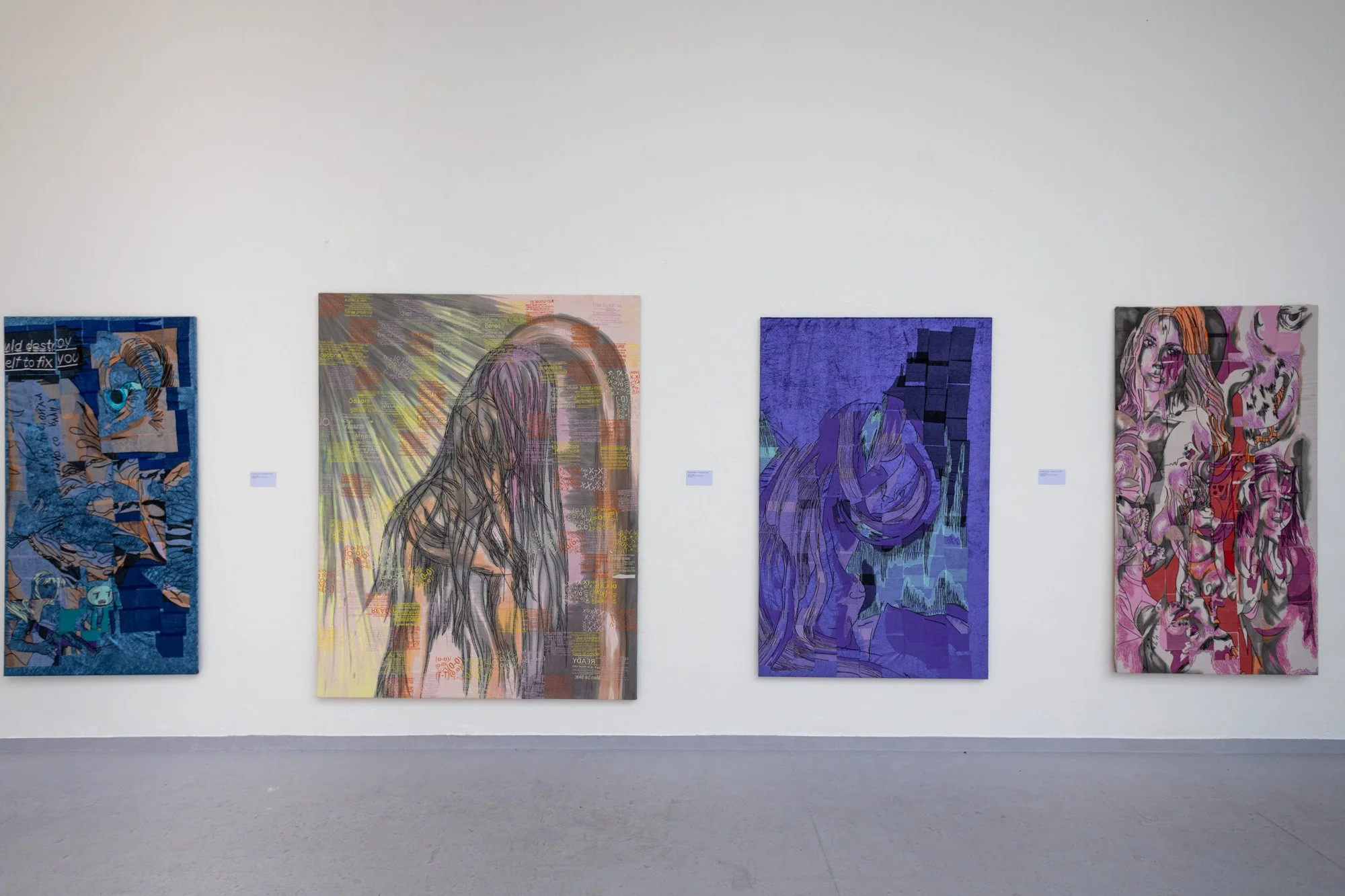
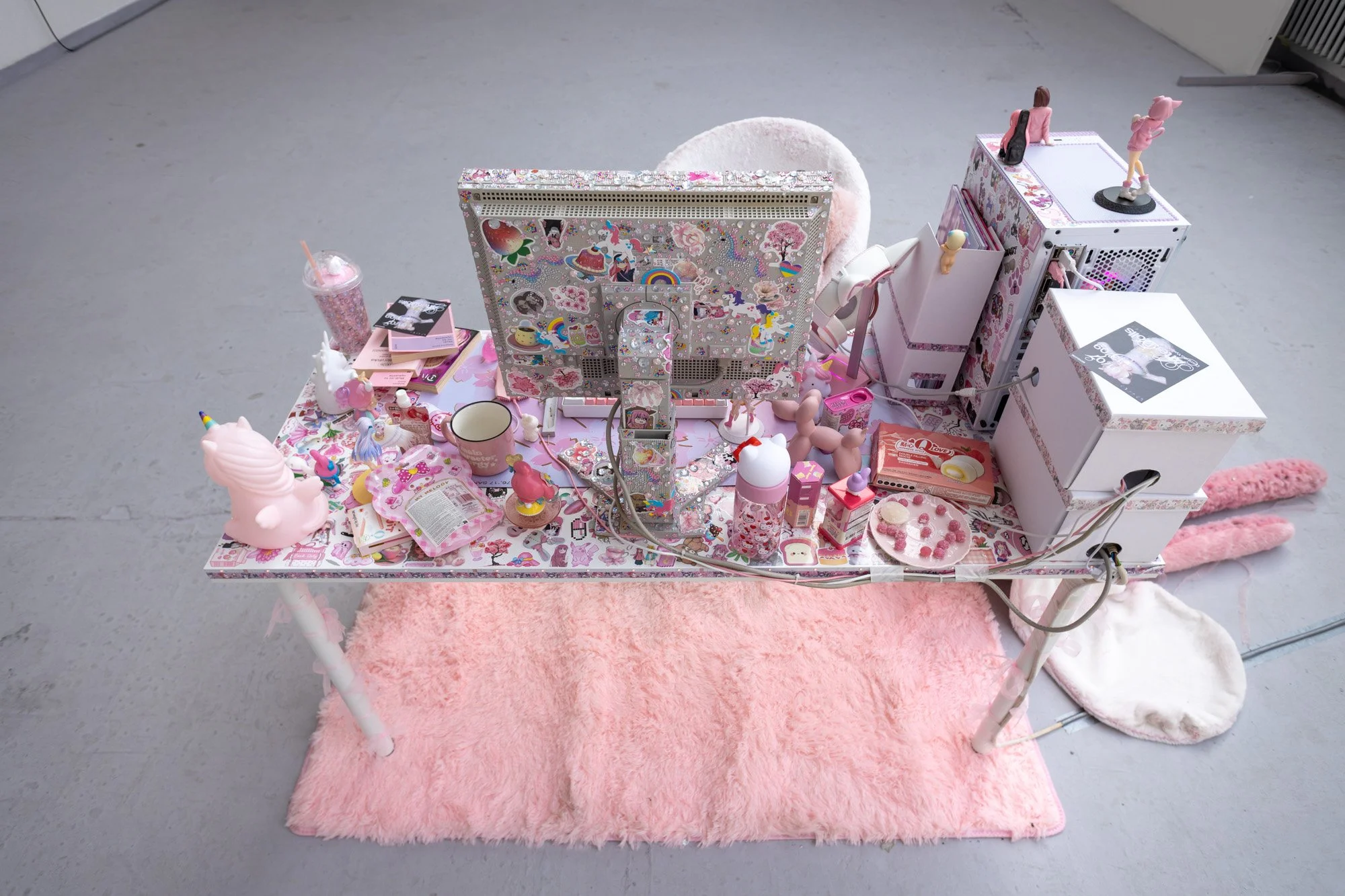
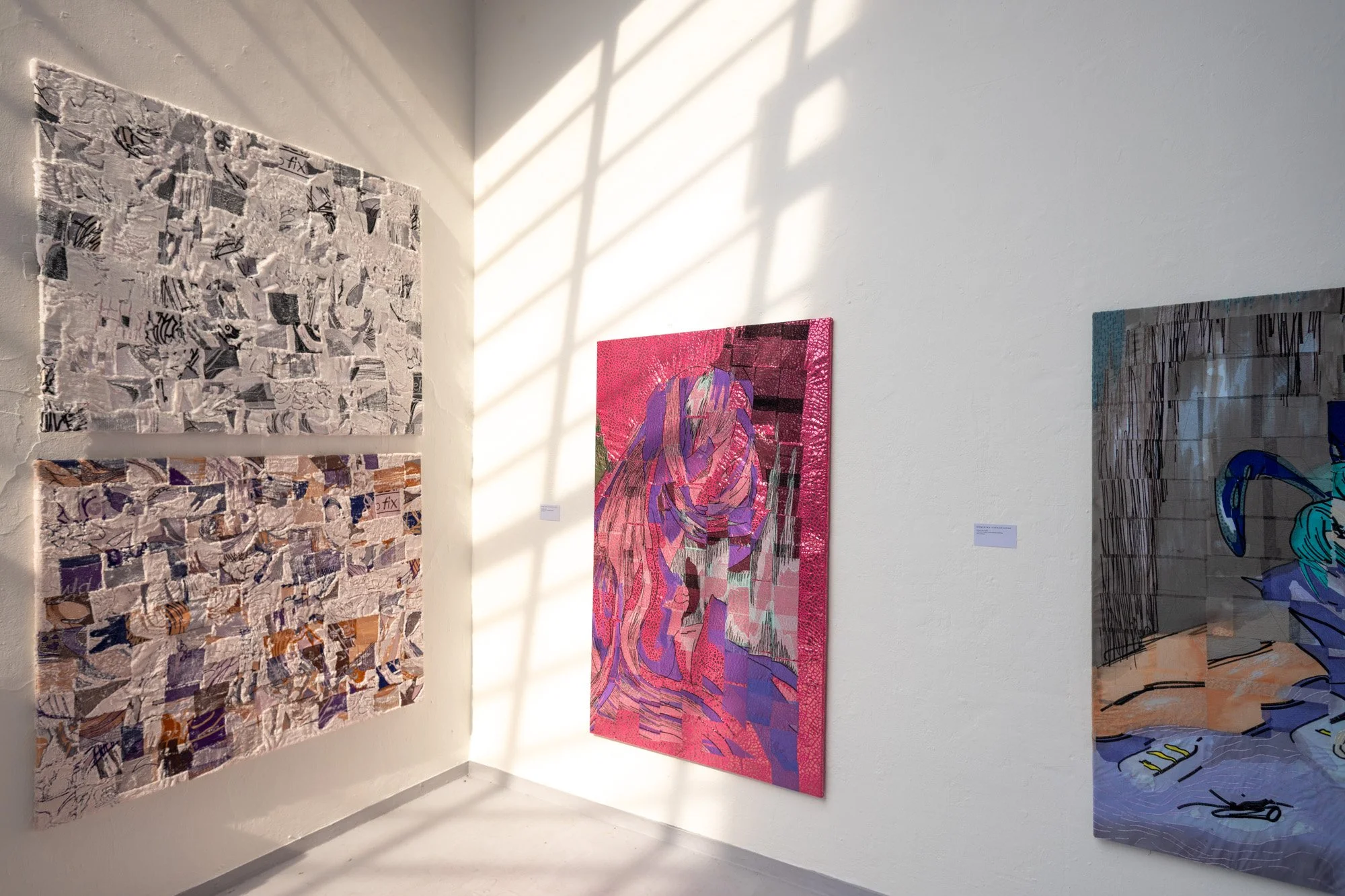
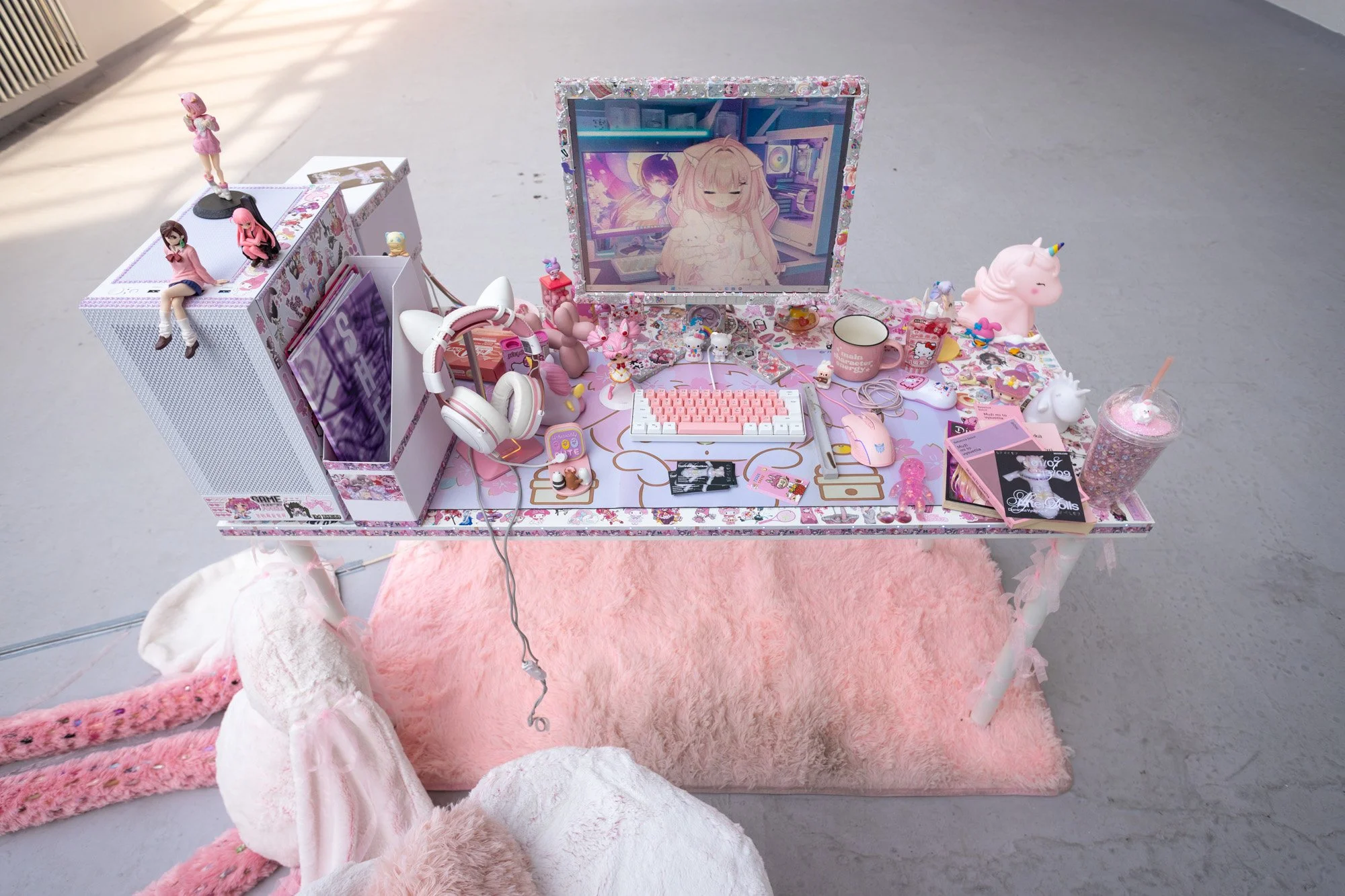
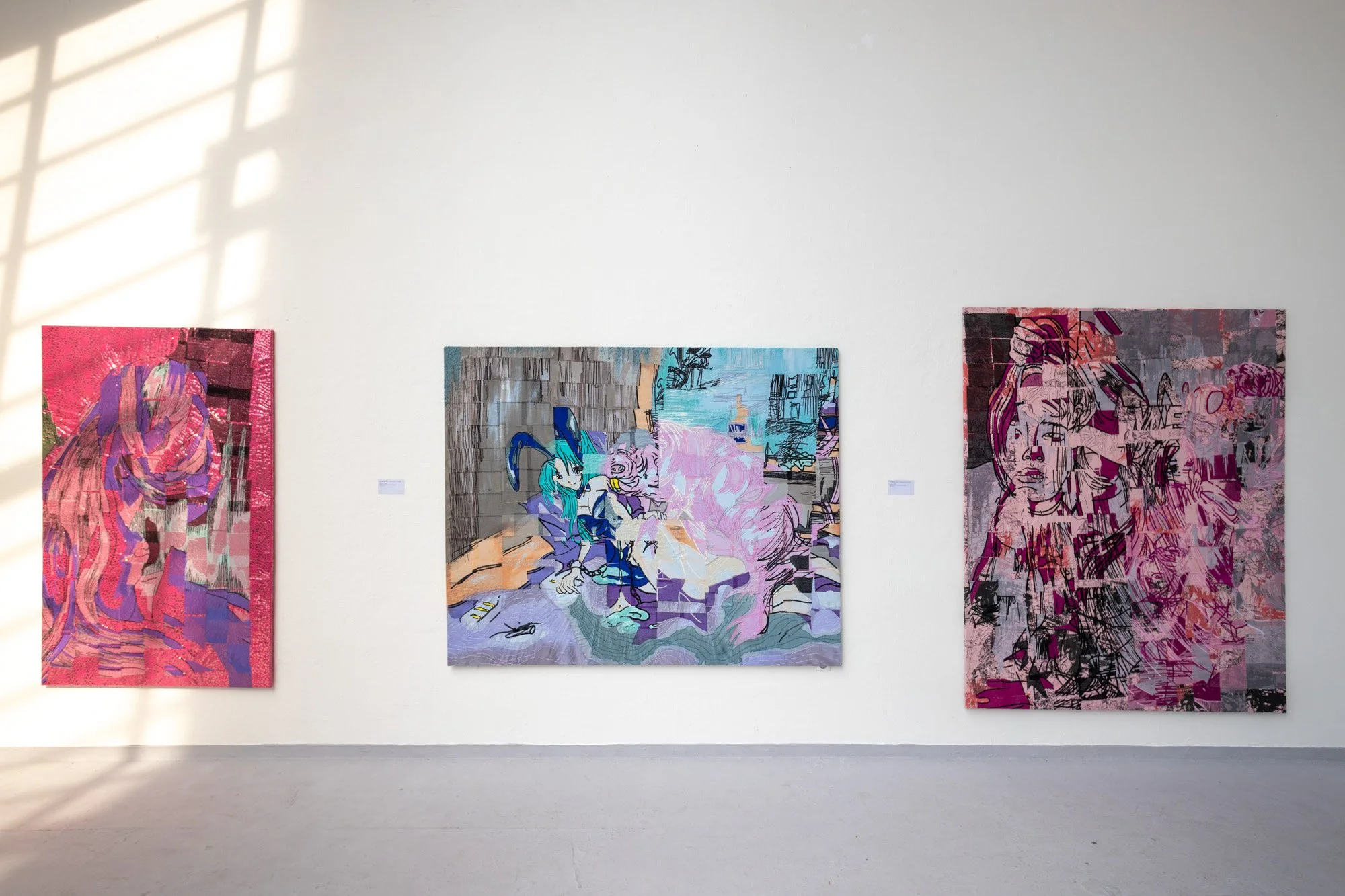
In Soft Resistance, Dominika Vyskočilová takes the pink, cute, girly look that people tend to dismiss and uses it to talk about how girls are shaped before they get to decide for themselves. The installation includes nine large paintings made with an embroidery machine, sewn in around two hundred small pieces each, sometimes combined with paint, hand stitching or screen print. Small shifts and glitches between the pieces are left visible on purpose. Next to them stands a corner of a teenage girl’s bedroom with a gaming setup, plush toys and a screen where a VTuber avatar speaks. Embroidery, long treated as small domestic work, becomes huge here.
In the podcast, Dominika tells how a freezing Erasmus in Riga, a shop full of wedding fabrics and a box of glittering thread started her embroidery, and how she later taught herself to program a machine that has to be watched like a factory worker would watch it. She talks about growing up in Czech cosplay and anime communities and about the paintings she cares about most. Expect a fast, funny and very honest conversation, including practical tips on websites, business cards and not giving discounts.
Jakub Hons
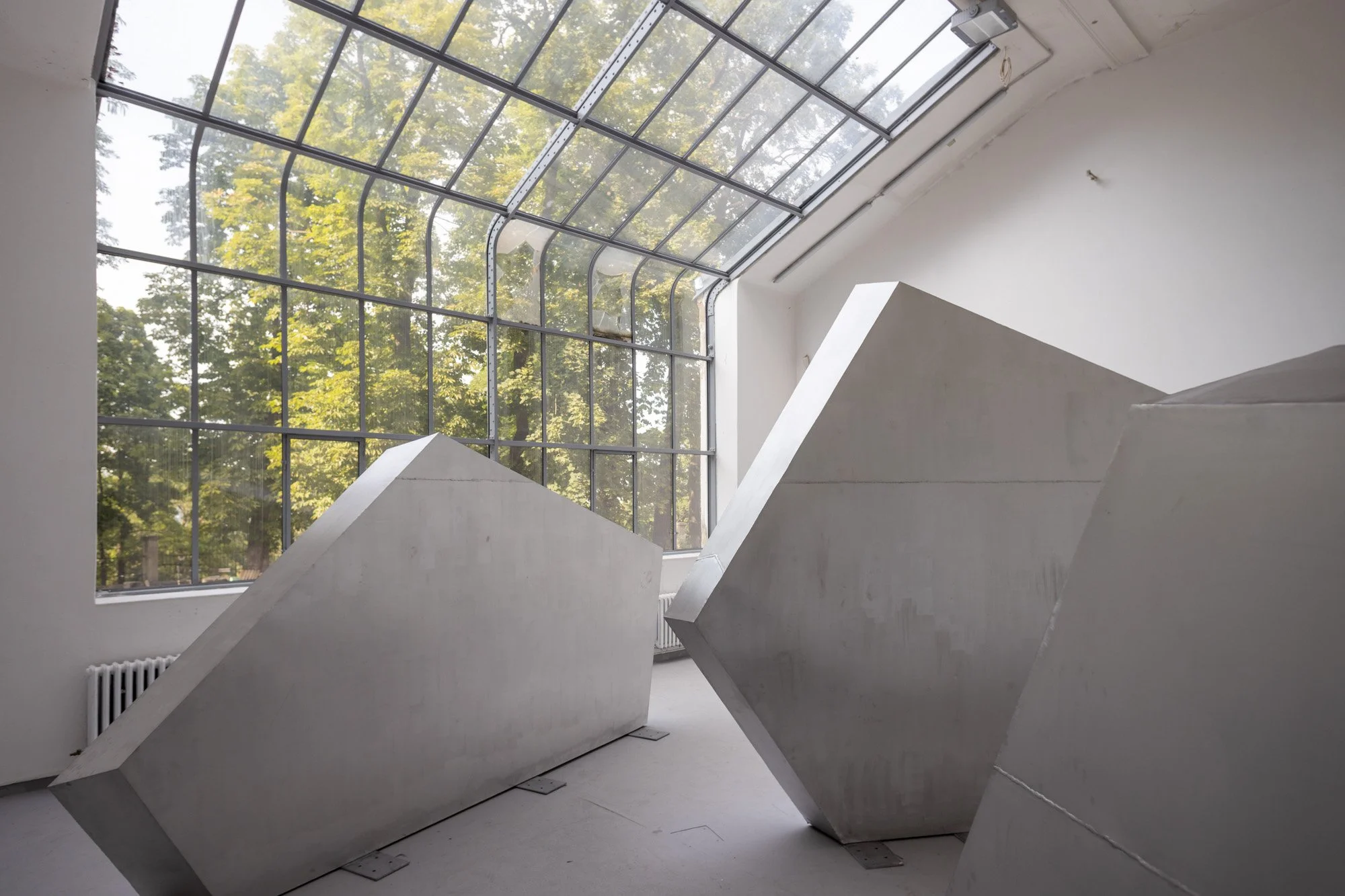
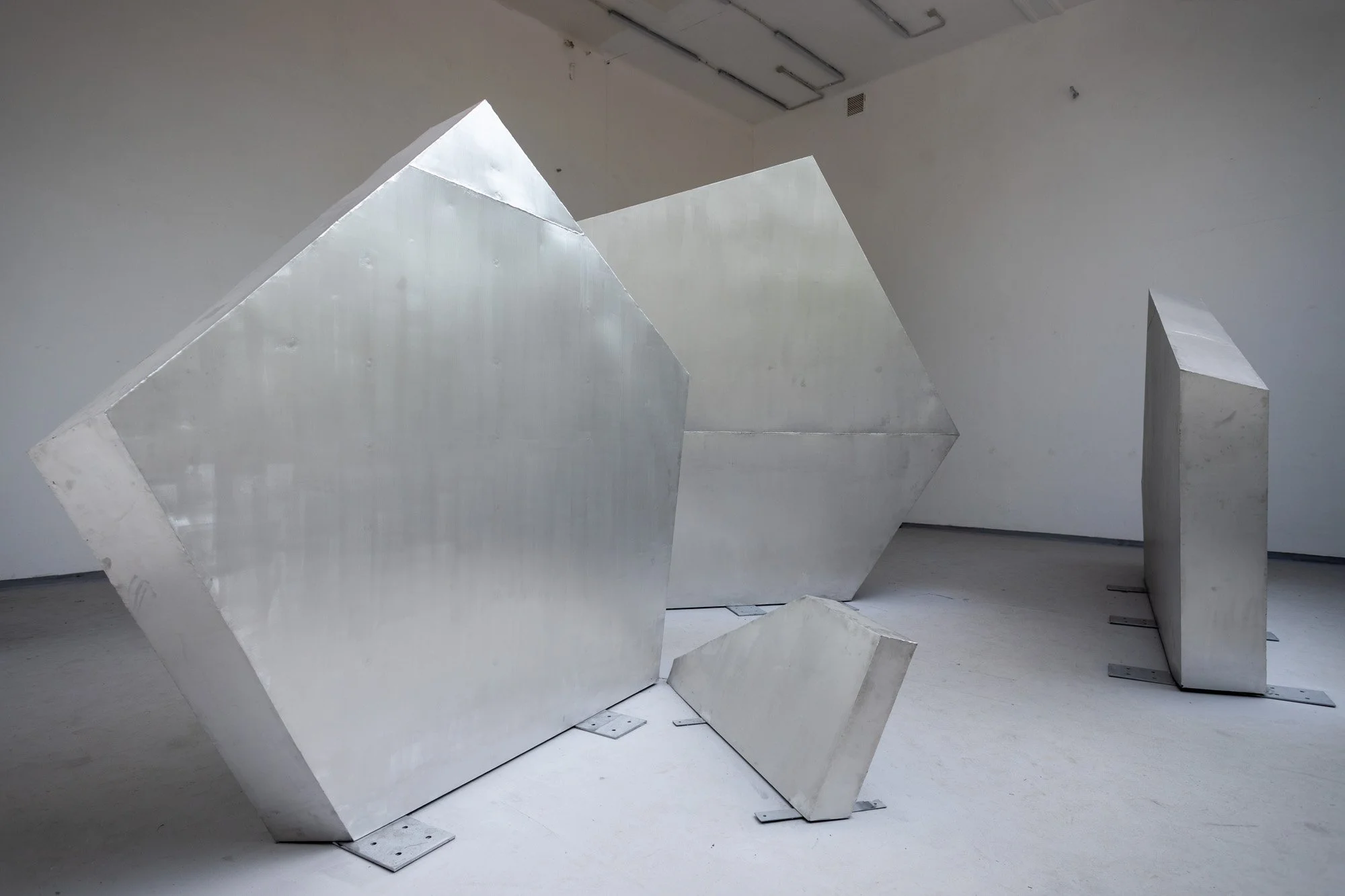
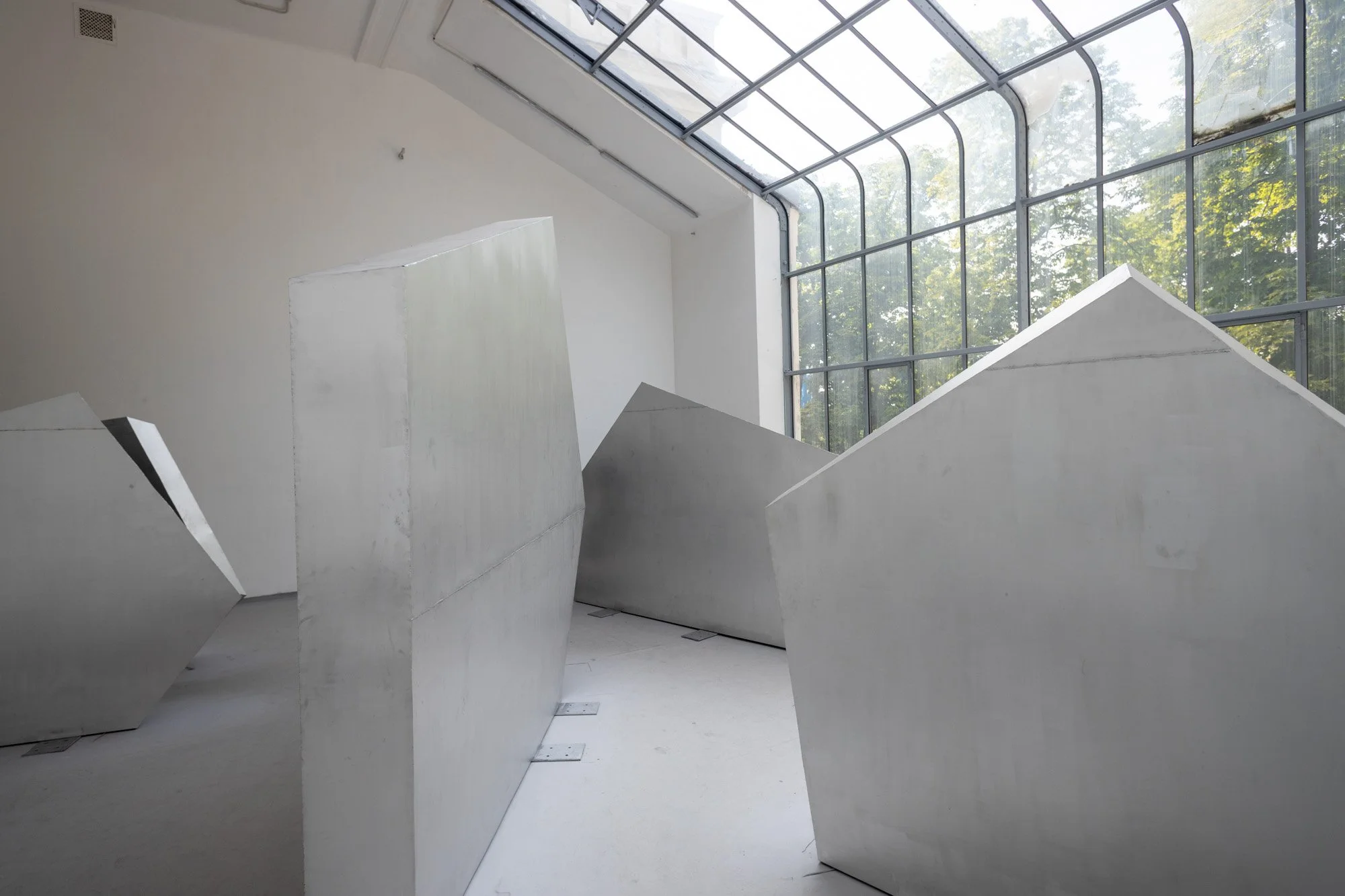
In Cínovec Monument, Jakub Hons scales tiny flakes of zinnwaldite, the mineral from which lithium is mined in the Ore Mountains, up into eight large blocks of semi-matt aluminium. The work is meant for the hill of Cínovec on the Czech-German border, where Europe hopes to open one of its largest lithium mines. Before going outdoors, it was shown squeezed into a small studio at AVU, with cold air, mist and a soundtrack recorded in old mining tunnels. It is not a heroic monument to look up to. You walk between the blocks and slow down, in a landscape shaped by centuries of mining.
In the podcast, Jakub explains how he moved from documentary film at FAMU, where he made a video essay on phosphate mining in Western Sahara, to sculpture at AVU. He describes what a new lithium mine could do to the hill and its residents: a tunnel wide enough for trucks, a cable car, falling groundwater, houses nobody wants to buy. He welded all the aluminium himself, for the first time, every day from February until the defence. We also talk about why lithium may not save the planet, how hard it is to fund an artwork when many grants come from mining interests, and his plans for a fountain in central Prague.
Enisa Skoko
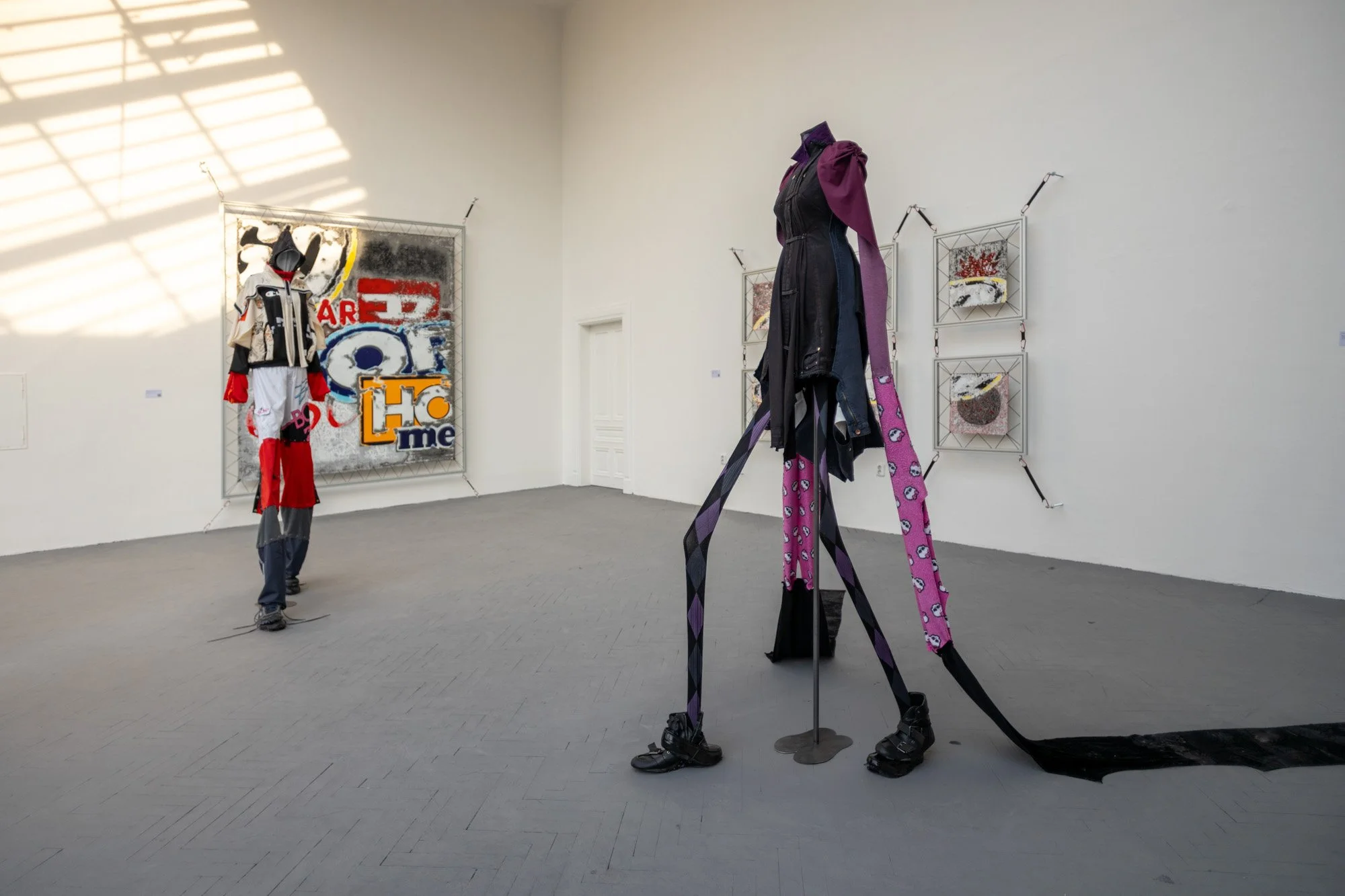
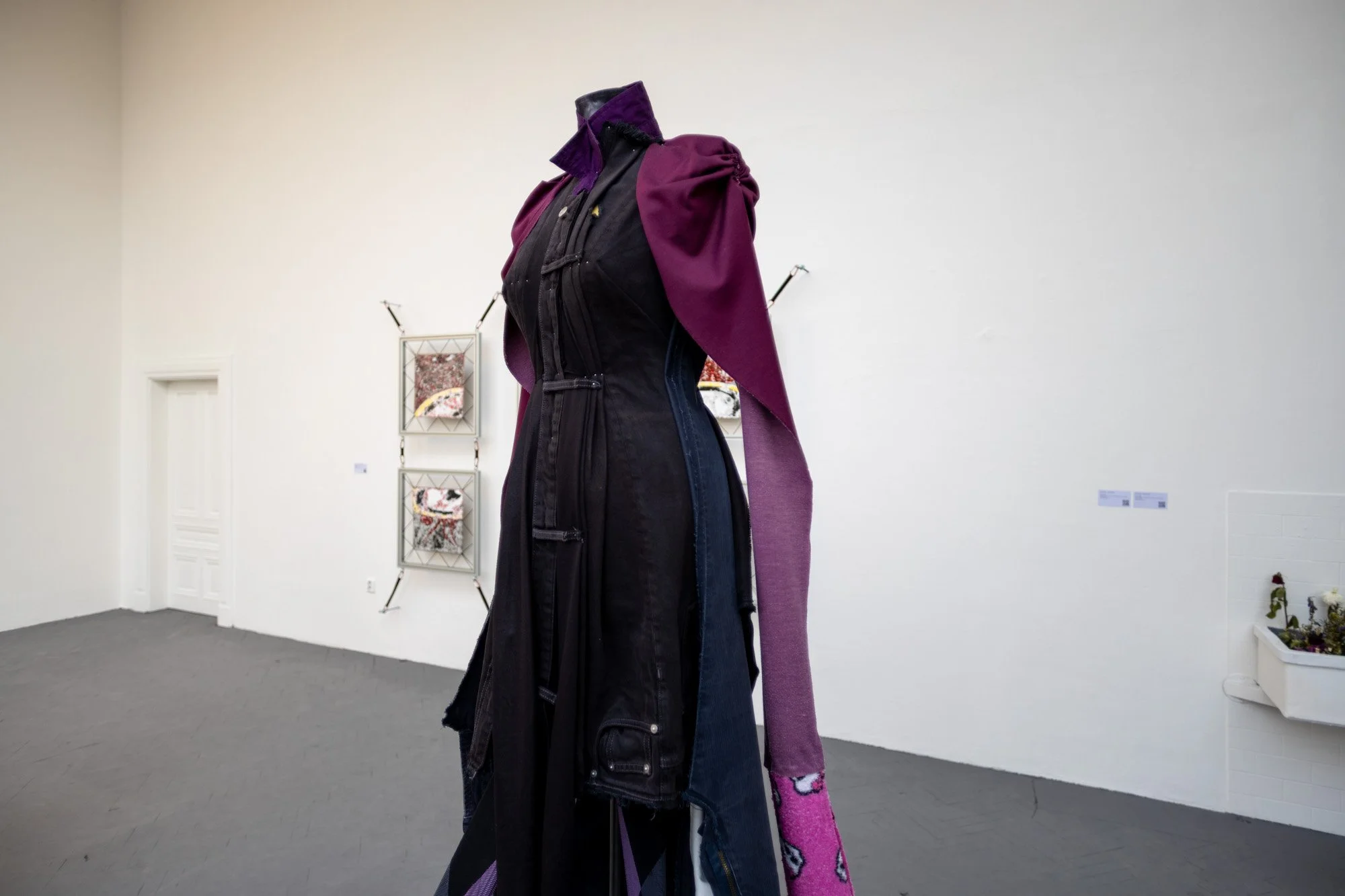
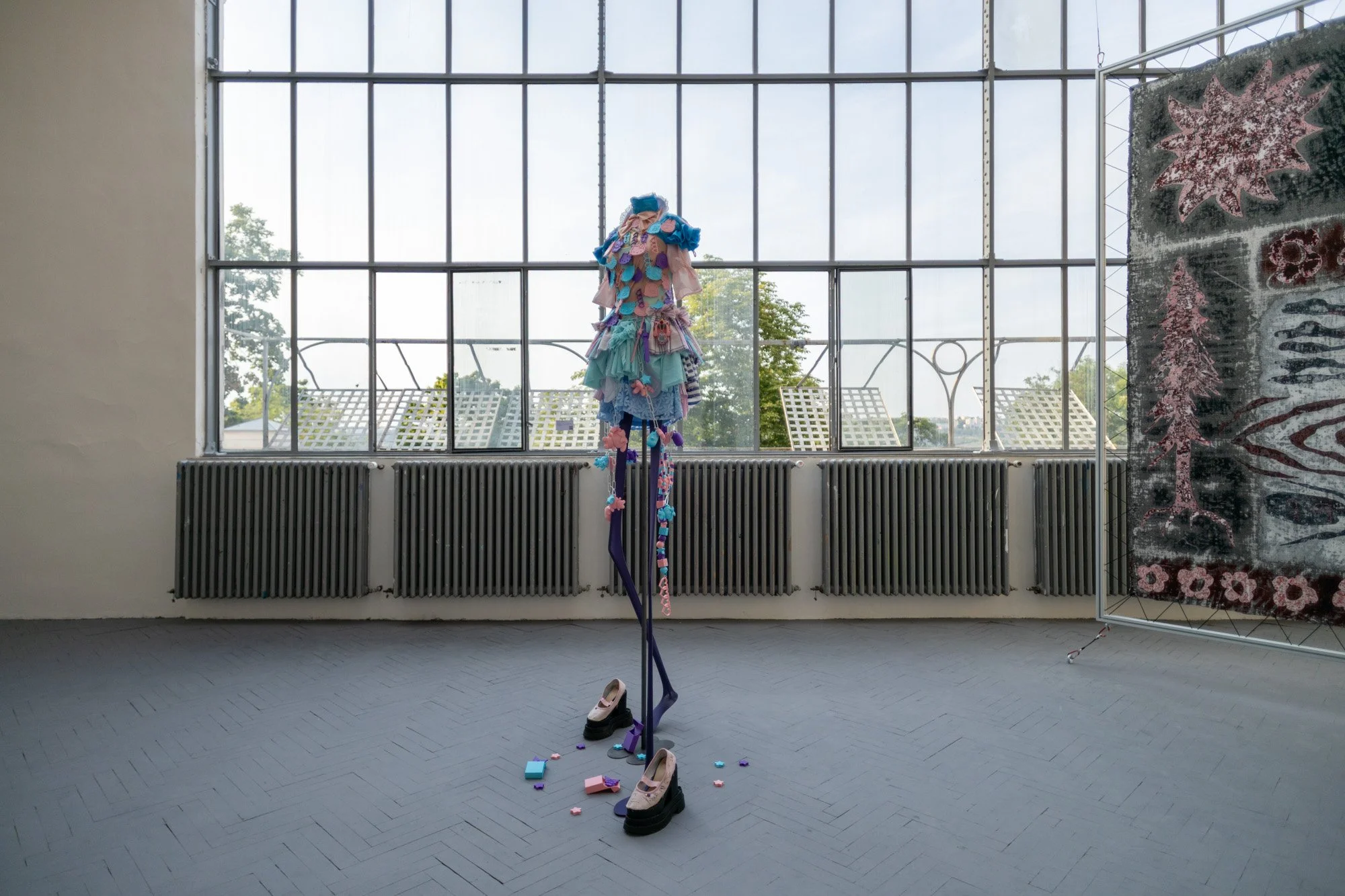
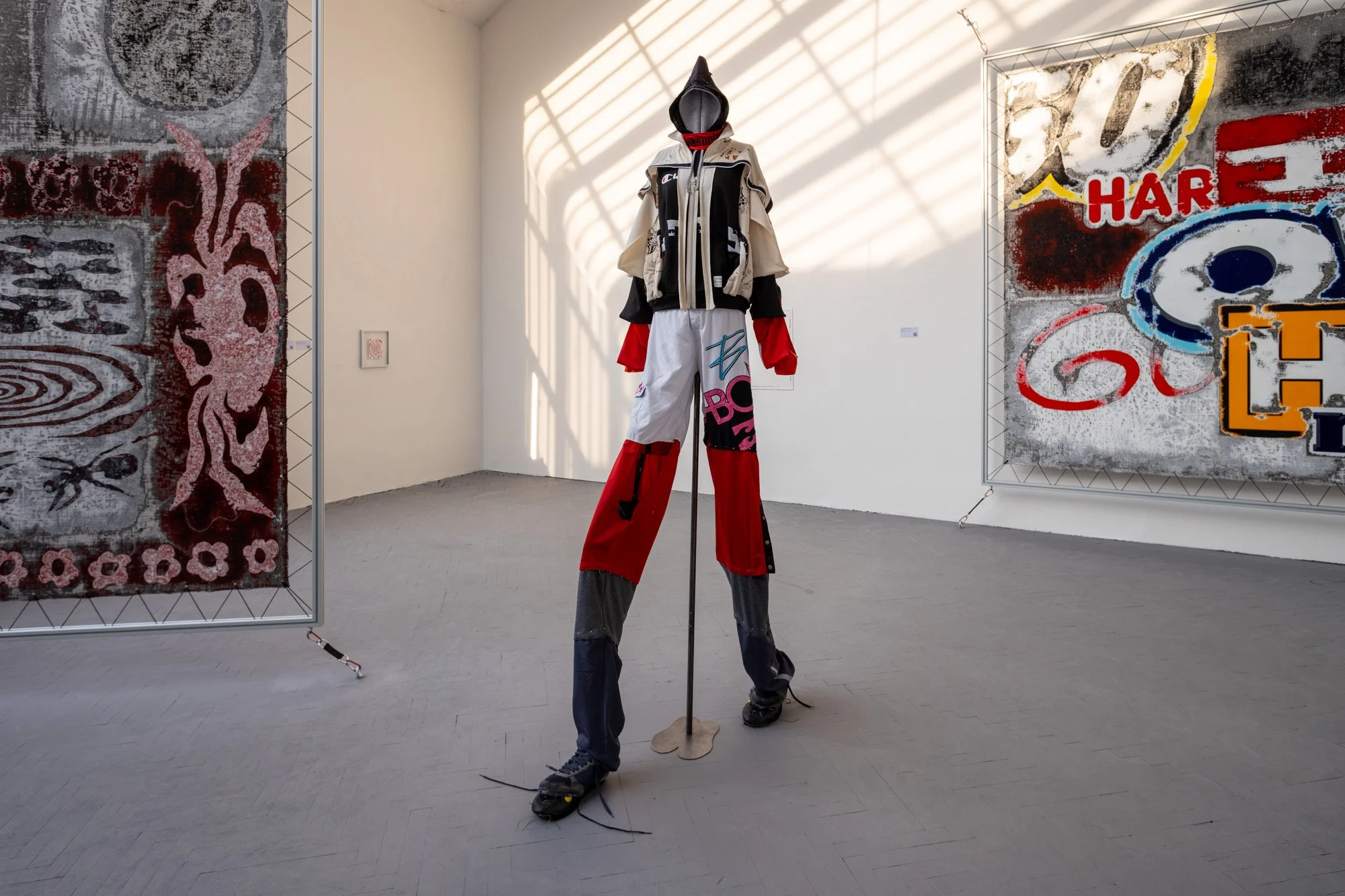
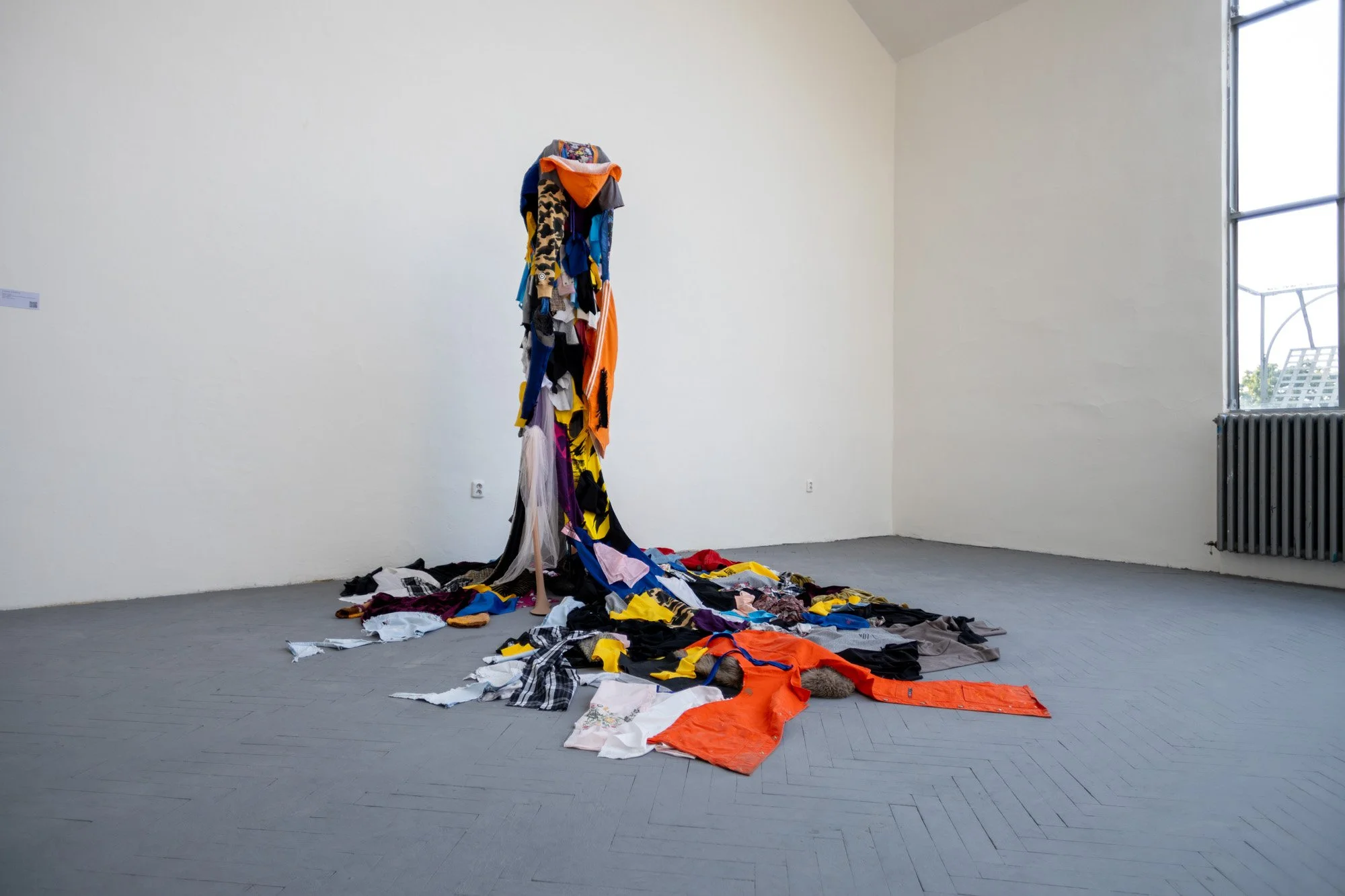
In Missing, Enisa Skoko takes apart her own wardrobe from the past ten years and rebuilds it into five larger-than-life figures. Each figure stands for a style she once tried on as an identity: a lolita from her cosplay years, a “clean girl” in denim and white, a gothic witch with sleeves trailing to the floor, and a rapper lost in baggy clothes. The fifth, the Hoarder, sinks into a heap of everything left over. The clothes are unpicked seam by seam and mostly held together with pins, not stitches, so the works never turn back into fashion. Behind the personal story sit mountains of discarded clothing, like those piling up in the Atacama Desert.
In the podcast, Enisa explains why she left fashion school after a year and a half of teachers turning every idea into a standard cut, and how she ended up in painting at AVU. She tells the story of her first cosplay at thirteen, held together with tape, and of becoming one of the better-known cosplayers in the Czech scene. She shows how she unpicks jeans thread by thread, why she spent three days arranging one pile of clothes, and why she believes clothing keeps a memory of the person who wore it. Next, she wants to work with pockets and bags, especially men’s pockets and what ends up in them.
Matyáš Fiala
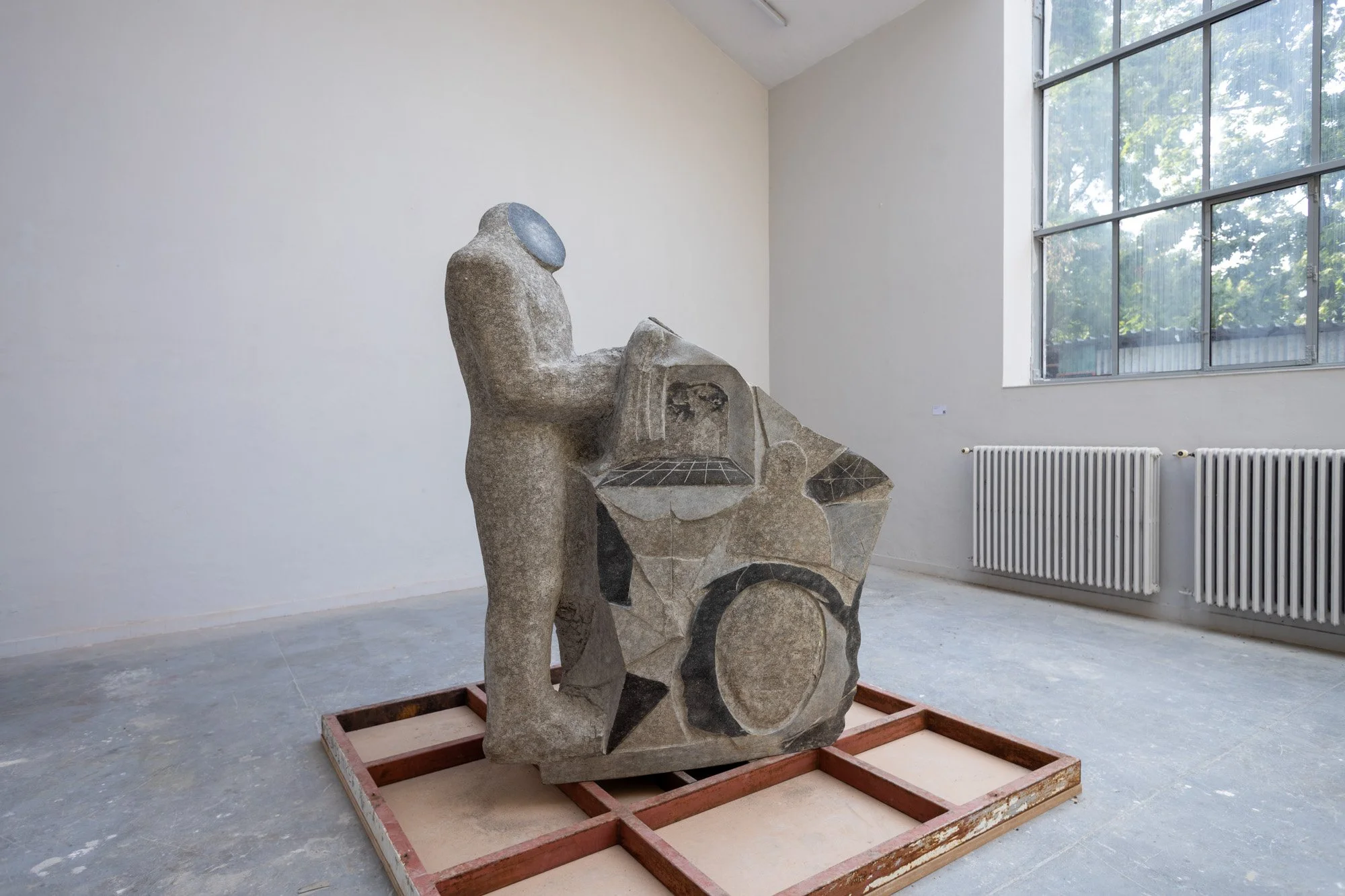
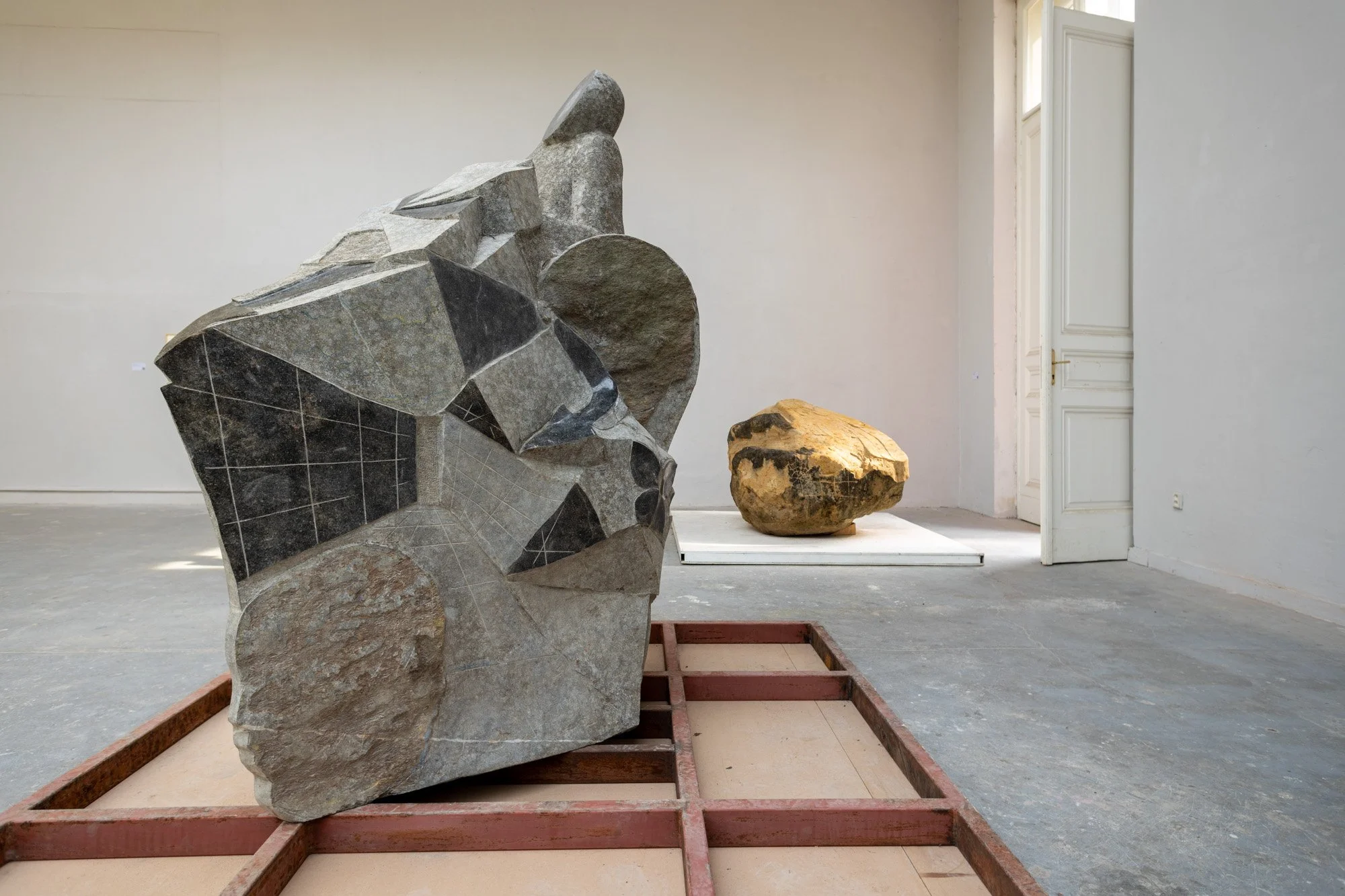
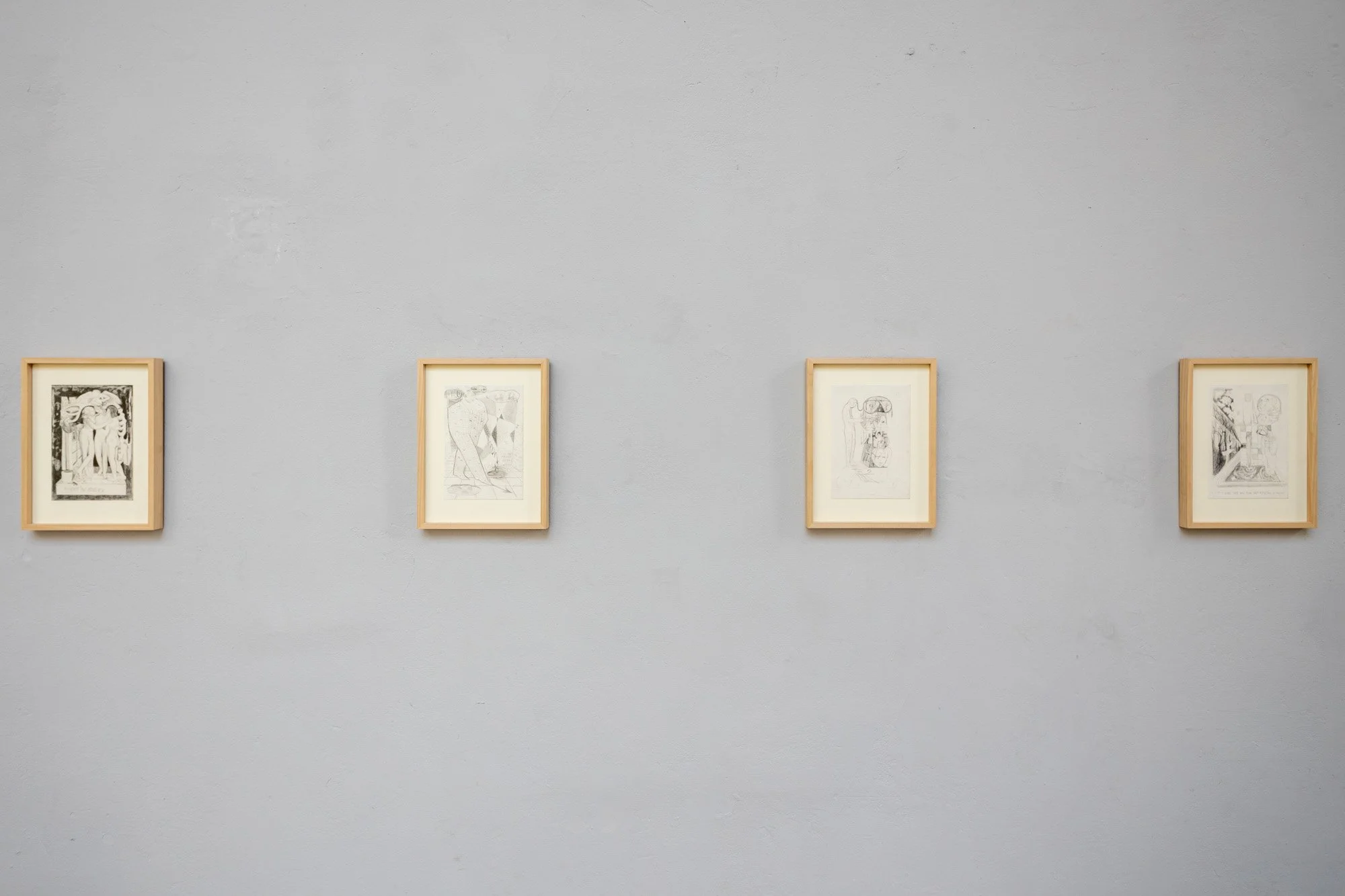
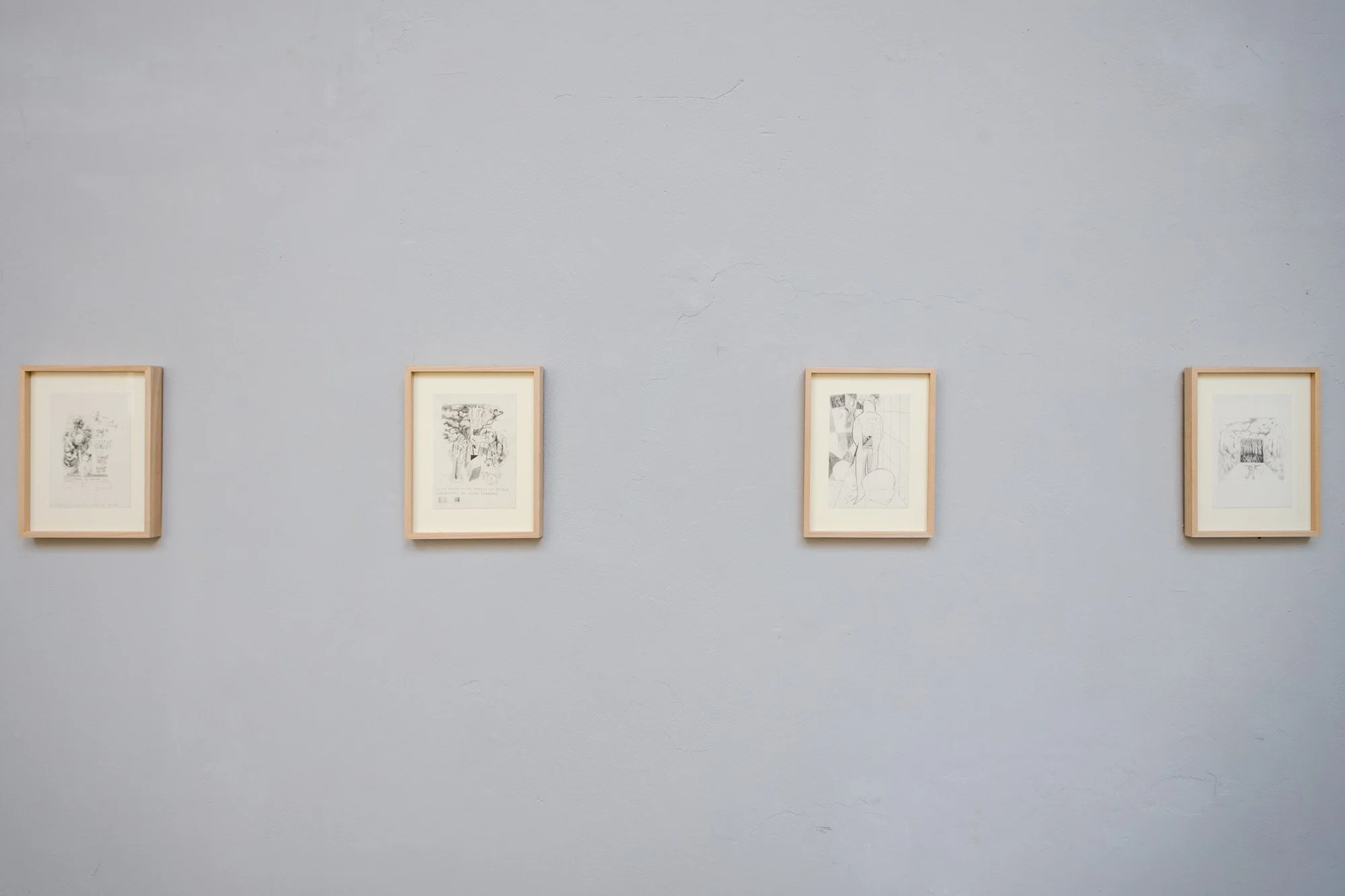
Collecting Dust is a stone sculpture that took a year to carve. A slightly larger-than-life figure in dark diorite steps into a cluster of flat reliefs, grids and folded surfaces, a bit like someone getting off a train in a strange city and trying to find their way. The figure is not in charge here. It is pulled in and almost absorbed. Next to it stands a second, smaller work carved by hand in sandstone, with a wing sealed into the stone, and a set of drawings. Matyáš Fiala uses the oldest and slowest form of public sculpture to ask what a monument can mean when nobody seems to agree on a shared future.
In the podcast, Matyáš talks about growing up in a stone-carving school in Uherské Hradiště, drifting towards drawing and poetry, and coming back to stone at AVU. He describes what actually goes on in your head during a day with a grinder in your hands, why he is glad mistakes in stone cannot be undone, and why he drew the whole year while carving. We also talk about Mark Fisher and the “lost future”, about where a sculpture this heavy can go next, from Vyšehrad to a new sculpture park, and about an old painting of his that simply says Nebe nebude, There Will Be No Heaven.
Viktorie Součková
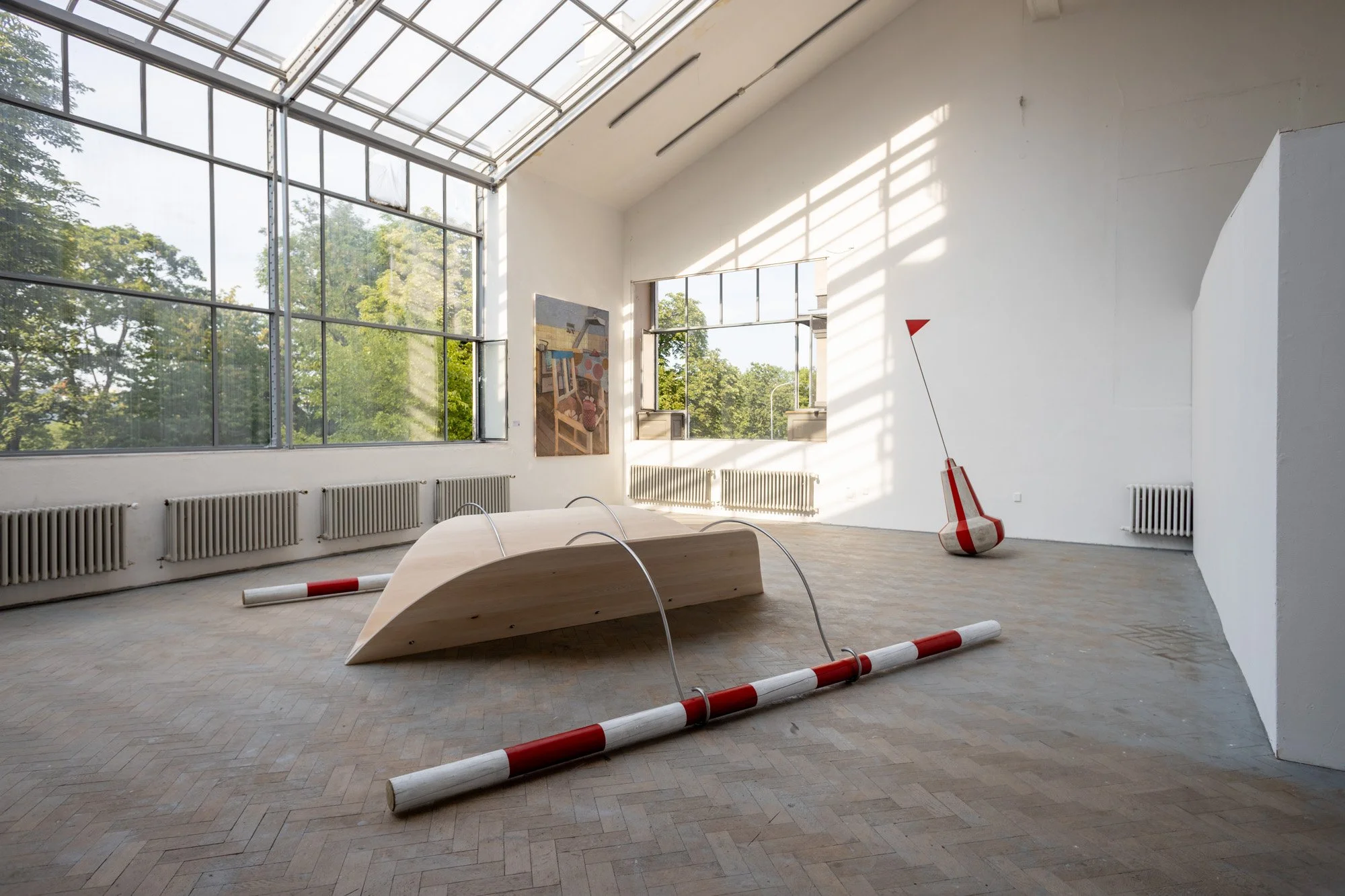
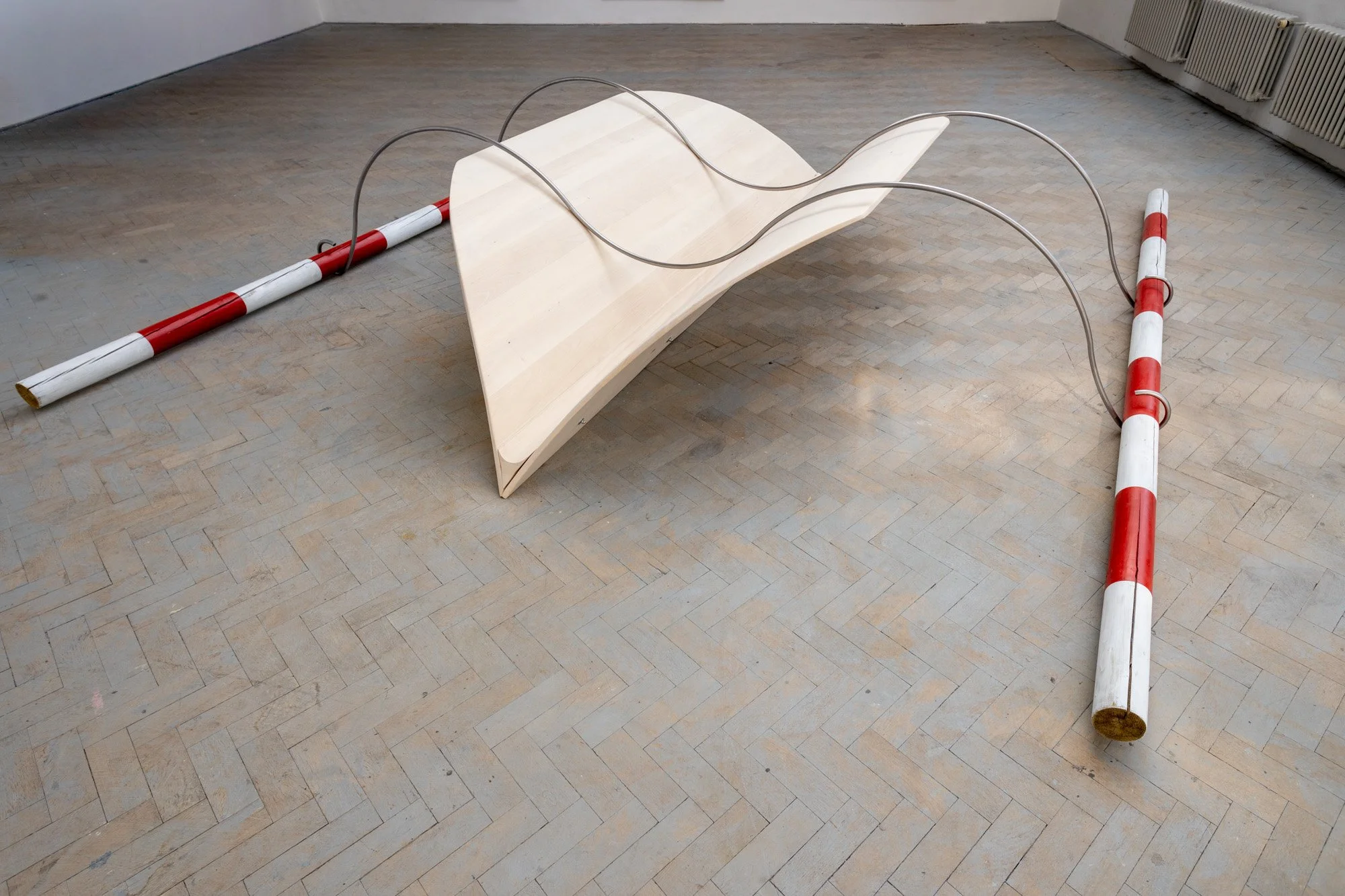
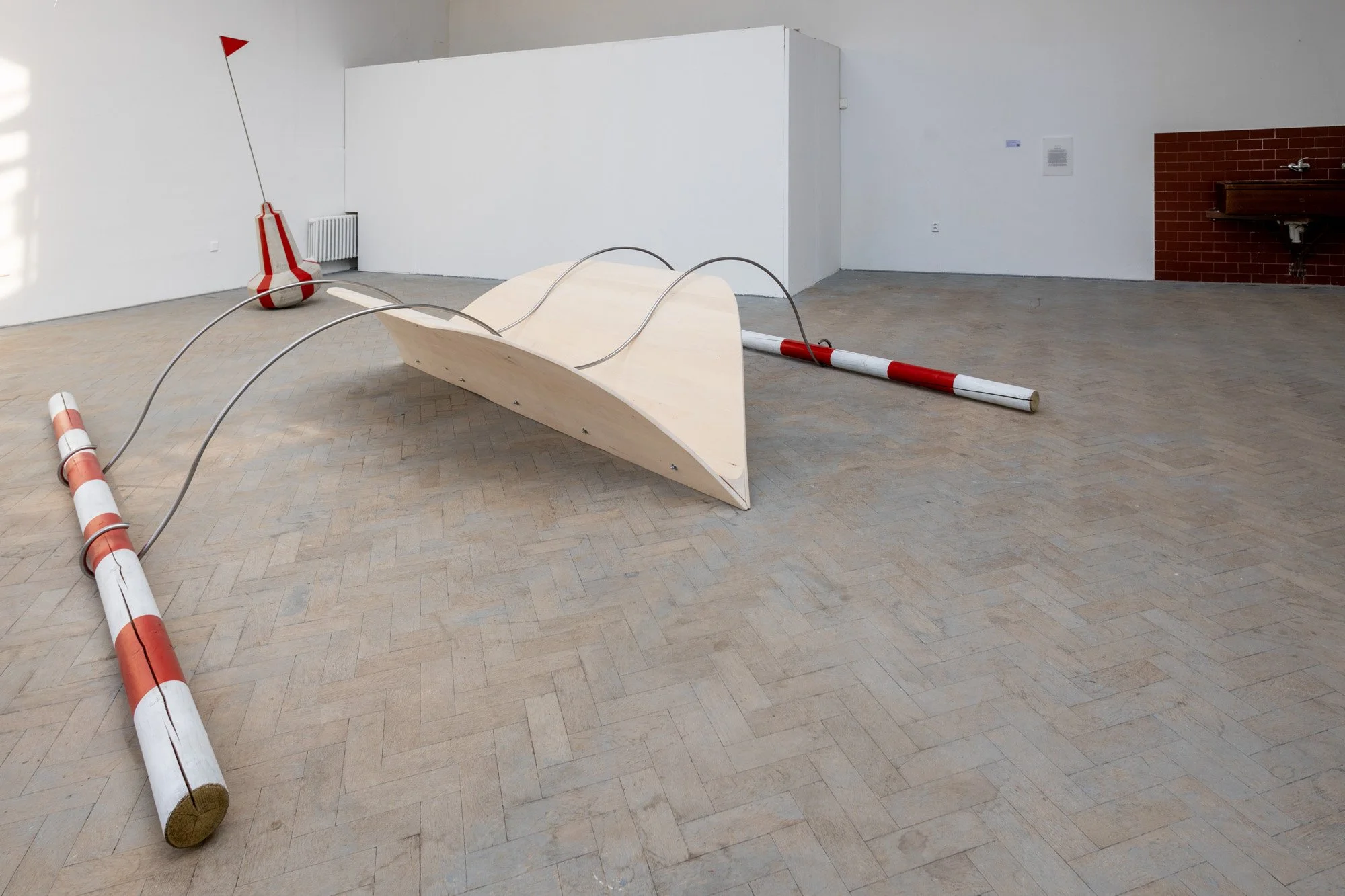
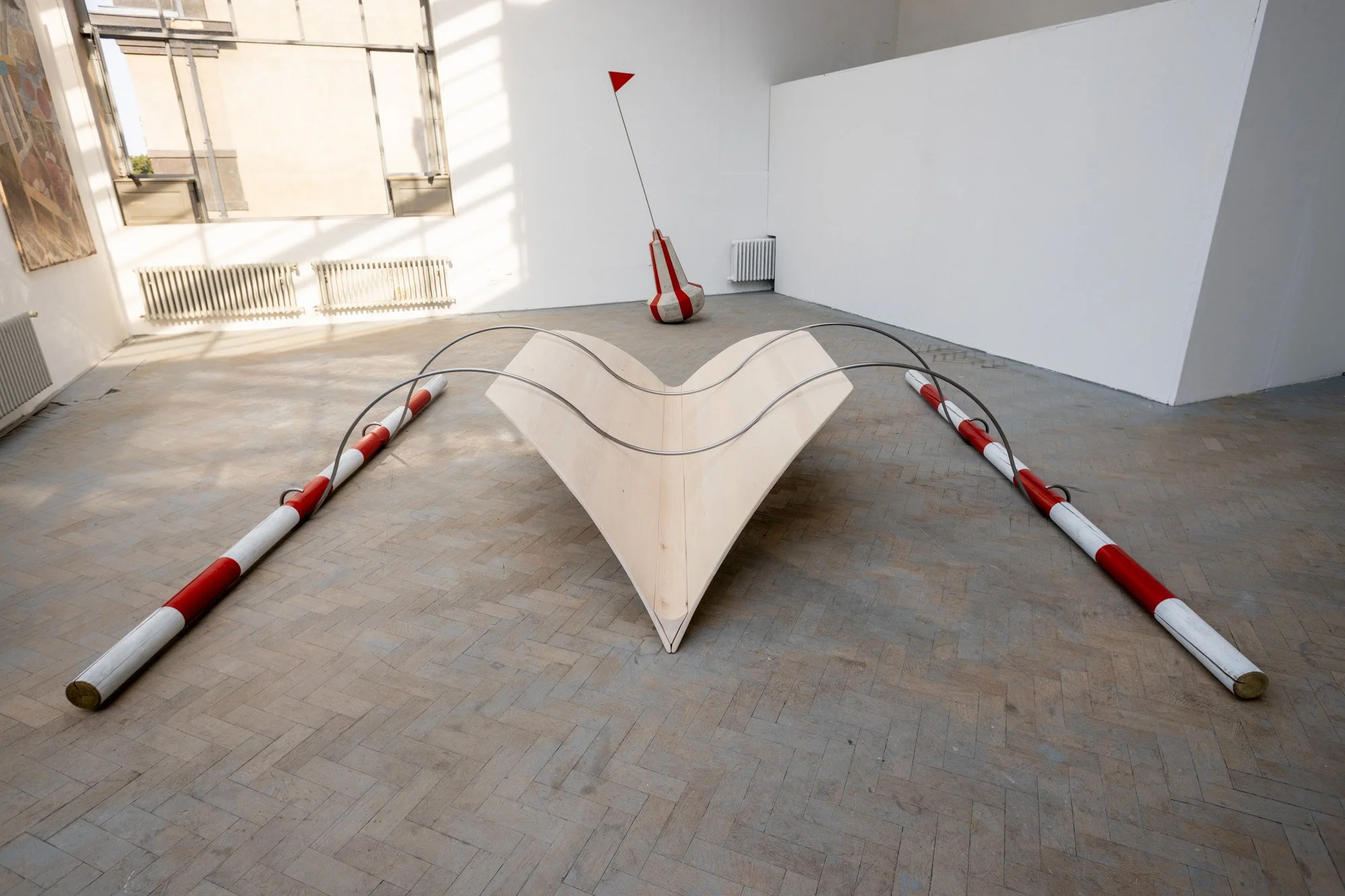
In Silence over the Water, Viktorie Součková builds a boat that is also a body. Two curved wings of pale linden wood rise like a swallow about to take off, but they are fixed to a frame with red-and-white striped floats, like the outriggers on traditional Indonesian boats. The floats stop it from sinking, and they also stop it from flying. Nearby lies a buoy cast in heavy concrete instead of light plastic: a safe point that also pulls you down. Both objects sit on dry land, away from the water they were made for. The work asks what it means to keep your head above water, and whether what keeps us safe also holds us back.
In the podcast, Viktorie traces the work back to a boat with floats she saw on a diving trip in Indonesia, and to a childhood memory of old railway barriers her father once took home. She explains how she built the wings with a carpenter, gluing linden boards together one a day for two and a half months, and why one of her concrete buoys ended up as a meeting point in the AVU garden. We also talk about why being underwater can feel like a return to safety, and why she prefers making things with her own hands. It is a quiet, funny conversation that makes the work easier to read.
Bartoloměj Šolc
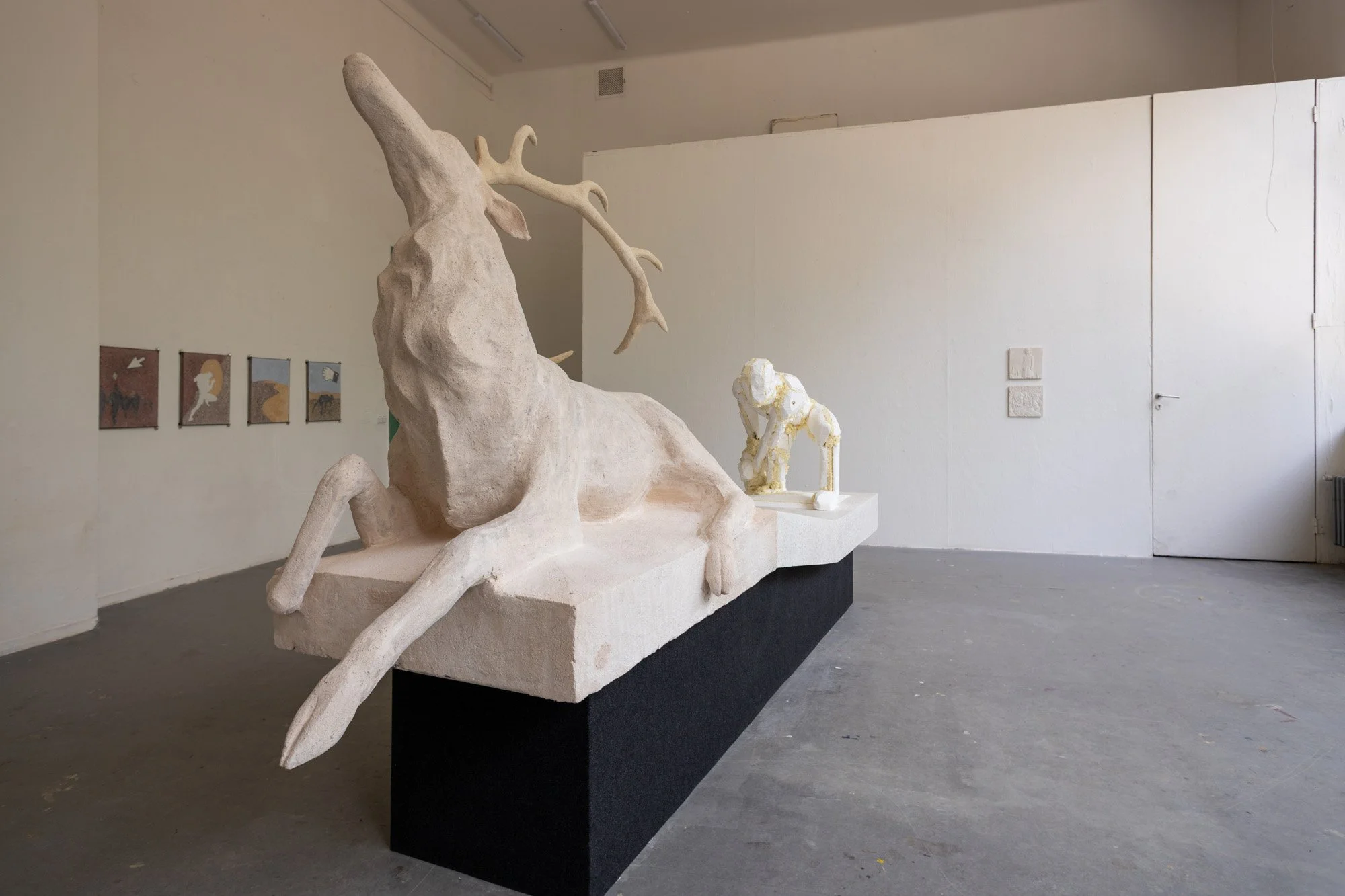
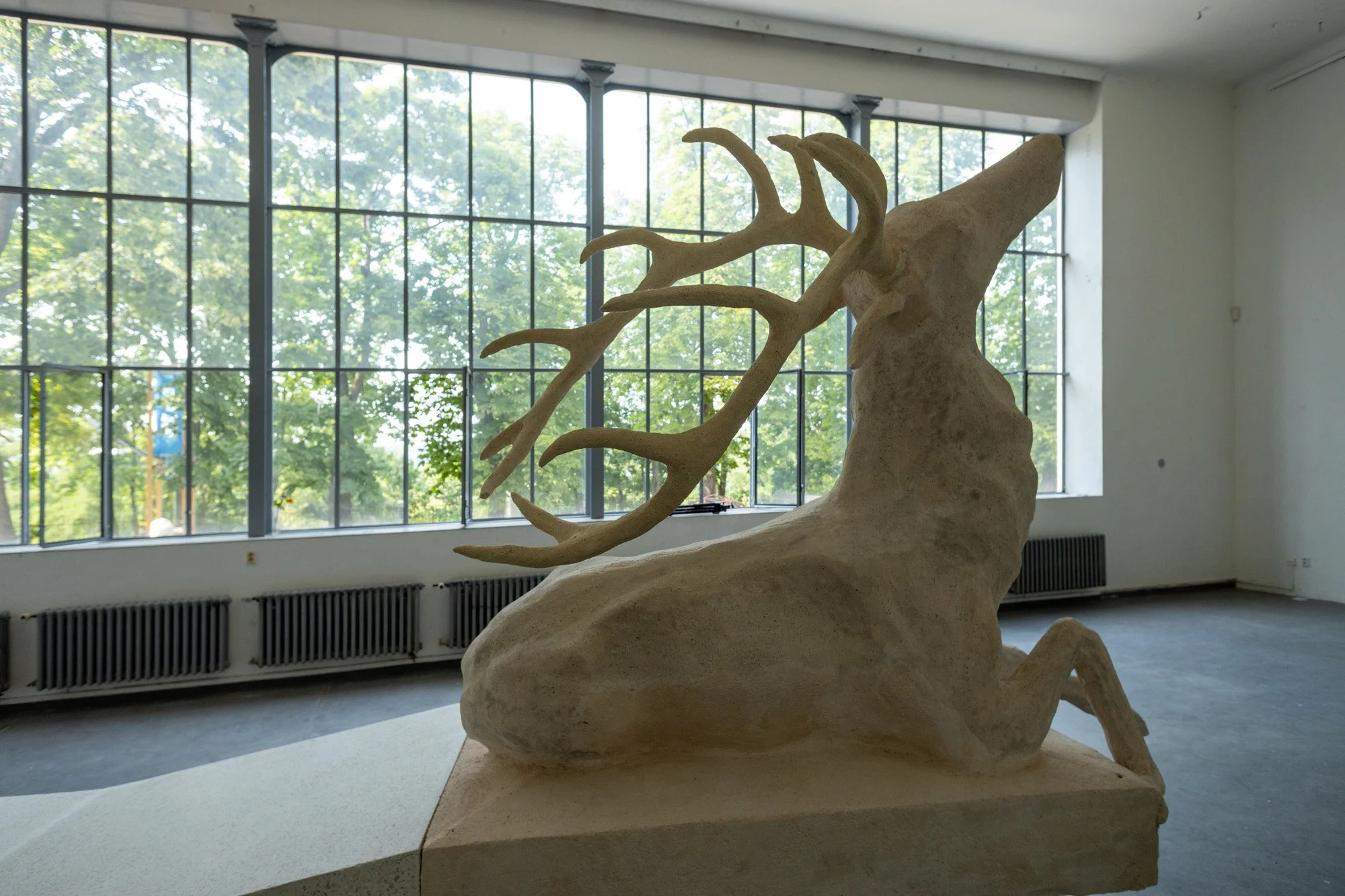
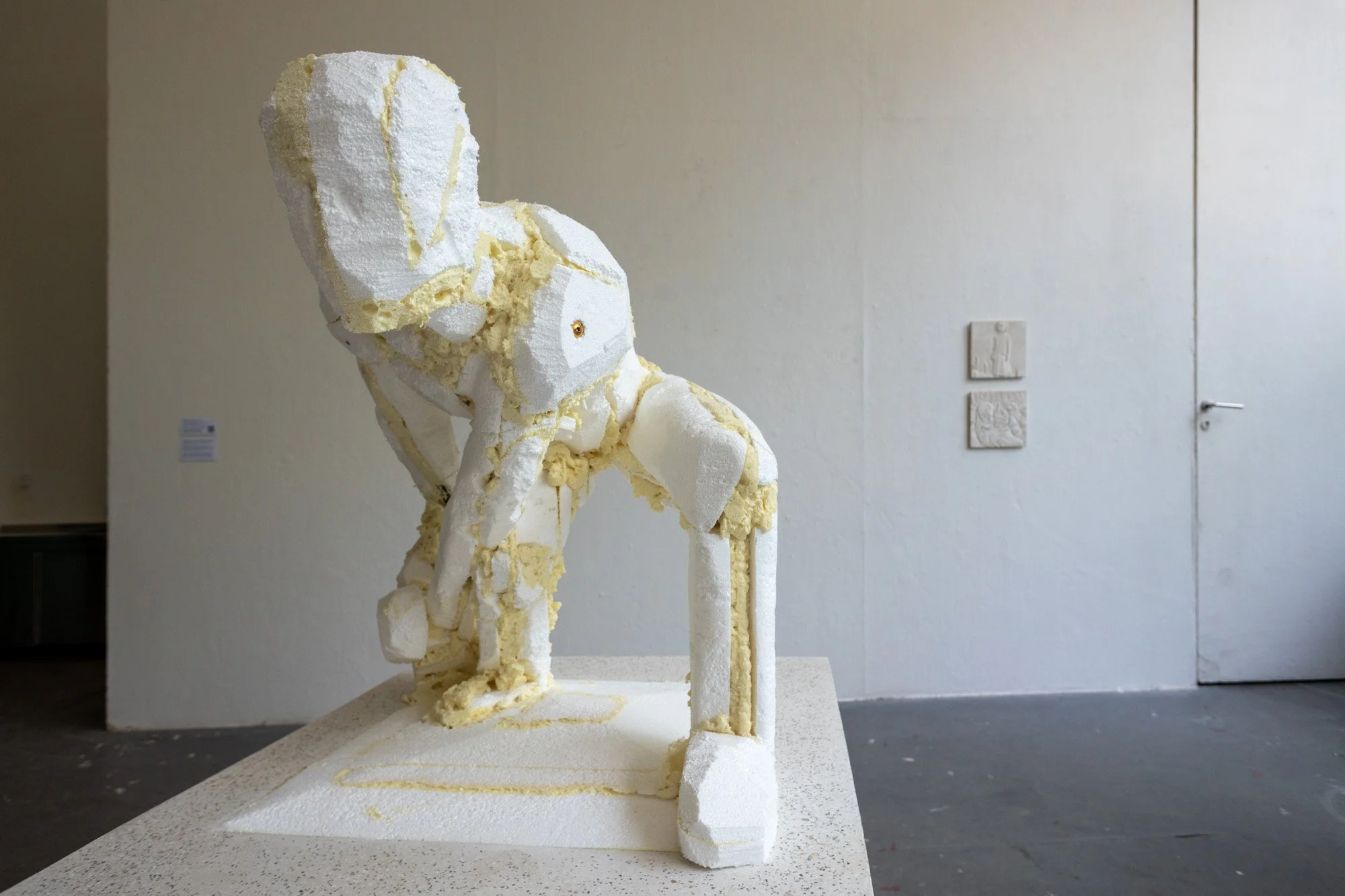
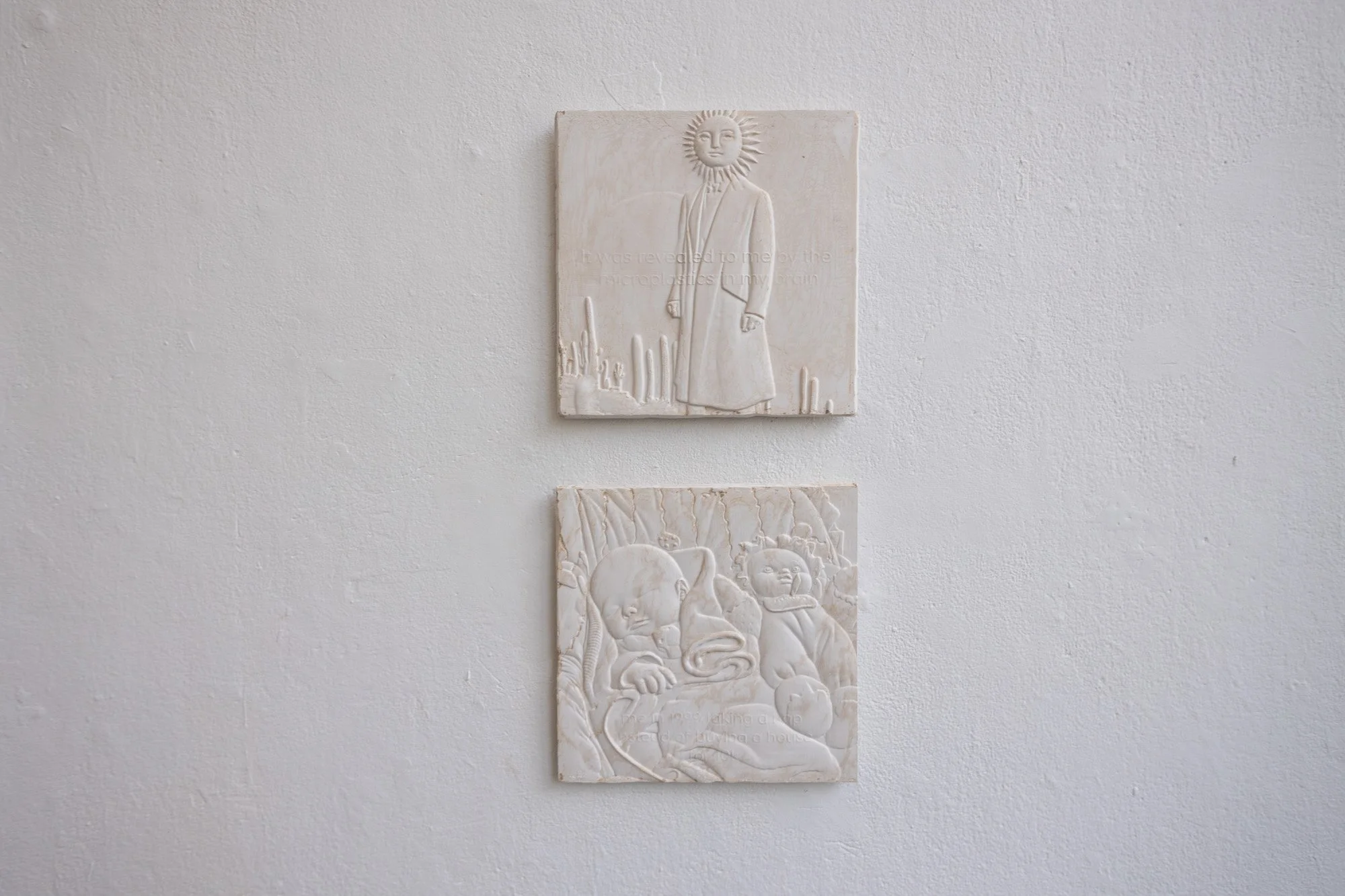
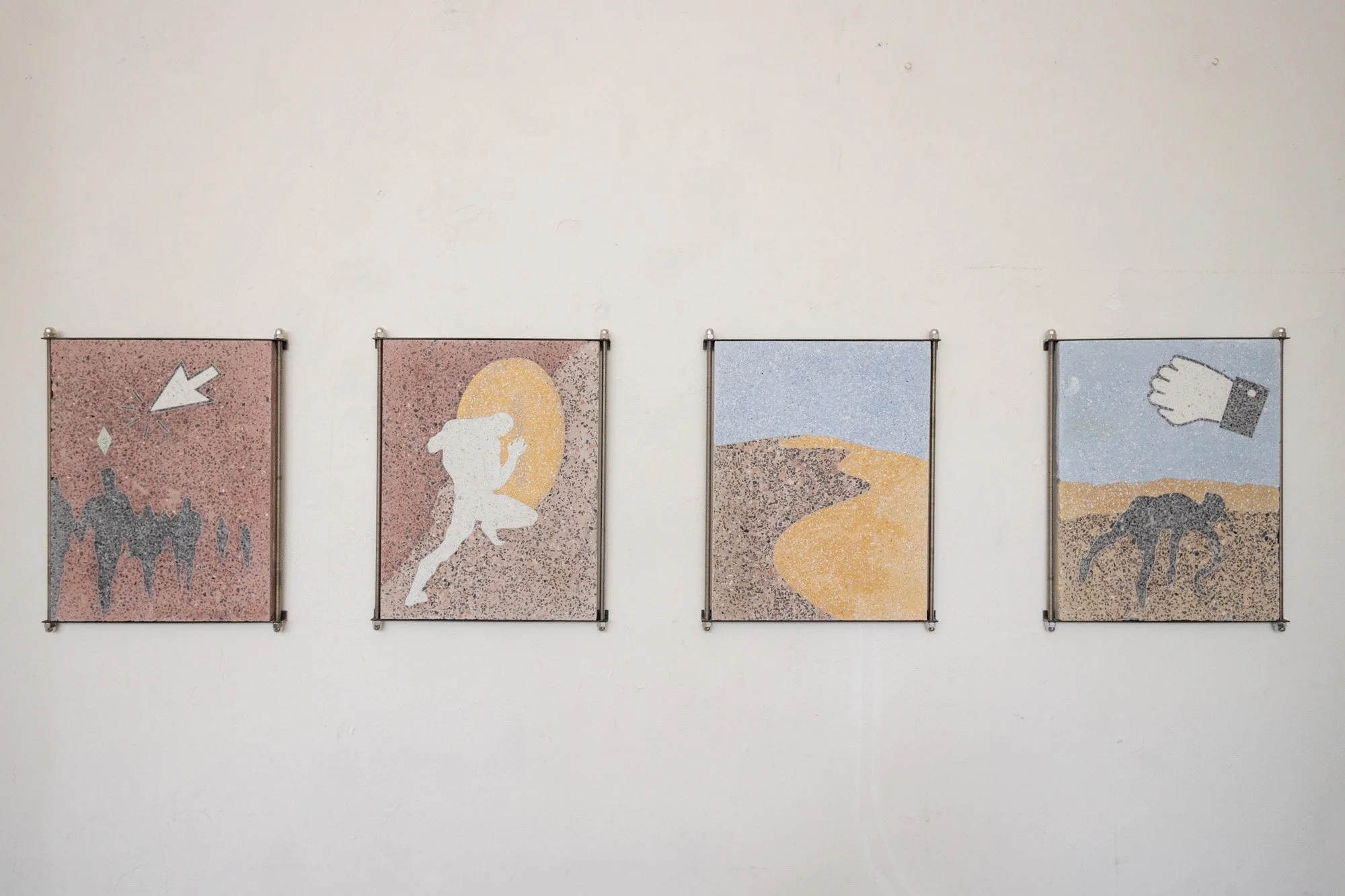
Bartoloměj Šolc borrowed his title from a corecore video, the TikTok genre that mixes news clips, memes and film scenes to express something hard to say directly. The centre of the installation is a deer and a hunter. It is a take on the legend of Saint Hubert, who stopped mid-hunt when he saw a cross between a stag’s antlers and changed his life. Here, the moment never comes: the hunter, a man with a briefcase rather than a gun, keeps going. The figures are made of artificial stone over polystyrene and look worn and broken, like an archaeological find. Around them hang terrazzo pictures of memes: Sisyphus pushing a gaming coin, a “Stonks” arrow, a relief that reads it was revealed to me by the microplastics in my brain.
In the podcast, Bartoloměj talks about growing up around his father, a restorer, starting in restoration at AVU, and slowly finding his way through video at FAMU to Milena Dopitová’s studio. He explains what corecore is and why humour is the way his generation handles inflation, ecology and microplastics. He shows how restorers’ techniques and old Roman terrazzo ended up in a work about the internet, and why a Soviet monument by Ivan Shadr shaped the pose of his hunter. The conversation ends with one simple question: are you the deer, or the hunter?
Matěj Pavelka
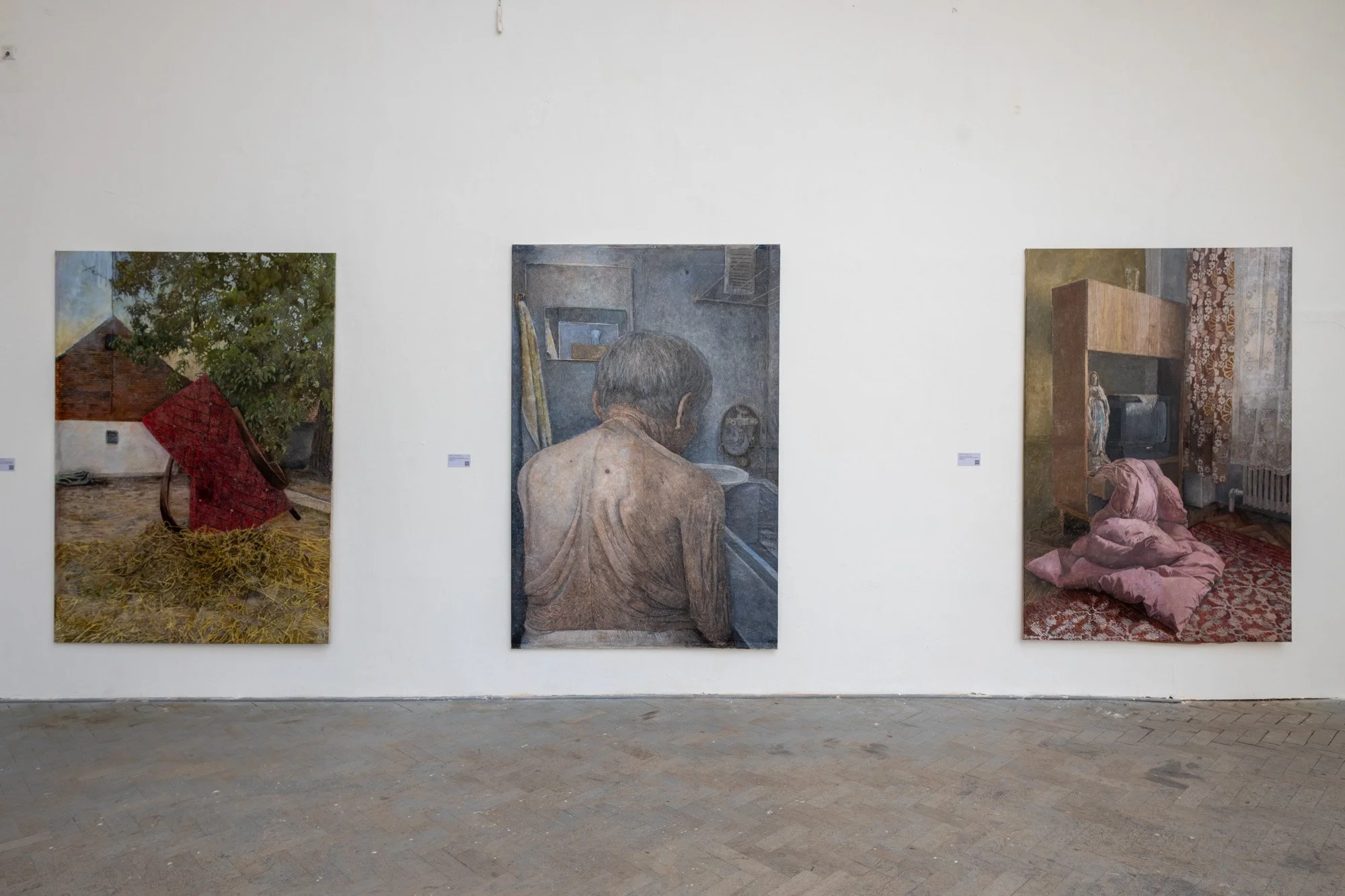
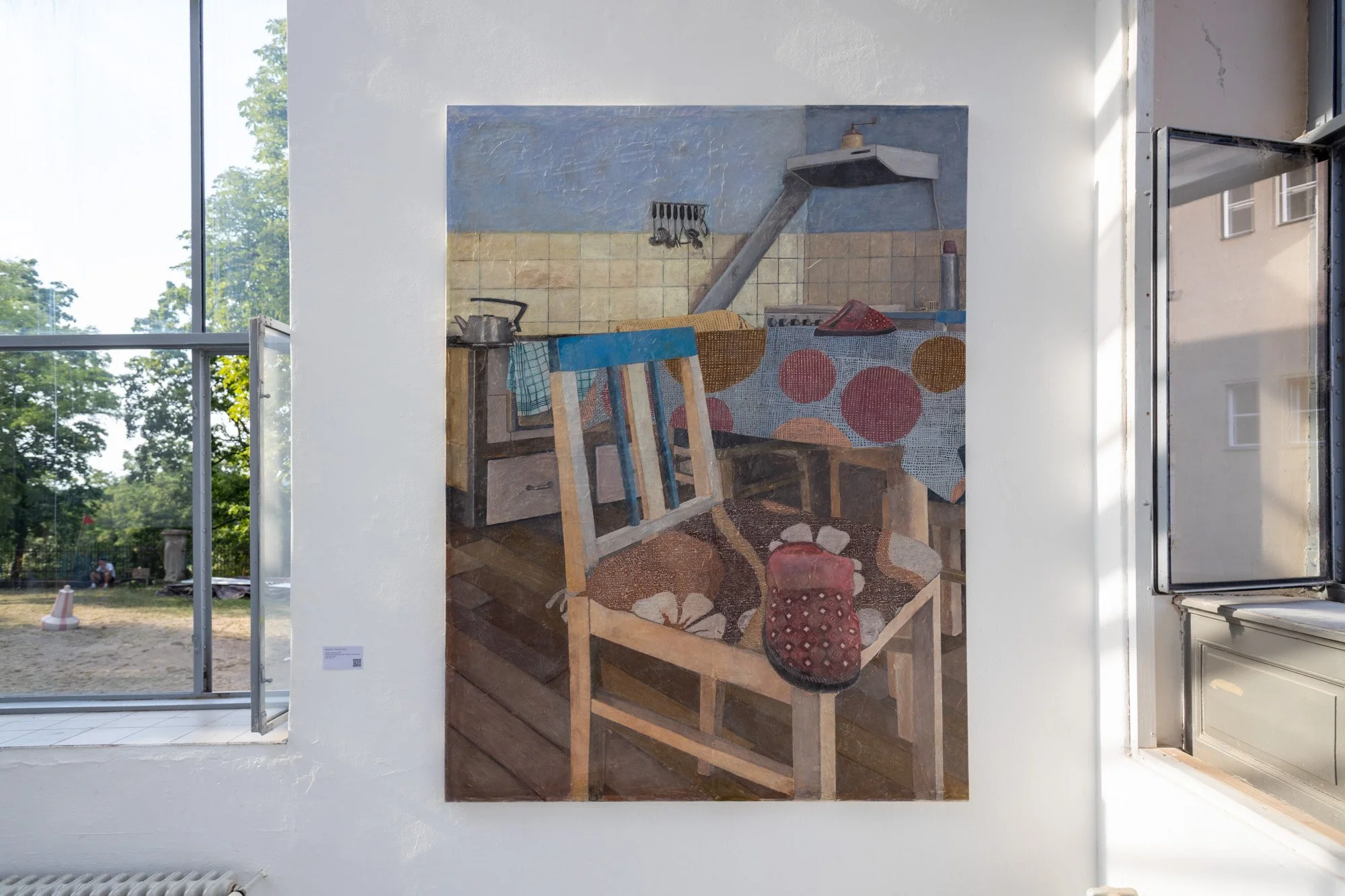
They Are Still Here began when Matěj Pavelka returned to a family cottage in South Moravia after eleven years and opened the oven. Inside was a dumpling, left there all that time, eaten by moths. The furniture was where it had always been, yet the place felt strange. His four large pictures show that cottage: a figure’s ageing back against a worn Formica bathroom, slippers left on a kitchen table and chair, a red armchair sinking into straw, a duvet spilling out of a cupboard. They look like oil paintings, but they are drawn in dry pastel over a primed canvas. Each looks ordinary at first, until one detail feels out of place.
In the podcast, Matěj explains how he went from printmaking and black-and-white linocuts to colour after six years away from it, and why he prefers to draw on the floor. He talks about working with his opponent, the photographer and collector Ivan Pinkava, who helped him strip the pictures down and also price them, and about selling his first one. We discuss why he barely names his works, how much of his grandmother found its way into the pictures, and the Soviet-made radio he took home from the cottage. Expect a warm, slightly melancholy conversation about memory, objects and learning how the art market works.
Vavřinec Vyoral
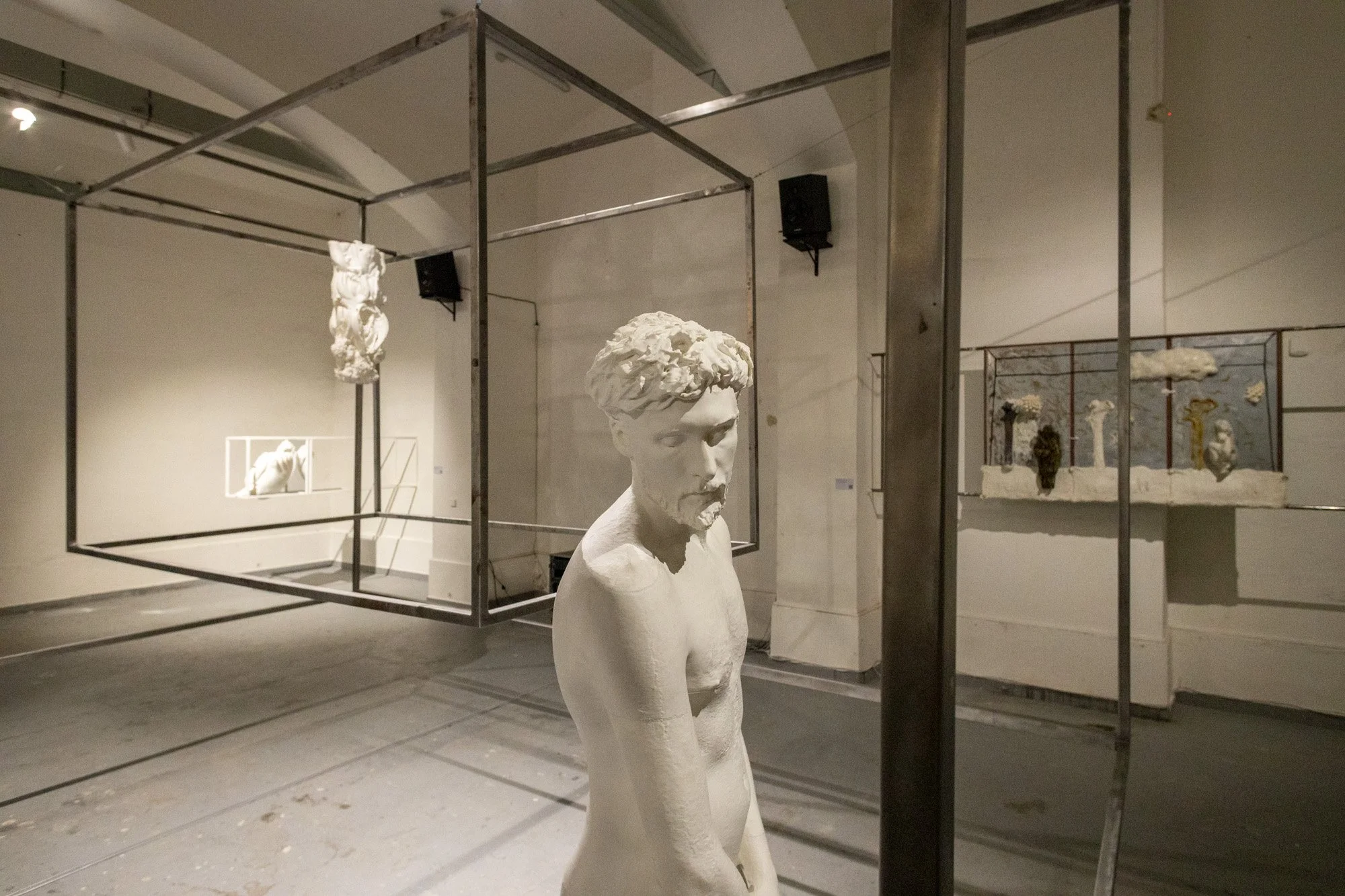
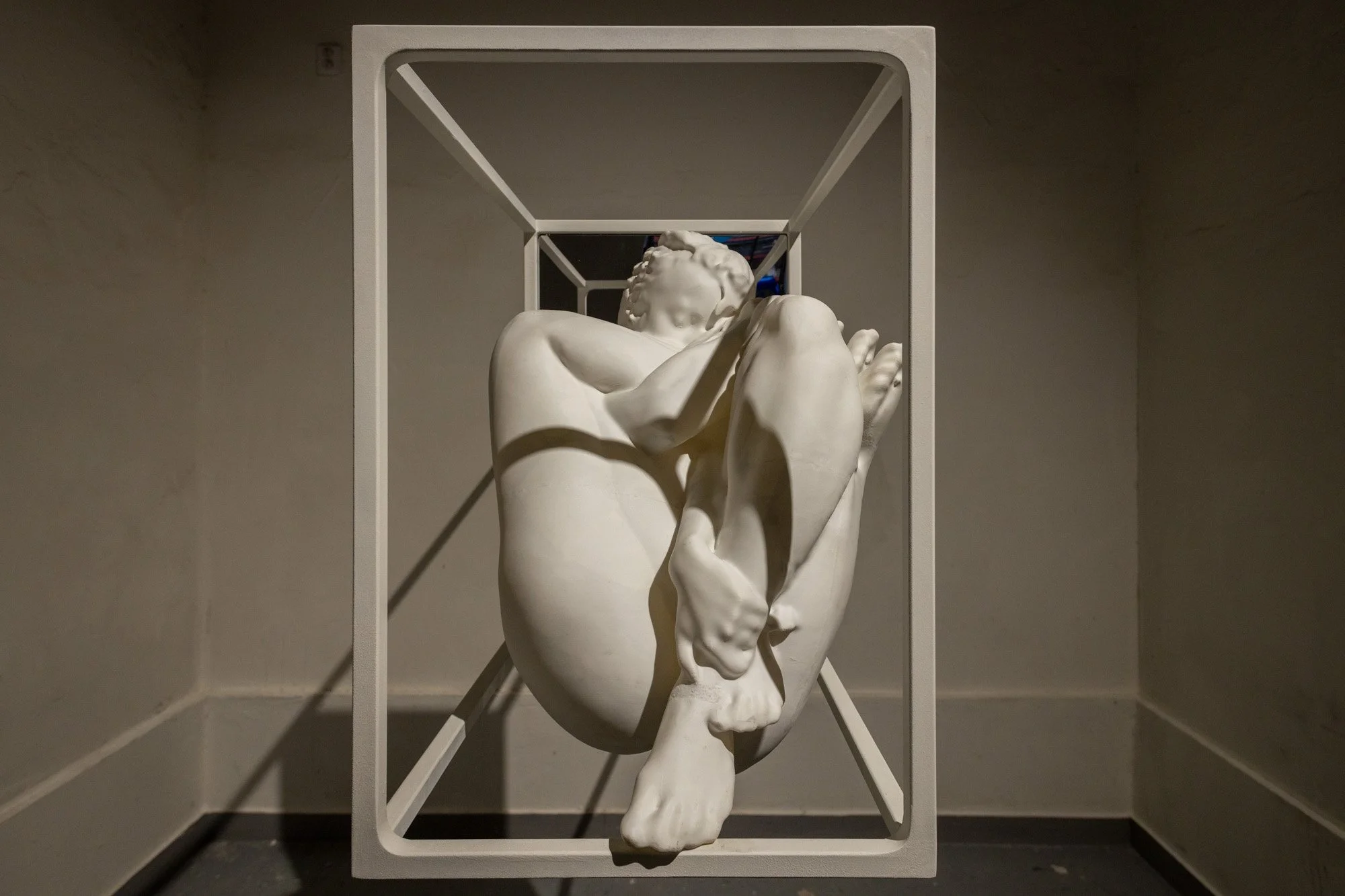
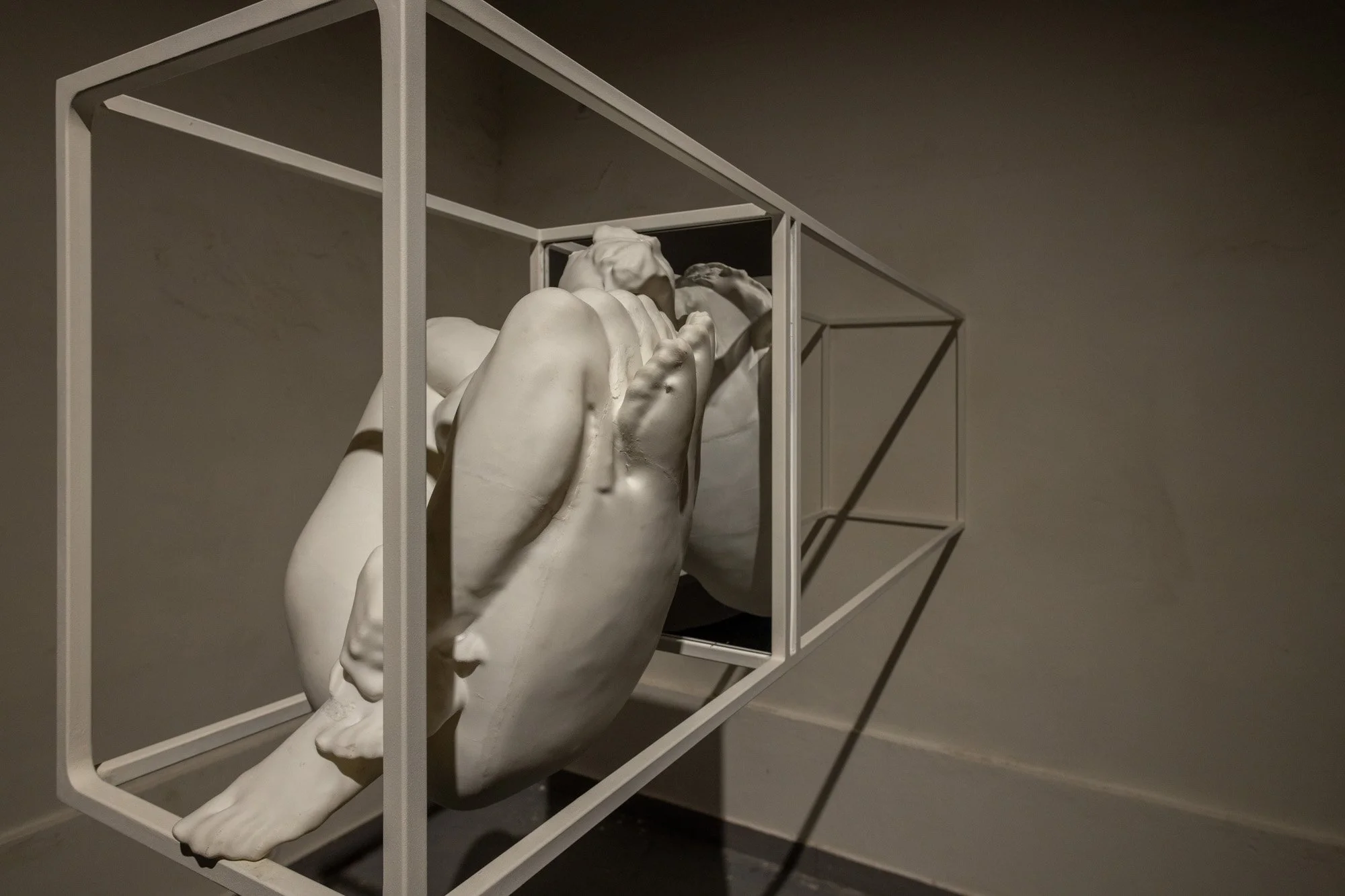
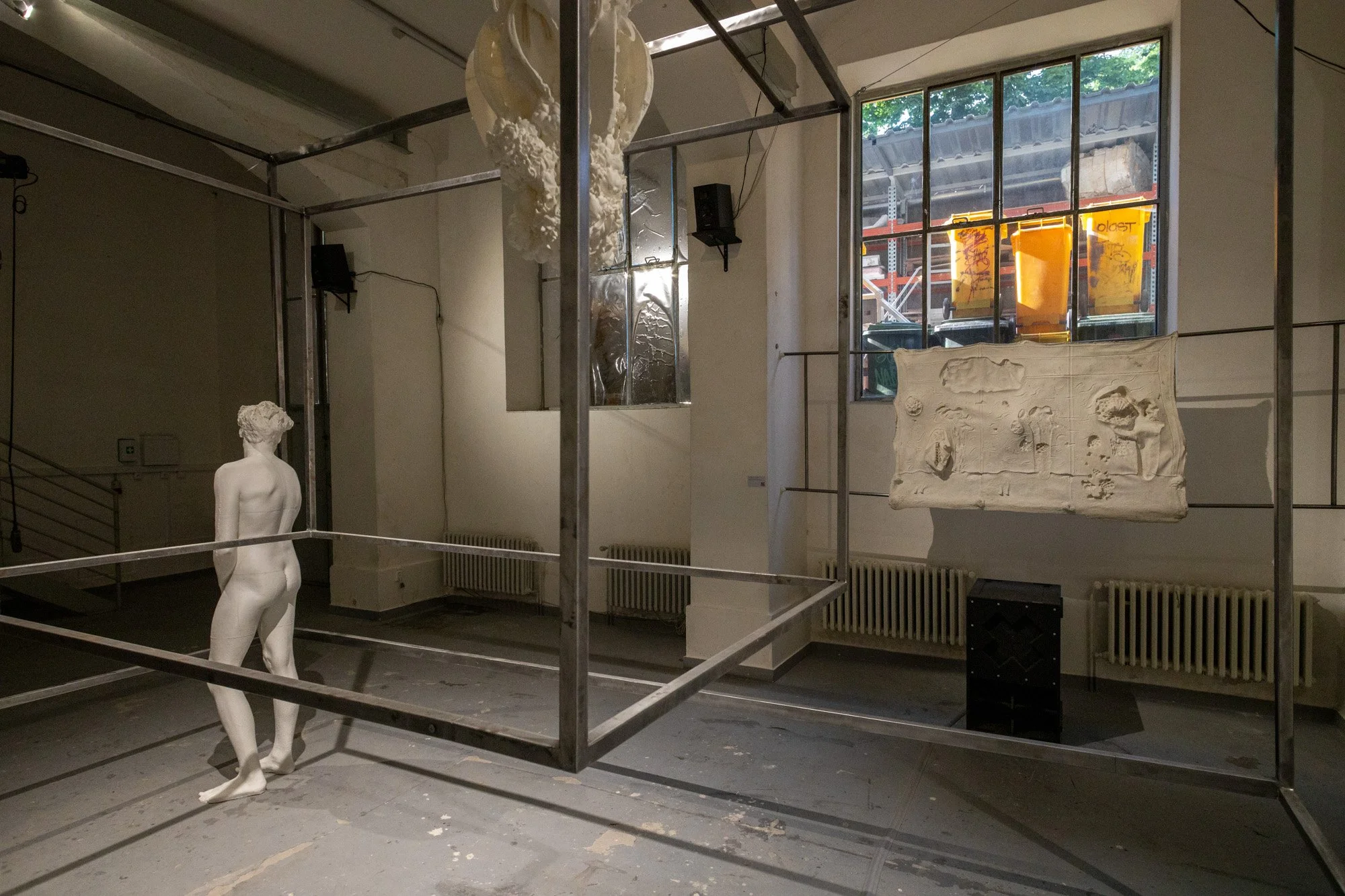
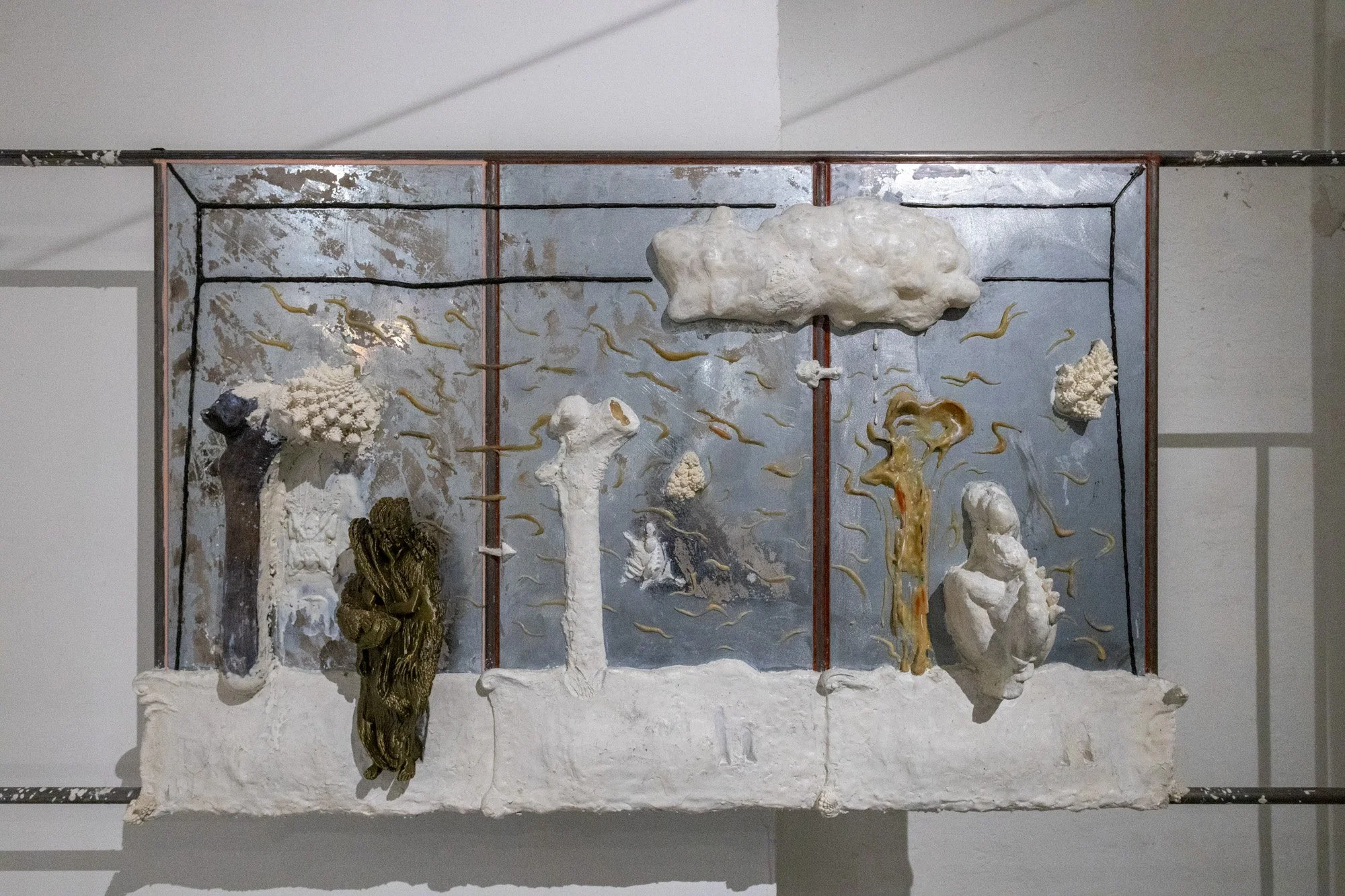
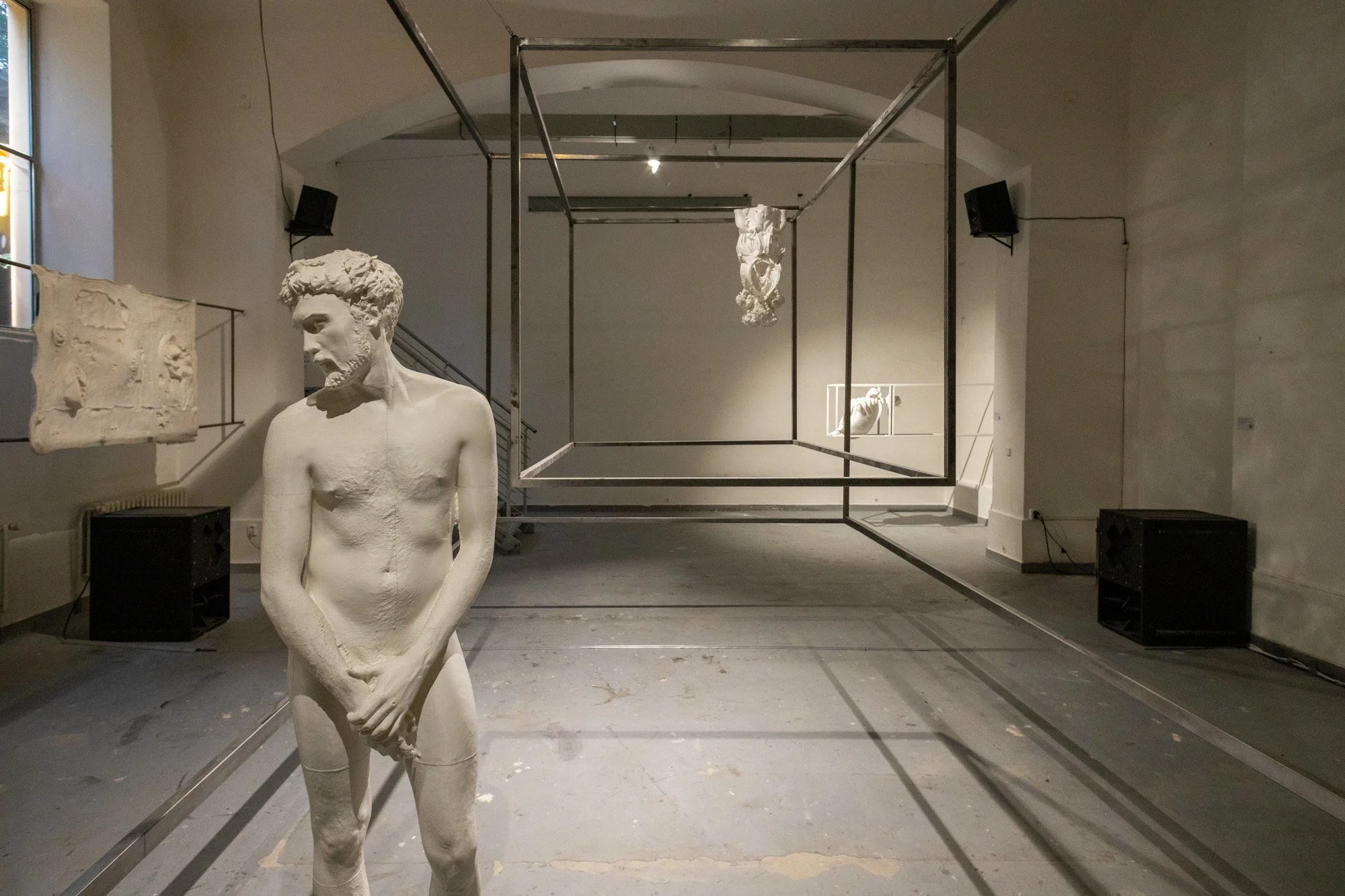
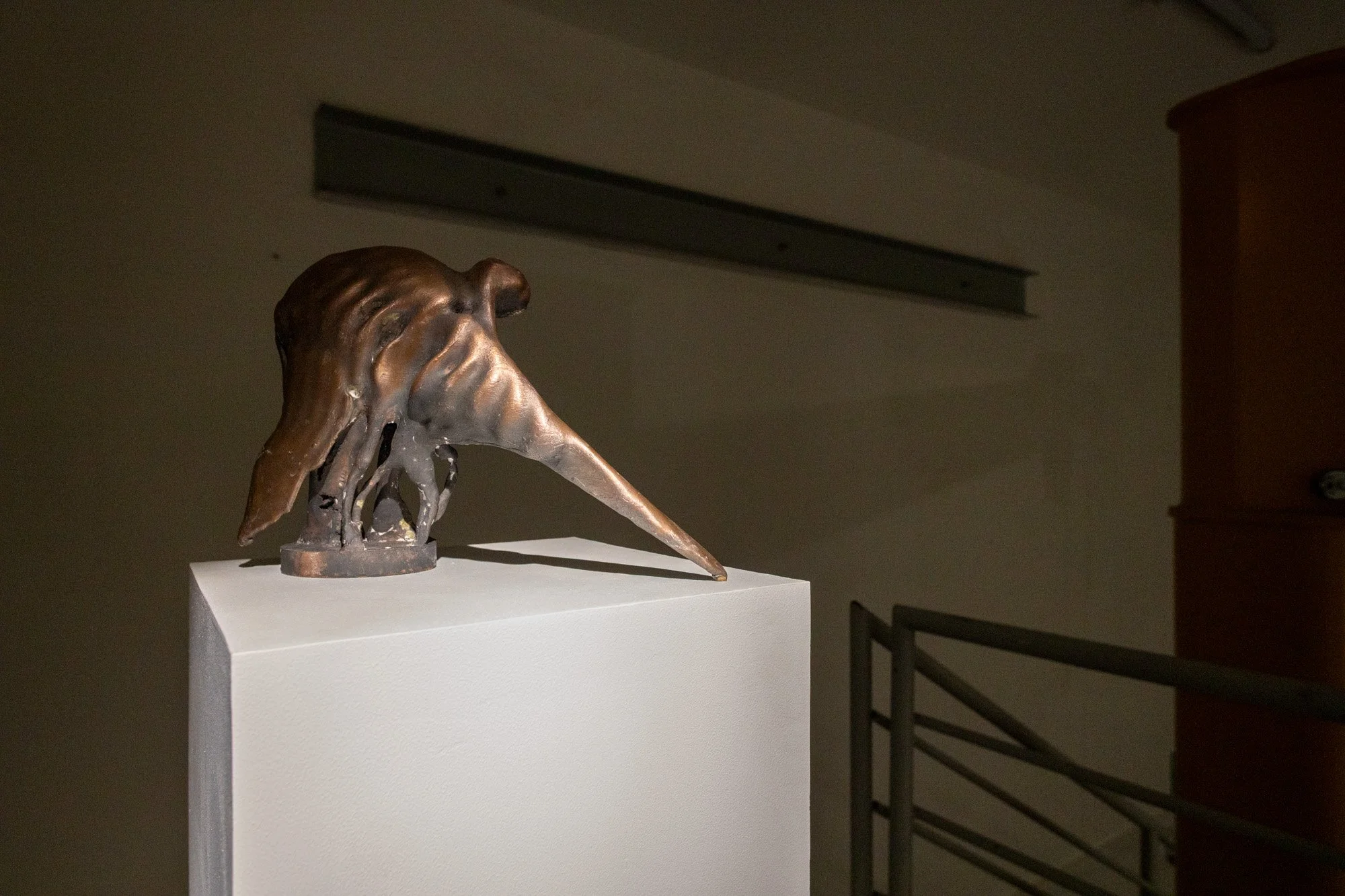
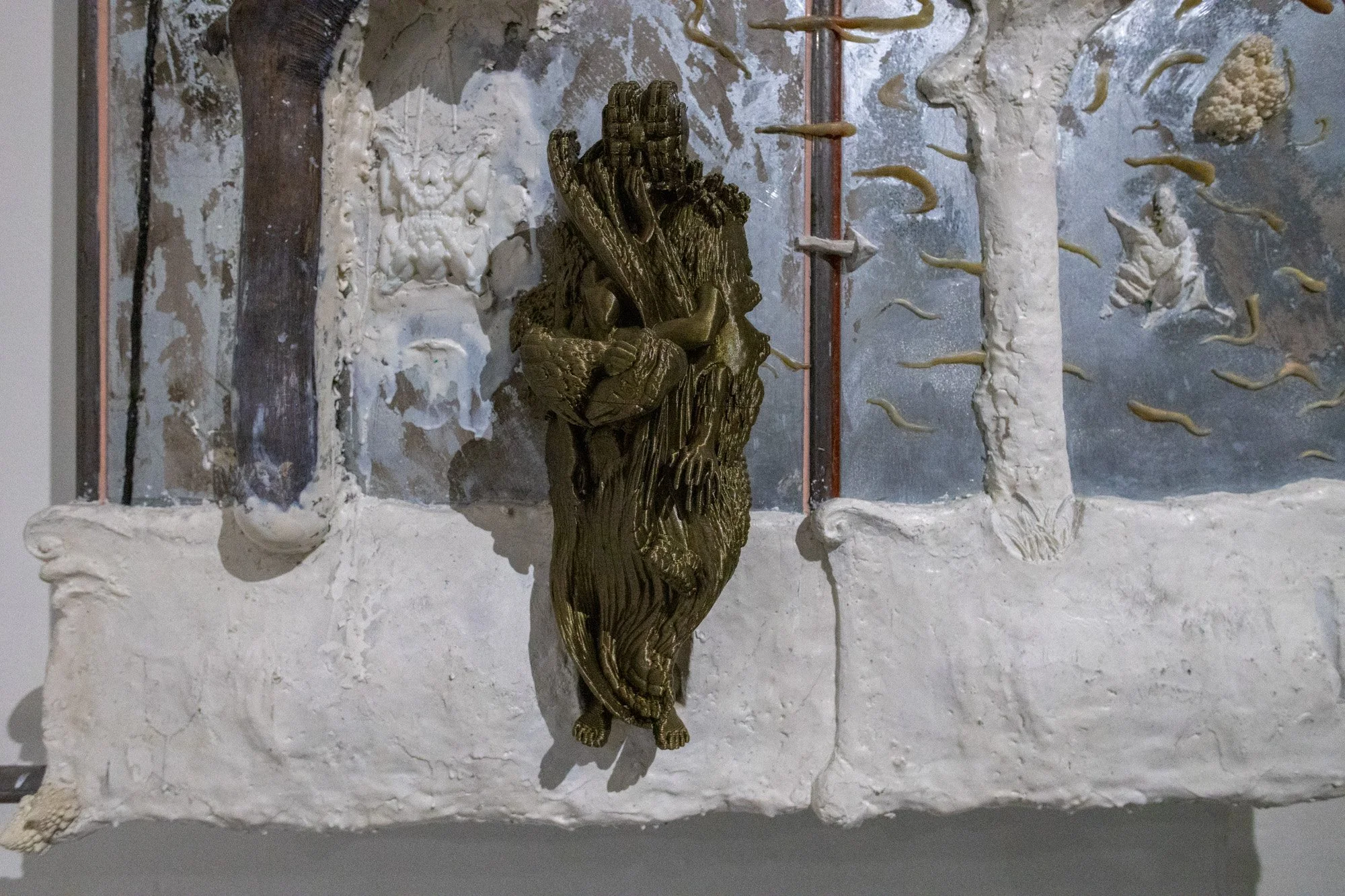
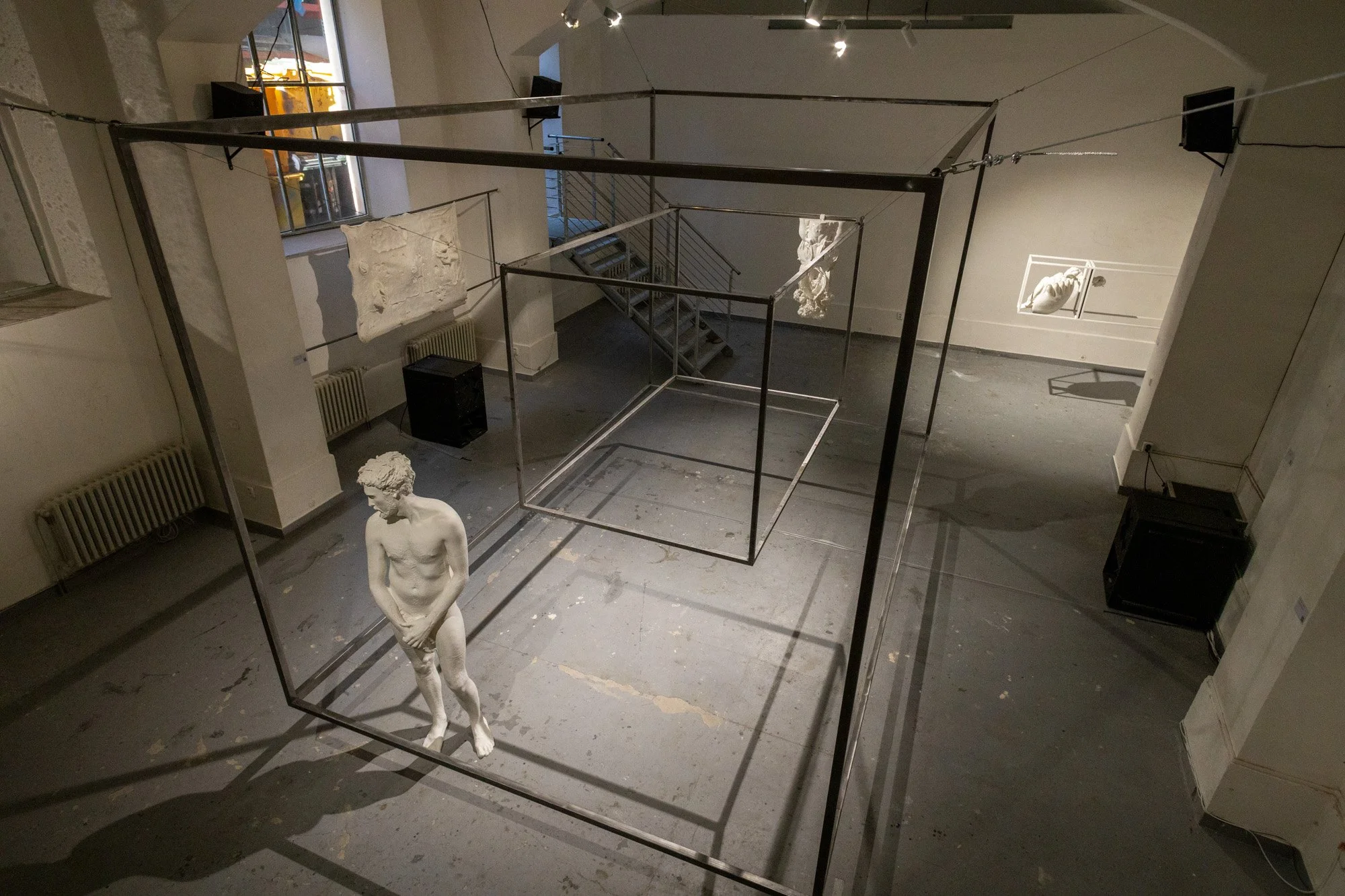
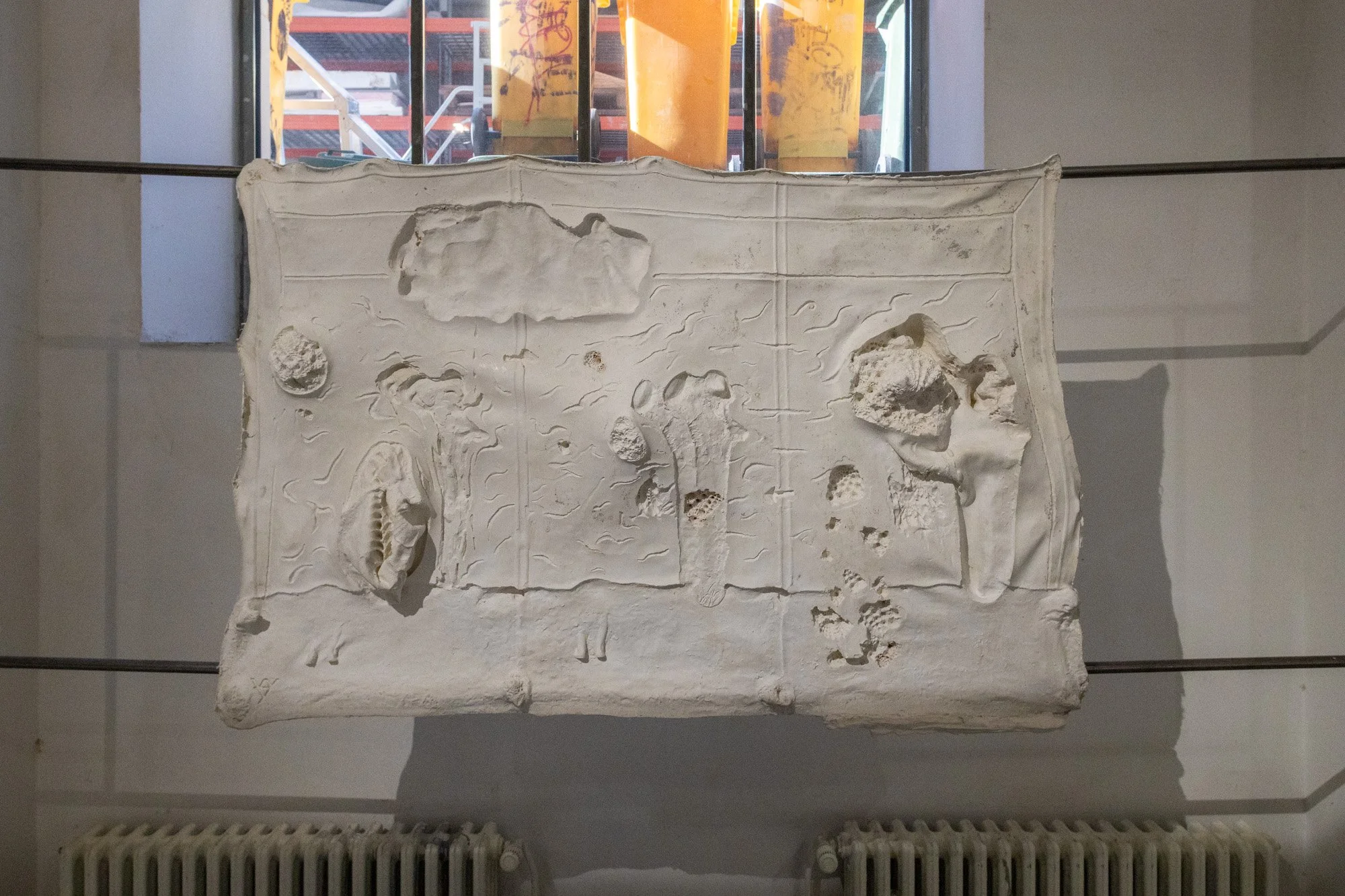
Inverted Polarity of the World started with a single moment in the castle park at Hluboká nad Vltavou. Vavřinec Vyoral looked at a leaf, closed his eyes, and watched its outline fold into one point and dissolve. The installation tries to rebuild that moment in space. At its centre is a steel tesseract, a “cube within a cube” that stands in for a fourth dimension. Around it are 3D-printed figures made from body scans of the artist and his partner, one left raw with visible seams, the other curled up and multiplied as it shrinks towards a point. Reliefs cast from wax, metal and romanesco cauliflower hang nearby, while a soundtrack of heartbeats moves around the room.
In the podcast, Vavřinec explains how he moved through the AVU studios of Lukáš Rittstein and Maruša Sagadin to figural sculpture with Vojtěch Míča, and why a classical sculptor ended up working with 3D scanners and printers. He talks about the leaf at Hluboká, about fractals in romanesco, and about a heartbeat on the soundtrack that his mother recorded at an ultrasound before he was born. We also touch on Baudrillard, the fourth dimension and The Three-Body Problem, and on what to do with a tesseract that is three metres wide once the show is over. Expect a slow, dreamy conversation for anyone who likes art that makes you stay a while.