BETONOVÝ OIDIPUS
HIDDEN at (A)Void Gallery
Náplavka, Rašín Embankment, Prague 2
17. 4. 2026 / 1. 5. 2026
Guided Tour: 26.04.2026 18:00
HIDDEN launches its first takeover of (A)Void Gallery, an exhibition space located beneath the Rašín Embankment on Prague’s riverfront. Opening in April 2026 with a solo presentation by Jan Bátorek, this project marks the beginning of an ongoing summer program, with a series of short-term exhibitions running from June to September, each lasting approximately two weeks.
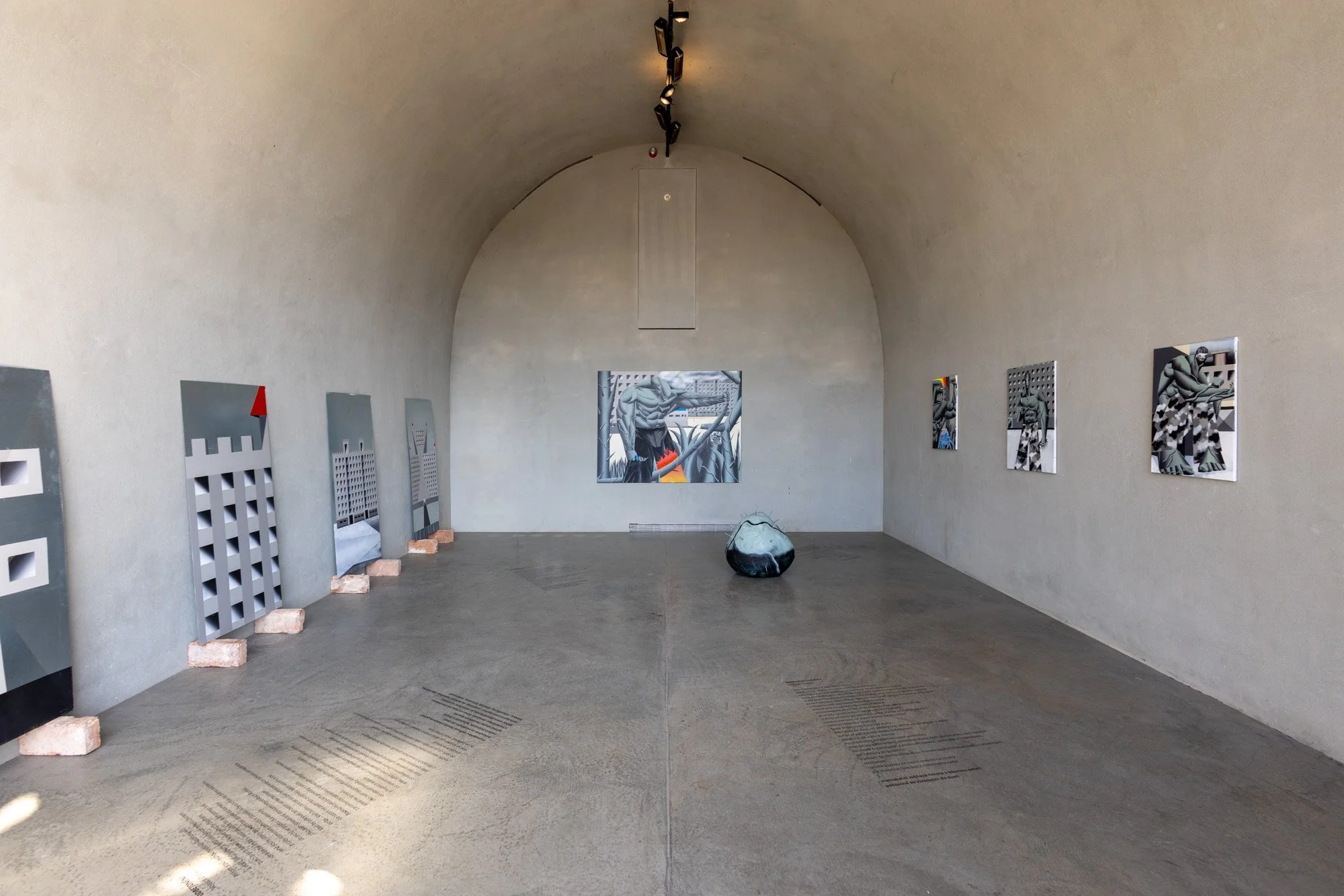

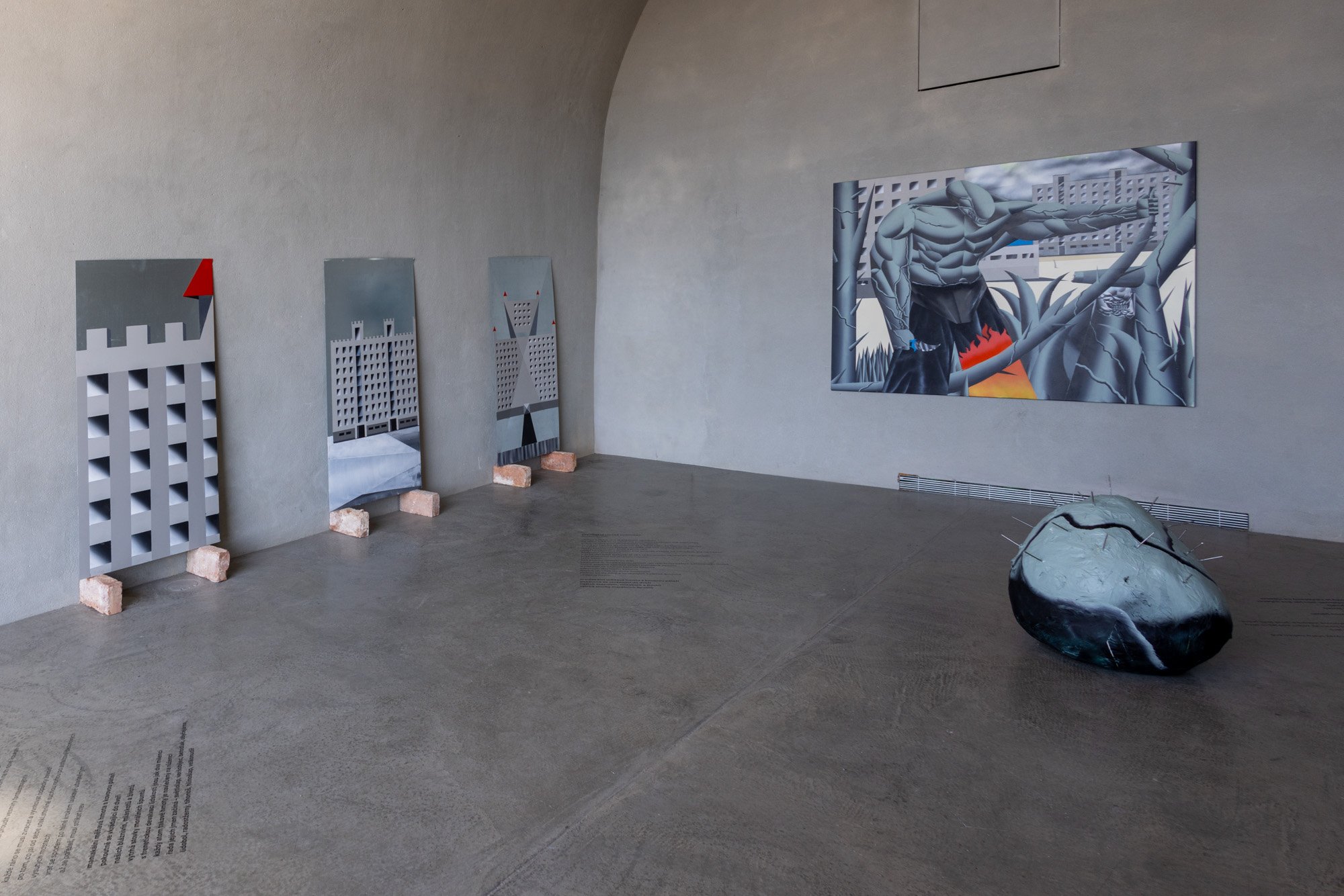
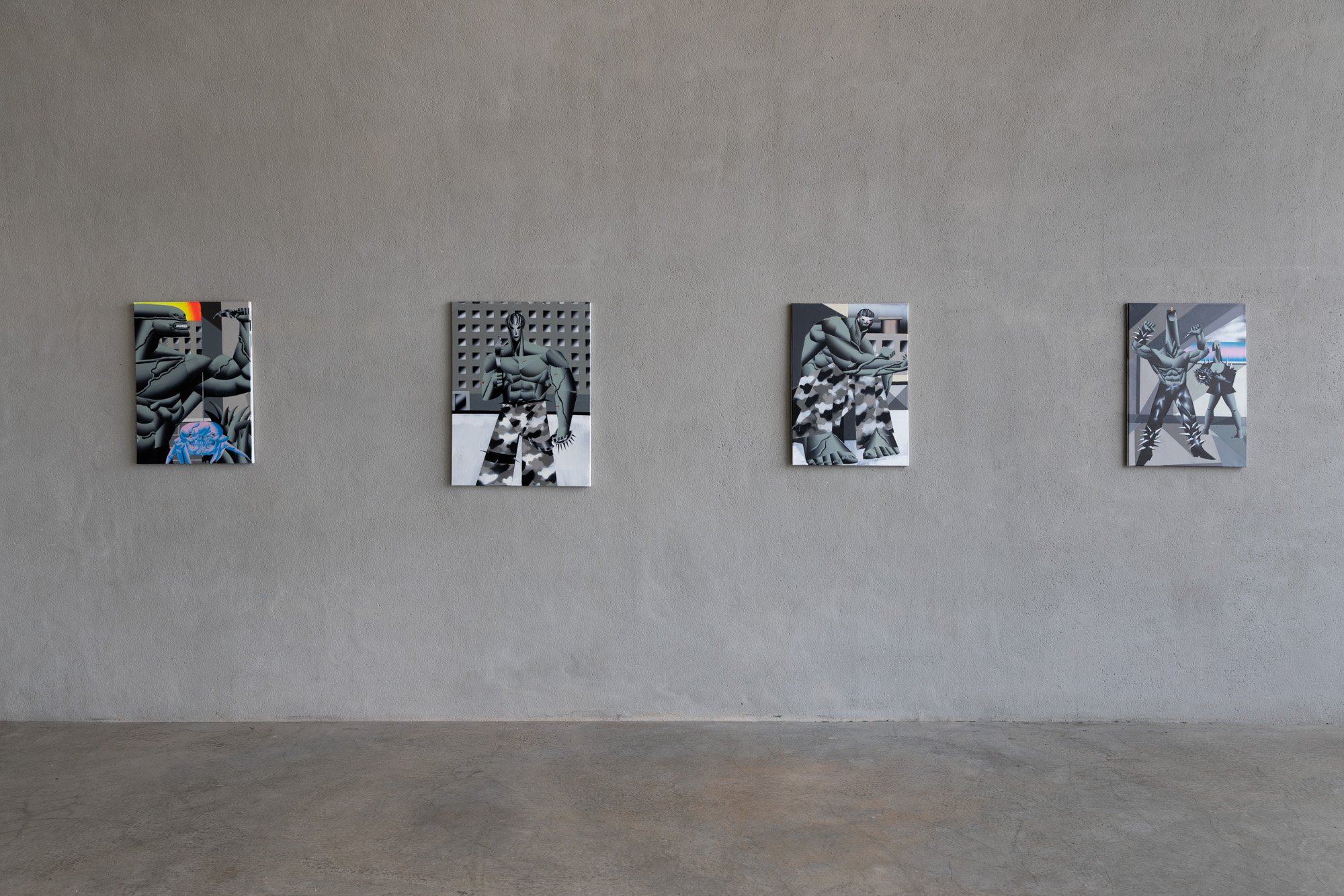
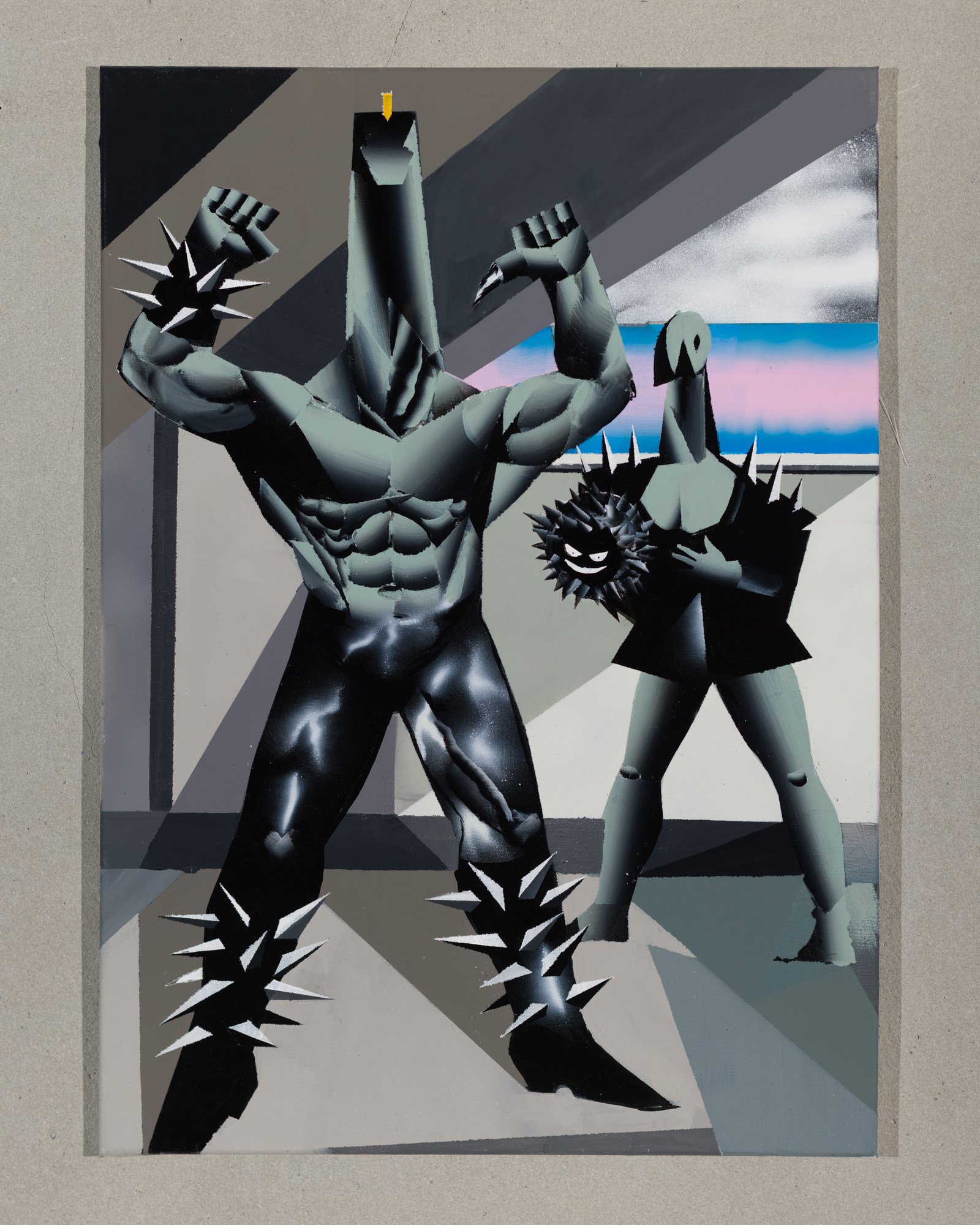
The exhibition draws on Sigmund Freud’s concept of the Oedipus complex, in which a boy, during the phallic stage of development, begins to unconsciously desire sexual intercourse with his mother while perceiving his father as a rival. Bátorek shifts this concept into his own artistic register: the mother is absent, leaving only the father as both an unattainable ideal and an existential adversary. The painter works with motifs of painful maturation, where the Oedipus complex has already metastasized into a severe inner conflict. This martyr-like passage from boyhood to adulthood unfolds across the exhibited canvases as a drama of an ancient tragedy.
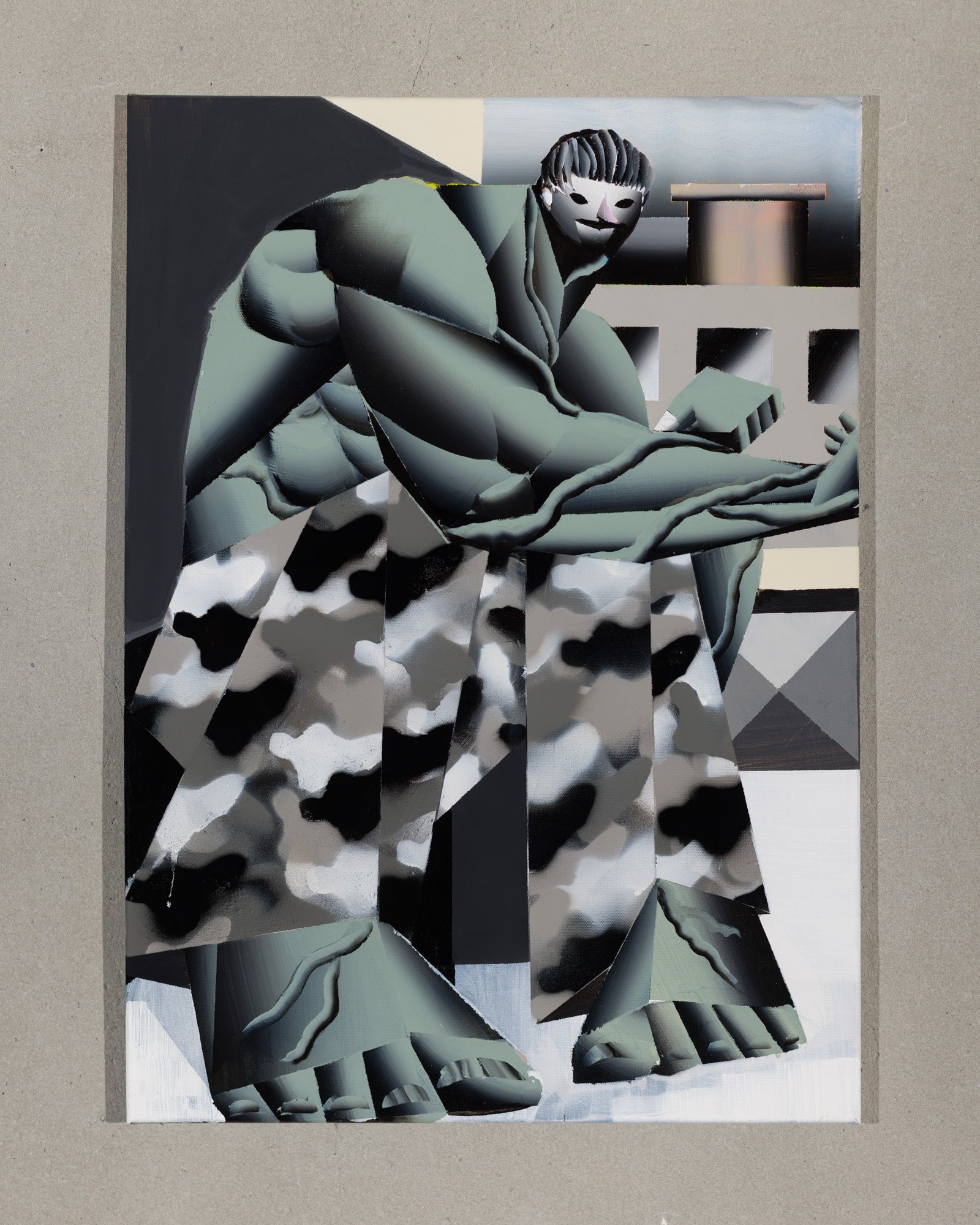
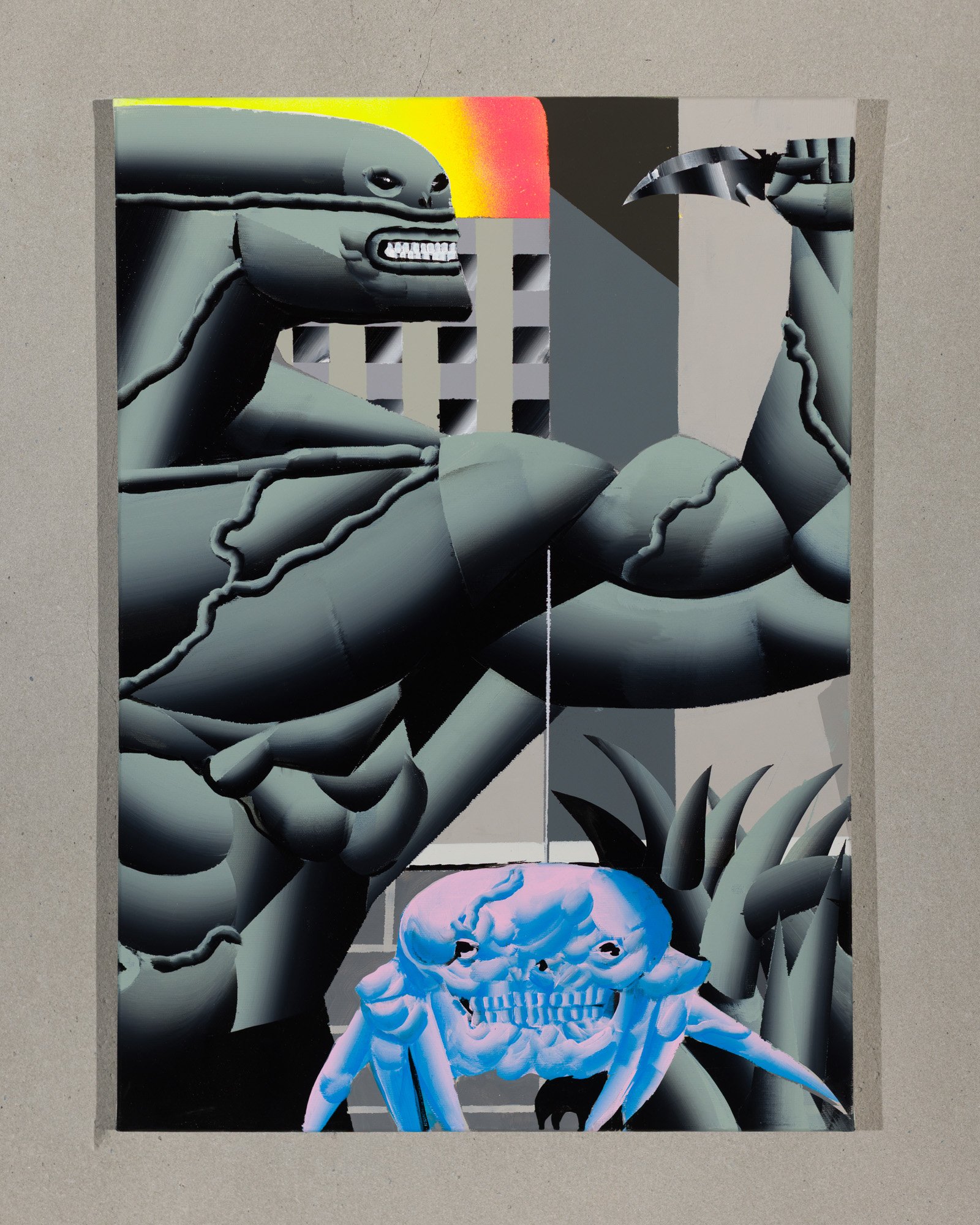
Spikes represent the defensive, antisocial thorns of an introverted soul, while empty buildings serve not only as an image of inner human emptiness but also as an allegory of hollow meanings in futile words and gestures—where we speak a great deal yet say nothing. H. R. Giger-like aliens, demonic spiders, and steroidal golems embody our inner demons in the form of characters reminiscent of violent video games such as Tekken or Doom. A stegosaurus with a human face and blades along its back assumes the role of a manticore, while deindividualized, faceless Platonic eide wander like ghosts between the world of ideas and the bleak reality of a hostile housing estate.
False sentiment and dark trauma form an intertwined web in which the exhibition visitor becomes ensnared, reliving alongside the artist his 1990s narrative, where the boundary between bromance and Cain-like betrayal is disturbingly fragile. Dehumanization, anxiety, and aggression accompany us like the three beasts from the opening canto of Divine Comedy. The grey moths of concrete housing blocks and the minefields of abandoned playgrounds evoke the depressive atmosphere of the Chernobyl disaster. Bátorek’s polygonal figures draw on the monumental sculptural qualities of totalitarian art, extending into the disproportionate hypermasculinity of comic-book superheroes who have not come to save the world, but to leave it in ruins. The influence of punk and metal subcultures is also evident, as the artist himself is an active musician. The paintings lack spatial depth, through which the artist levels an accusation that industrialized society leads to the flattening of the human being.
The painter adopts the conviction of Paul Cézanne that the world possesses an inner order that can be rendered through basic geometric forms. In Bátorek’s work, form emerges without contours, built instead from planes of color, with color assuming a volumetric function. The chosen hue becomes a fundamental structural element rather than mere decoration. This shift from imitating reality to deconstructing and analyzing it leads the artist toward both an aversion to and a fetishization of concrete. Concrete is not merely a material, but a symptom of a civilizational illness. It serves as the sarcophagus of a city decaying from within. The anonymity of the metropolis leads to a Sartrean alienation, where existence does not precede essence, but rather decadence. As the Czech writer Iva Pekárková observed: “Concrete is an extraordinarily decadent medium: a few decades suffice for it to absorb a melancholy and world-weariness that old stone castles did not absorb over centuries.
Concrete castles—Babylonian towers of functionalist architecture—also appear in Bátorek’s work, notably in his multi-part series of painted metal sheets. Like concrete, sheet metal is a “dead,” inorganic material whose sharpness and coldness are hostile to life. Here, concrete becomes a symbol of enclosure and petrified fear—no wonder the French philosopher Paul Virilio described it as the physical imprint of modernity’s permanent threat. In his paintings, the artist suggests that concrete is indeed a sore at the core of architecture: devoid of ornament, beauty, and relation to its surroundings. Yet at the same time, he adores it, studies it in detail, and obsessively overuses it.
The exhibition is accompanied by a poetic manifesto by Czech linguist and writer Vojtěch Diatka titled Betonění(Concreting). It works with the metaphor of concrete as the language of the city, as well as the layering of evil and the weight of life whose structure is undermined by its own mass. The poet guides us through a landscape of “non-places” (non-lieux)—functional yet meaningless, used yet uninhabited, transient even as we spend all our time within them, time slipping through our fingers like the quicksand of a broken hourglass: “when we bleed from sorrow and from wound / concrete flows / white blood cells cannot feed on it / if we fall, from bleeding wounds immediately sprout the roof trussing of our concrete graves / [...] / humanity has entered the concrete age / after into the pores and cogs of evolution / concrete dripped” (Concreting of the human form)
– Kamil Princ
Concrete Castles #1
120 × 74 cm
Acrylic on metal
2025
unavailable
Concrete Castles #2
120 × 74 cm
Acrylic on metal
2025
Concrete Castles #3
120 × 74 cm
Acrylic on metal
2025
unavailable
Concrete Castles #4
120 × 74 cm
Acrylic on metal
2025
Concrete Castles #5
120 × 74 cm
Acrylic on metal
2025
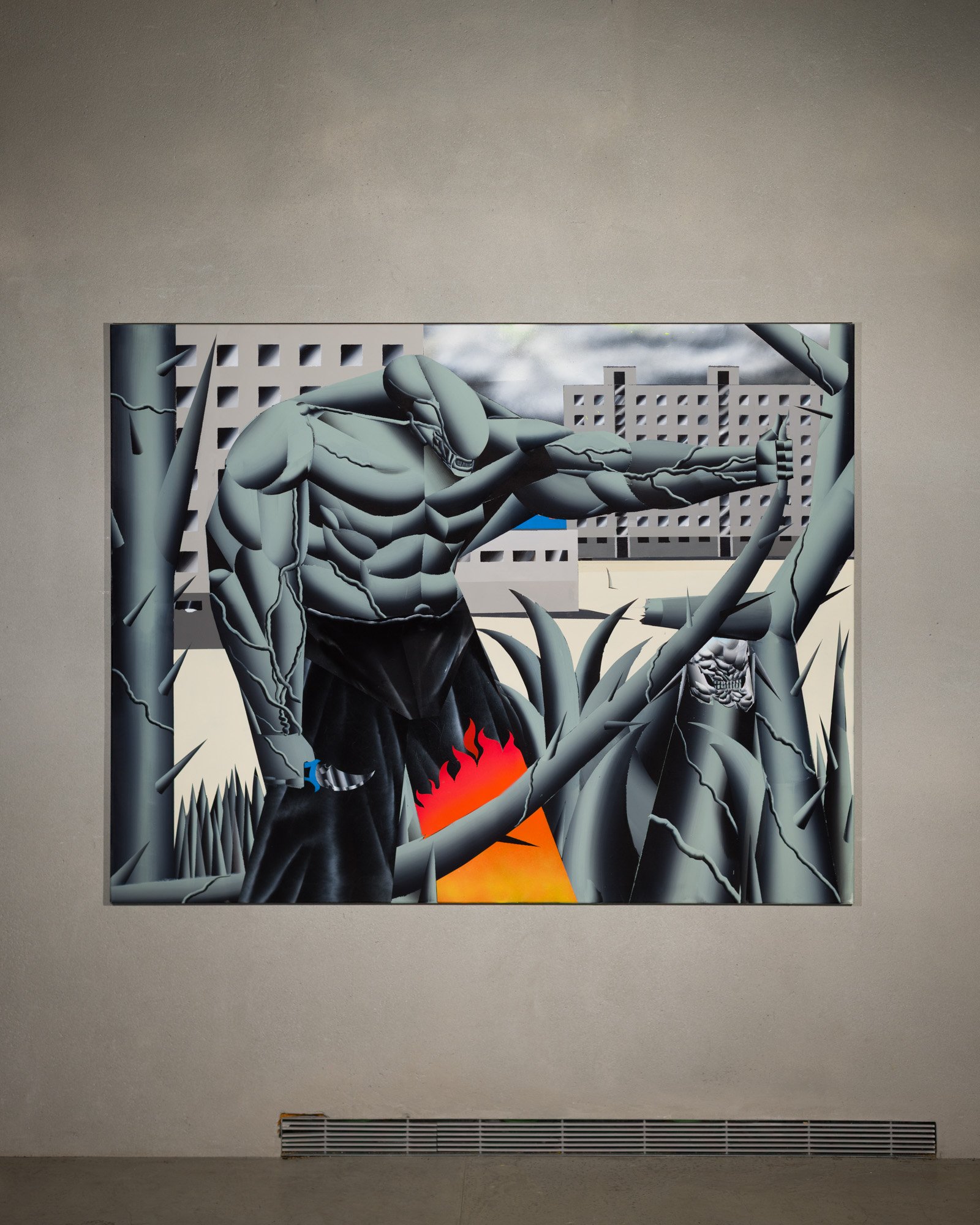
Urban Amor
140 × 180 cm
Acrylic, spray on canvas
2025