CAMBION
HIDDEN at (A)Void Gallery
Náplavka, Rašín Embankment, Prague 2
27. 7. / 9. 8. 2026
As the sixth exhibition of HIDDEN’s summer programme at (A)VOID Gallery, Cambion presents a solo exhibition by Filip Kůrka, exploring folklore, the uncanny, and the fragile boundary between humanity and monstrosity.
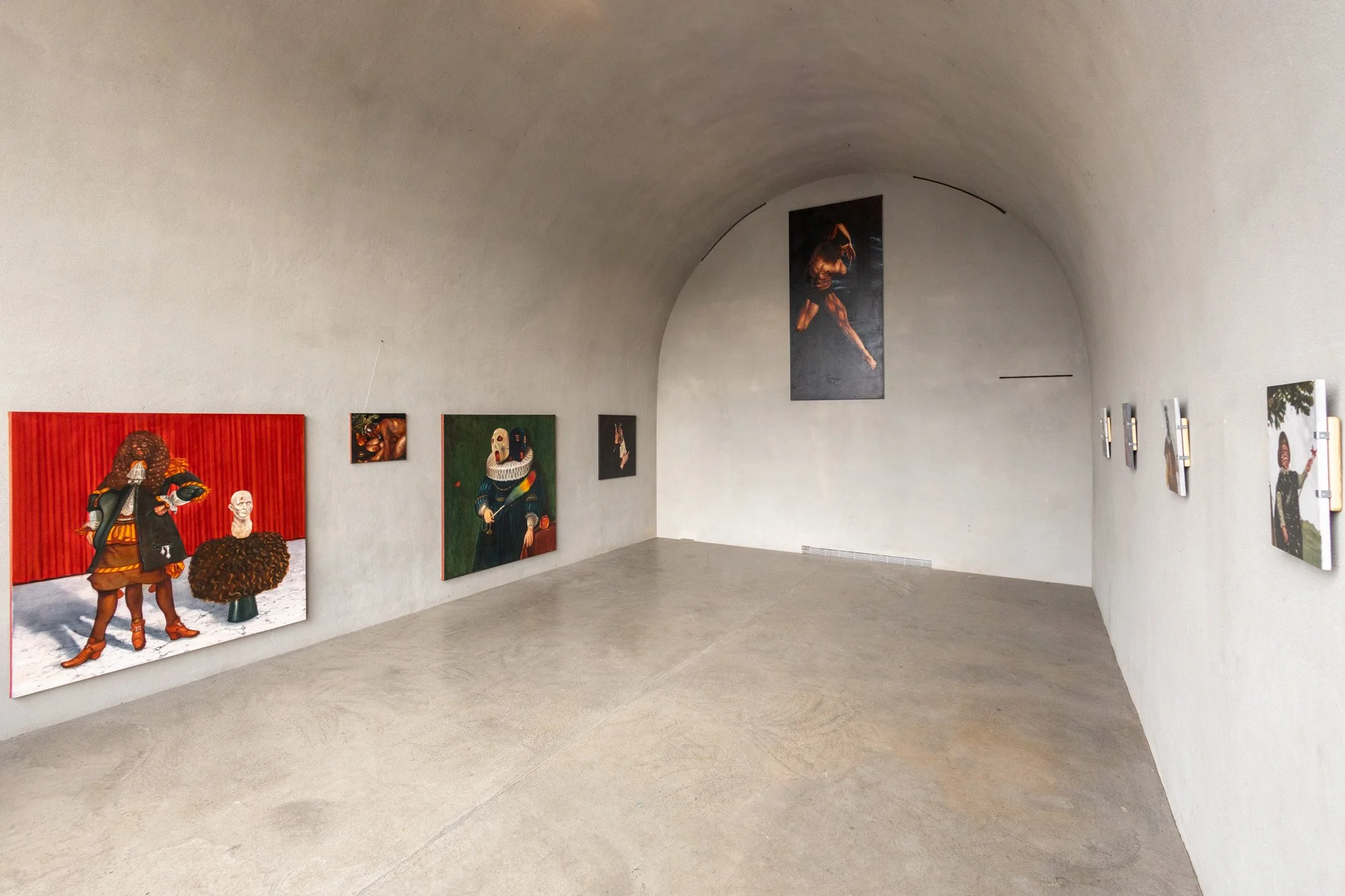
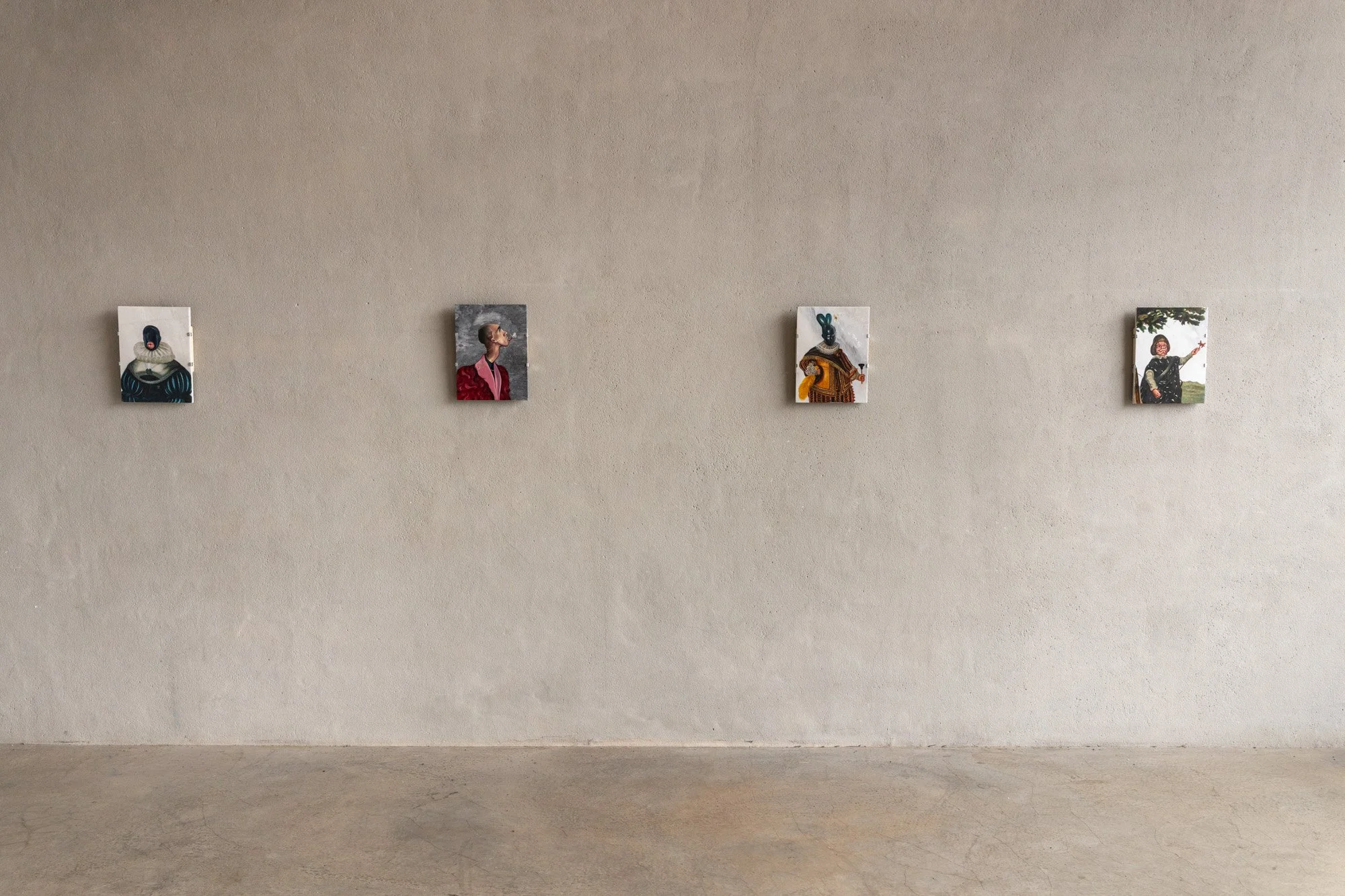

In legends and folk tradition, the term cambion refers to a changeling—a child born from the union of a human and a demon, secretly exchanged for a human infant. Such children were believed to differ from ordinary humans through traits such as an oversized head and eyes, stunted growth, muteness, restlessness, cruelty, insatiable hunger, incessant crying, or chronic illness. They were thought to be the result of divine punishment, a curse, or the evil eye. These beliefs likely emerged as attempts to explain the high number of children born with physical or mental disabilities, caused by poor hygiene, inadequate medical care, alcoholism, or endogamous marriages.
The exhibition’s title refers to the phenomenon of something dehumanized and unnatural. Inspired by Théodore Géricault’s portraits of the mentally ill, Kůrka depicts figures marked by physical, sexual, psychological, and social deviation. Their appearance provokes unease and disgust, yet also compassion, for they too long to live and bear no responsibility for having been born into a world that is itself profoundly distorted.
This sense of otherness is closely related to Freud’s psychoanalytic concept of Das Unheimliche—the uncanny—which describes something that is at once intimately familiar and deeply unsettling. Kůrka confronts us with the biological disquiet of the naked human body, nature’s grotesque anomalies, derailed sexuality, and pathological anatomy. Like the board game Othello, he reverses pain into pleasure and death into life, as if ugliness and beauty had exchanged places in a strategic move.
The painter moves beyond the l’art pour l’art aesthetic of decadence. Rather than merely depicting a dystopian reality, he diagnoses and analyzes its pathological symptoms. He presents the world in its genuine state of sickness and builds it a mound of skulls—not as a monument, but as a cradle for a new cult of strength. Into the biblical lineage of Adam and Eve he inserts the offspring of Actaeon and Artemis, whose monstrosity is simultaneously the source of vitality. In Beyond Good and Evil, Nietzsche warns us not to become monsters ourselves, yet Kůrka’s paintings suggest that we crossed that threshold long ago. What children could a monstrous age produce, if not monstrous ones? The artist stands in defense of these cambions, offering them a paternal refuge on the surface of his canvases.
As Slavoj Žižek has observed, psychosis, neurosis, and hysteria are not merely subjective pathologies but disturbances in the fundamental relationship between human beings and the world. Kůrka transfers these categories into the realm of art, transforming them into a Symbolist anti-ornament whose purpose is not to decorate but to unsettle. Personality disorder becomes a Hamlet-like mask concealing the highest form of mental health. Instead of offering an illusion of beauty, he reveals the truth of an age in decline—a condition already captured by Paul Verlaine in his verse: “I am the late Second Empire, at the end of decadence.” (Langueur)
This decay both disturbs and profoundly fascinates Kůrka as an instance of the abject. Beyond psychoanalysis, the term also appears in Abject Art, which employs disturbing or repulsive materials, and in sociology, where it refers to individuals or groups pushed to the margins of society. The changeling embodies all these meanings, personifying everything rejected, excluded, and repressed within ourselves. Are we not, in the end, all cambions wandering through an alienated world of spiritual emptiness, much like the one T. S. Eliot portrayed in The Waste Land?
“I think we are in rats’ alley Where the dead men lost their bones.”
— Kamil Princ
Uncle Oedipus
Oil painting on marble
30 × 40 cm
2026
35 000 CZK
unavailable